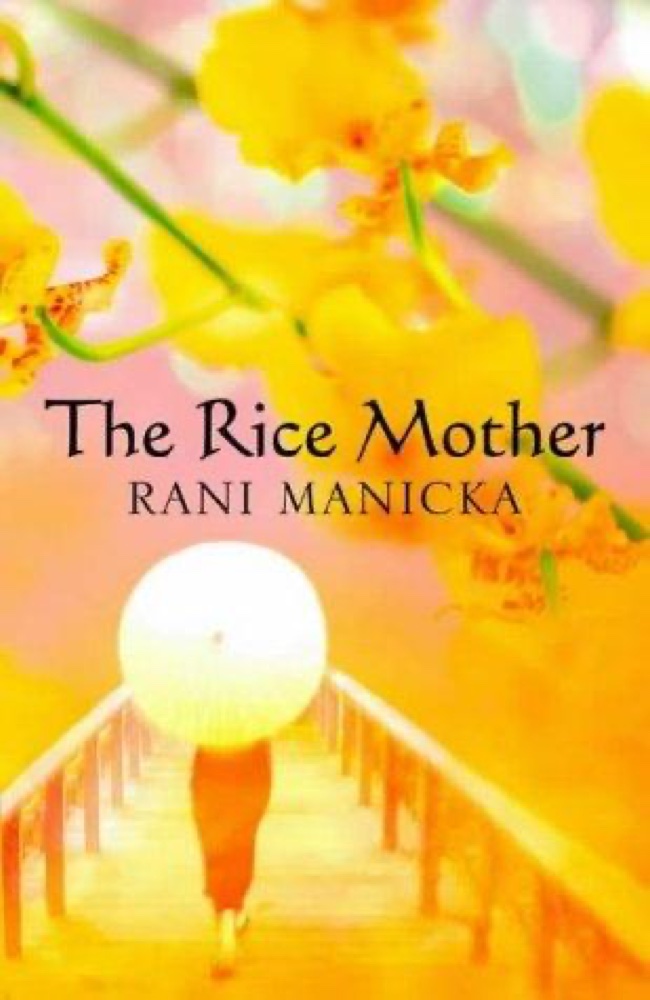

Quotes from The Rice Mother

Rani Manicka ·  432 pages

Rating: (4.5K votes)


“Flowers grow beneath her feet, but she is not dead at all. The years have not diminished the Rice Mother. I see her, fierce and magical. Stop despairing and call to her, and you will see, she will come bearing a rainbow of dreams.”
― Rani Manicka, quote from The Rice Mother


“Майка ми седеше край него ден и нощ. Понякога го гълчеше, понякога му пееше песни, които никога не бях я чувала да пее. Може би все пак тя го обичаше. Вероятно по природа си беше такава — като настръхнала. И сега си я представям — дребна фигурка, седнала край леглото, върху което се очертава тялото на татко, заобиколен от вечерните сенки. Облегната на рамката на вратата, подпряла петата на левия крак на прасеца на десния, я слушах като захласната как пее песни, които не знаех, че е скътала в себе си. Спомням си, тогава ми хрумна, че мама е като океан. Дълбока и пълна с неизвестни неща. Дори се боях, че никога нямаше да стигна до дъното му. Искаше ми се да съм ручей, който някой ден щеше да прерасне в река и някога да се влее в океана.”
― Rani Manicka, quote from The Rice Mother


“Тогава започна да дялка маска. Бавно, извънредно бавно се оформи едно красиво лице с извити вежди и пълни чувствени устни. Гладката леко усмихната маска лежеше до леглото и татко дълго я гледаше. По-късно една нощ се събудихме от трясък и сърдити викове. Втурнахме се и го заварихме насред стаята, облегнат на тежкия дървен бюст на мама. Трески от строшената маска бяха разпилени навсякъде по пода. В продължение на няколко секунди той ни гледа сякаш не ни позна, после се разрида и се свлече безпомощно на пода.”
― Rani Manicka, quote from The Rice Mother


“Да, прекрасното легло и прекрасната пейка бяха направени за хората, които улавяха слънчевите лъчи в косите си.”
― Rani Manicka, quote from The Rice Mother


“Китайците обичат булки с малки устица, защото смятат, че жените с голяма уста са лоша поличба. Жена с голяма уста духовно поглъща съпруга си и причинява ранната му смърт.”
― Rani Manicka, quote from The Rice Mother


“Меначи беше сбръчкана стара жена с тесни рамене и тънки като на скелет ръце. Предишната й красота се бе запазила единствено в тъмните й очи, обрамчени от гъсти извити мигли. Винаги съм обичала да наблюдавам лицата на много възрастни хора, а нейното беше изключително. Беше като учебник по история, който разказва какви ли не случки. Бръчките й бяха увлекателни страници за разгръщане.”
― Rani Manicka, quote from The Rice Mother


“Искаш да ти разкажа спомени ли? Да, имам спомени, но те са много ценни и трепкат като пеперуди. Малки вълшебни летящи шарени парченца, с които любознателното малко момченце на времето си играе. Никой не смее да му каже: „Не ги докосвай, защото прашецът ще падне от крилата им, ще се зацапат и няма повече да могат да летят“.”
― Rani Manicka, quote from The Rice Mother


“Петнайсетгодишна, мама се бе отказала от живота си заради нас и си запази правото да живее чрез нас. Тя преливаше безграничната си енергия в нас. Подтикваше ни към недостижими висоти. За нас искаше онова, което никога не бе имала или не бе могла да направи. А имаше толкова много неща, които не бе имала, и толкова много неща, които не бе могла да направи. Моят баща я спъваше и тя често му се сърдеше.”
― Rani Manicka, quote from The Rice Mother


“За нея най-важно бе да бъдем по-добри, по-умни и по-смели. Провалът беше невъзпитано куче, което трябваше да живее в чужда къща. А когато ние наистина се проваляхме, което се случваше често, тя го приемаше като лична обида. Тъжният неоспорим факт беше, че всички ние, взети заедно, не можехме да се наместим и на малкия й пръст нито по способности, нито по интелигентност. Нито един от нас не бе наследил нейните заложби. Факт, който много скоро стана очевиден за нас, но доста късно за нея. С течение на годините тя се превърна в безутешна нещастна жена, която от своя страна направи всички ни нещастни.”
― Rani Manicka, quote from The Rice Mother


“How not to miss those days when the sun was a happy companion that stayed to play all year round and kissed me a careless nut brown? When Mother caught the sweet rain in her well behind the house, and the air was so clear that the grass smelled green?”
― Rani Manicka, quote from The Rice Mother


“Родена съм в Цейлон през 1916 година, във времето, когато духовете ходеха по земята също като хората. Беше преди ослепителният блясък на електричеството и шумът на цивилизацията да ги прогонят в тъмните недра на горите. Те обитаваха огромни дървета, изпълнени с хладни синьо-зелени сенки. В пъстрото безмълвие човек можеше да се пресегне и почти да почувства тихото им присъствие, тъй като те копнееха да си възвърнат физическия образ. Ако се появеше неотложна нужда да се облекчим, докато пресичаме джунглата, трябваше да изречем молитва и да поискаме от тях разрешение още преди изпражненията ни да докоснат земята, тъй като те бяха много обидчиви. Нарушаването на самотата им беше извинението, което използваха, за да се вселят в неканения гост. Да вървят с неговите крака.”
― Rani Manicka, quote from The Rice Mother


“След всяко свое отсъствие той се връщал и сервирал на младата си жена всякакви измислици, мариновани с различни видове алкохол. Кой знае защо смятал, че те й харесват.”
― Rani Manicka, quote from The Rice Mother


“Майките виждаха в лицето на боговете детегледачки, скупчени в белите облаци на небето, за да държат под око децата, палуващи във водопада.”
― Rani Manicka, quote from The Rice Mother


“They didn't finish each other's sentences, rather it was the pauses they shared.”
― Rani Manicka, quote from The Rice Mother


“Майка ми смяташе, че залогът за успеха се крие в кожата. За разлика от нея не бях индийска красавица, но в страна, където живеят хора, чиято кожа има цвят на кафе, моята беше като чай с много мляко.
Ценен, прекрасен цвят.”
― Rani Manicka, quote from The Rice Mother


“În casa aceasta ,zeița noastră a orezului este bunica ta!Ea este păstrătoarea visurilor !Uită-te cu atenție și ai s-o vezi cum stă pe tronul ei de lemn ,ținându-ne toate speranțele si visurile ,mari și mici,ale tale și ale mele ,în brațele ei puternice .Anii nu-i scad puterea !”
― Rani Manicka, quote from The Rice Mother


“Той ме погледна. Имаше малки черни очички. Смело се взрях в малките, черни като мъниста гледци. В тях прочетох обезпокоителен израз на гордо притежание. Гледах го, без да мигна. „Не показвай, че те е страх“ мислех си, стомахът ми се бе свил на топка от яд. Бях втренчила очи в него като в детската игра кой пръв ще отмести погледа си. Докато неотклонно се взирах в него, биенето на барабаните и звукът на тромпетите заглъхна и присъстващите се превърнаха в сив фон. Странно, но долових промяна в очите на моя бъдещ съпруг. На мястото на гордото притежание се появи изненада. Той сведе очи. Бях победила страшното чудовище. В края на краищата той се оказа плячката, а аз ловецът. Бях опитомила дивия звяр с очи. Усетих как цялото ми тяло пламна.”
― Rani Manicka, quote from The Rice Mother


“O femeie îndrăgostită vrea să știe ce conține inima unui bărbat și dacă imaginea ei este gravată pe pereții acesteia.”
― Rani Manicka, quote from The Rice Mother


“Tinerețea este ca un prieten capricios.Îi poți da oricât și orce și tot te va lăsa.Vârsta îți este un prieten adevărat ! Ea rămâne cu tine,oferindu-ți tot mai mult până când mori.”
― Rani Manicka, quote from The Rice Mother


“Chiar dacă deșertul dorește ploaia ca să se împrospăteze ,deșertul are nevoie de soare pentru a ști că este un deșert.”
― Rani Manicka, quote from The Rice Mother


“Cel mai rău demon la lumina zilei poate arăta ridicol,dar în umbră crește în înălțime și capătă proporții incredibile.”
― Rani Manicka, quote from The Rice Mother


“Coaja tare de nucă de cocos a mândriei se sparge așa de ușor și în atâtea bucăți când este azvârlită de cimentul tare al durerii!”
― Rani Manicka, quote from The Rice Mother


“Trecutul e ca un infirm fără mâini și fără picioare,cu ochi șireți,o limbă ascuțită și o memorie bună.”
― Rani Manicka, quote from The Rice Mother


About the author

Rani Manicka
Born place: Malaysia
See more on GoodReads

Popular quotes

“You know, you spend your childhood watching TV, assuming that at some point in the future everything you see there will one day happen to you: that you too will win a Formula One race, hop a train, foil a group of terrorists, tell someone 'Give me the gun', etc. Then you start secondary school, and suddenly everyone's asking you about your career plans and your long-term goals, and by goals they don't mean the kind you are planning to score in the FA Cup. Gradually the awful truth dawns on you: that Santa Claus was just the tip of the iceberg — that your future will not be the rollercoaster ride you'd imagined, that the world occupied by your parents, the world of washing the dishes, going to the dentist, weekend trips to the DIY superstore to buy floor-tiles, is actually largely what people mean when they speak of 'life'. Now, with every day that passes, another door seems to close, the one marked PROFESSIONAL STUNTMAN, or FIGHT EVIL ROBOT, until as the weeks go by and the doors — GET BITTEN BY SNAKE, SAVE WORLD FROM ASTEROID, DISMANTLE BOMB WITH SECONDS TO SPARE — keep closing, you begin to hear the sound as a good thing, and start closing some yourself, even ones that didn't necessarily need to be closed.”
― Paul Murray, quote from Skippy Dies


“Would that we could soar forever beyond the reach of earth, away from the dangers that await us the moment we alight.”
― quote from A Woman of Independent Means


“Any day that starts off in a demon-filled bar in a casino designed to look like Hell isn't likely to turn out well.”
― Karen Chance, quote from Claimed By Shadow


“A conversation with Mabh was like playing tag with a grizzly bear.”
― Lesley Livingston, quote from Darklight


“All these adoptions of European styles make it obvious that the Greenlanders paid very close attention to European fashions and followed them in detail. The adoptions carry the unconscious message, “We are Europeans, we are Christians, God forbid that anyone could confuse us with the Inuit.” Just as Australia, when I began visiting it in the 1960s, was more British than Britain itself, Europe’s most remote outpost of Greenland remained emotionally tied to Europe. That would have been innocent if the ties had expressed themselves only in two-sided combs and in the position in which the arms were folded over a corpse. But the insistence on “We are Europeans” becomes more serious when it leads to stubbornly maintaining cows in Greenland’s climate, diverting manpower from the summer hay harvest to the Nordrseta hunt, refusing to adopt useful features of Inuit technology, and starving to death as a result. To us in our secular modern society, the predicament in which the Greenlanders found themselves is difficult to fathom. To them, however, concerned with their social survival as much as with their biological survival, it was out of the question to invest less in churches, to imitate or intermarry with the Inuit, and thereby to face an eternity in Hell just in order to survive another winter on Earth. The Greenlanders’ clinging to their European Christian image may have been a factor in their conservatism that I mentioned above: more European than Europeans themselves, and thereby culturally hampered in making the drastic lifestyle changes that could have helped them survive.”
― Jared Diamond, quote from Collapse: How Societies Choose to Fail or Succeed


Interesting books

Rich Dad Poor Dad
(211K)
Rich Dad Poor Dad
by Robert T. Kiyosaki
Curtain: Poirot's Last Case
(23.7K)
Curtain: Poirot's La...
by Agatha Christie
The Abyss Surrounds Us
(2.9K)
The Abyss Surrounds...
by Emily Skrutskie
Hamlet: An Authoritative Text, Intellectual Backgrounds, Extracts from the Sources, Essays in Criticism (Norton Critical Edition)
(607.2K)
Hamlet: An Authorita...
by William Shakespeare
Moxie
(6.1K)
Moxie
by Jennifer Mathieu
The Thief's Daughter
(11K)
The Thief's Daughter
by Jeff Wheeler

About BookQuoters

BookQuoters is a community of passionate readers who enjoy sharing the most meaningful, memorable and interesting quotes from great books. As the world communicates more and more via texts, memes and sound bytes, short but profound quotes from books have become more relevant and important. For some of us a quote becomes a mantra, a goal or a philosophy by which we live. For all of us, quotes are a great way to remember a book and to carry with us the author’s best ideas.

We thoughtfully gather quotes from our favorite books, both classic and current, and choose the ones that are most thought-provoking. Each quote represents a book that is interesting, well written and has potential to enhance the reader’s life. We also accept submissions from our visitors and will select the quotes we feel are most appealing to the BookQuoters community.

Founded in 2023, BookQuoters has quickly become a large and vibrant community of people who share an affinity for books. Books are seen by some as a throwback to a previous world; conversely, gleaning the main ideas of a book via a quote or a quick summary is typical of the Information Age but is a habit disdained by some diehard readers. We feel that we have the best of both worlds at BookQuoters; we read books cover-to-cover but offer you some of the highlights. We hope you’ll join us.