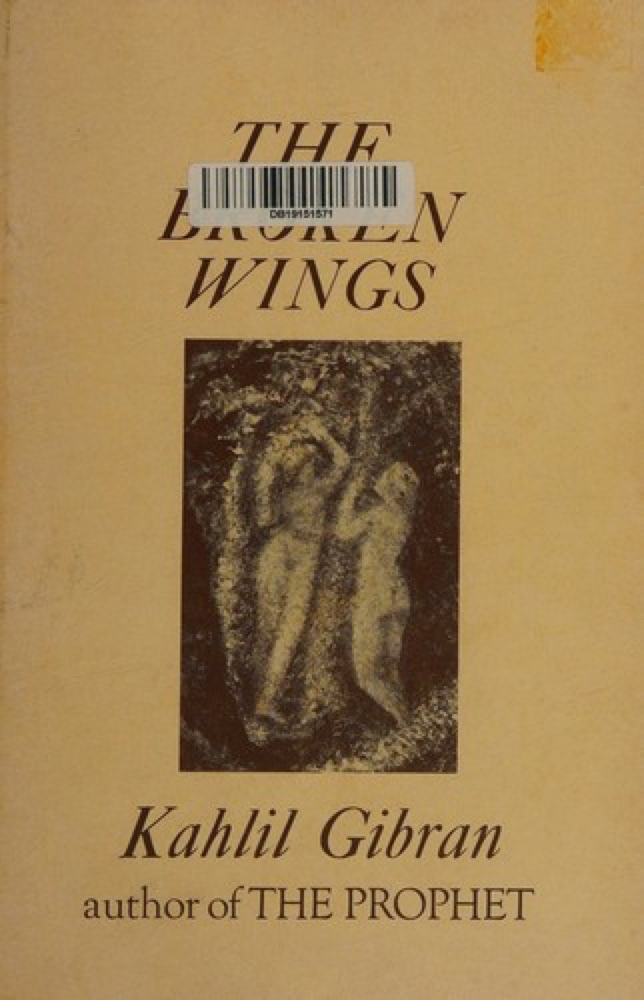
 The Broken Wings
Quotes from the Book
You talk when you cease to be at peace with your thoughts.
Let there be spaces in your togetherness, And let the winds of the heavens dance between you. Love one another but make not a bond of love: Let it rather be a moving sea between the shores of your souls. Fill each other's cup but drink not from one cup. Give one another of your bread but eat not from the same loaf. Sing and dance together and be joyous, but let each one of you be alone, Even as the strings of a lute are alone though they quiver with the same music. Give your hearts, but not into each other's keeping. For only the hand of Life can contain your hearts. And stand together, yet not too near together: For the pillars of the temple stand apart, And the oak tree and the cypress grow not in each other's shadow.
When love beckons to you follow him, Though his ways are hard and steep. And when his wings enfold you yield to him, Though the sword hidden among his pinions may wound you. And when he speaks to you believe in him, Though his voice may shatter your dreams as the north wind lays waste the garden. For even as love crowns you so shall he crucify you. Even as he is for your growth so is he for your pruning. Even as he ascends to your height and caresses your tenderest branches that quiver in the sun, So shall he descend to your roots and shake them in their clinging to the earth...... But if in your fear you would seek only love's peace and love's pleasure, Then it is better for you that you cover your nakedness and pass out of love's threshing-floor, Into the seasonless world where you shall laugh, but not all of your laughter, and weep, but not all of your tears. Love gives naught but itself and takes naught but from itself. Love possesses not nor would it be possessed; For love is sufficient unto love. And think not you can direct the course of love, if it finds you worthy, directs your course. Love has no other desire but to fulfil itself." But if you love and must needs have desires, let these be your desires: To melt and be like a running brook that sings its melody to the night. To know the pain of too much tenderness. To be wounded by your own understanding of love; And to bleed willingly and joyfully.
Your children are not your children. They are the sons and daughters of Life's longing for itself
The timeless in you is aware of life's timelessness. And knows that yesterday is but today's memory and tomorrow is today's dream.
And forget not that the earth delights to feel your bare feet and the winds long to play with your hair
Some of you say, “Joy is greater than sorrow,” and others say, “Nay, sorrow is the greater.” But I say unto you, they are inseparable. Together they come, and when one sits alone with you at your board, remember that the other is asleep upon your bed.
You give but little when you give of your possessions. It is when you give of yourself that you truly give.
To belittle, you have to be little.
Love one another, but make not a bond of love: Let it rather be a moving sea between the shores of your souls.
You pray in your distress and in your need; would that you might pray also in the fullness of your joy and in your days of abundance.
Beauty is eternity gazing at itself in a mirror. But you are eternity and you are the mirror.
When you part from your friend, you grieve not; For that which you love most in him may be clearer in his absence, as the mountain to the climber is clearer from the plain.
And a woman spoke, saying, "Tell us of Pain." And he said: Your pain is the breaking of the shell that encloses your understanding. Even as the stone of the fruit must break, that its heart may stand in the sun, so must you know pain. And could you keep your heart in wonder at the daily miracles of your life, your pain would not seem less wondrous than your joy; And you would accept the seasons of your heart, even as you have always accepted the seasons that pass over your fields. And you would watch with serenity through the winters of your grief. Much of your pain is self-chosen. It is the bitter potion by which the physician within you heals your sick self. Therefore trust the physician, and drink his remedy in silence and tranquillity: For his hand, though heavy and hard, is guided by the tender hand of the Unseen, And the cup he brings, though it burn your lips, has been fashioned of the clay which the Potter has moistened with His own sacred tears.
Love knows not its own depth until the hour of separation
We wanderers, ever seeking the lonelier way, begin no day where we have ended another day; and no sunrise finds us where sunset left us. Even while the earth sleeps we travel. We are the seeds of the tenacious plant, and it is in our ripeness and our fullness of heart that we are given to the wind and are scattered.
You have been told that, even like a chain, you are as weak as your weakest link. This is but half the truth. You are also as strong as your strongest link. To measure you by your smallest deed is to reckon the power of the ocean by the frailty of its foam. To judge you by your failures is to cast blame upon the seasons for their inconstancy.
For what is your friend that you should seek him with hours to kill? Seek him always with hours to live. For it is his to fill your need, but not your emptiness. And in th sweetness of friendship let there be laughter, and sharing of pleasures. For in the dew of little things the heart finds its morning and is refreshed.
No man can reveal to you aught but that which already lies half asleep in the dawning of your knowledge. The teacher who walks in the shadow of the temple, among his followers, gives not of his wisdom but rather of his faith and his lovingness. If he is indeed wise he does not bid you enter the house of his wisdom, but rather leads you to the threshold of your own mind.
In the sweetness of friendship let there be laughter, and sharing of pleasures. For in the dew of little things, does the heart find its morning and is refreshed.
For what is evil but good tortured by its own hunger and thirst?
Say not, “I have found the truth,” but rather, “I have found a truth.” Say not, “I have found the path of the soul.” Say rather, “I have met the soul walking upon my path.” For the soul walks upon all paths. The soul walks not upon a line, neither does it grow like a reed. The soul unfolds itself, like a lotus of countless petals.
And think not you can direct the course of love, for love, if it finds you worthy, directs your course.
When love beckons to you, follow him, Though his ways are hard and steep. And When his wings enfold you yield to him, Though the sword hidden among his pinions may wound you. And When he speaks to you believe in him, Though his voice may shatter your dreams as the north wind lays waste the garden... But if in your fear you would seek only love’s peace and love’s pleasure, Then it is better for you that you cover your nakedness and pass out of love’s threshing-floor, Into the seasonless world where you shall laugh, but not all of your laughter, and weep, but not all of your tears... But if you love and must needs have desires, let these be your desires: To melt and be like a running brook that sings its melody to the night. To know the pain of too much tenderness. To be wounded by your own understanding of love; And to bleed willingly and joyfully.
Did you know?
- The book is set in the fictional city of Orphalese and centers on a departing prophet named Almustafa.
- It consists of 26 prose-poetry essays, each addressing a single theme of human life such as love, work, or death.
- The Prophet has been translated into more than 100 languages and is one of the best-selling books of all time.
- Gibran wrote the book in English rather than his native Arabic.
- An animated film adaptation was released in 2014, produced by Salma Hayek.
About Kahlil Gibran
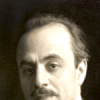
Kahlil Gibran (1883-1931) was a Lebanese-American writer, poet, and visual artist born in Bsharri in present-day Lebanon who emigrated to Boston as a child. He is best known for The Prophet and is counted among the best-selling poets of all time.
More about the author →More by Kahlil Gibran
All books by Kahlil Gibran →
About the book
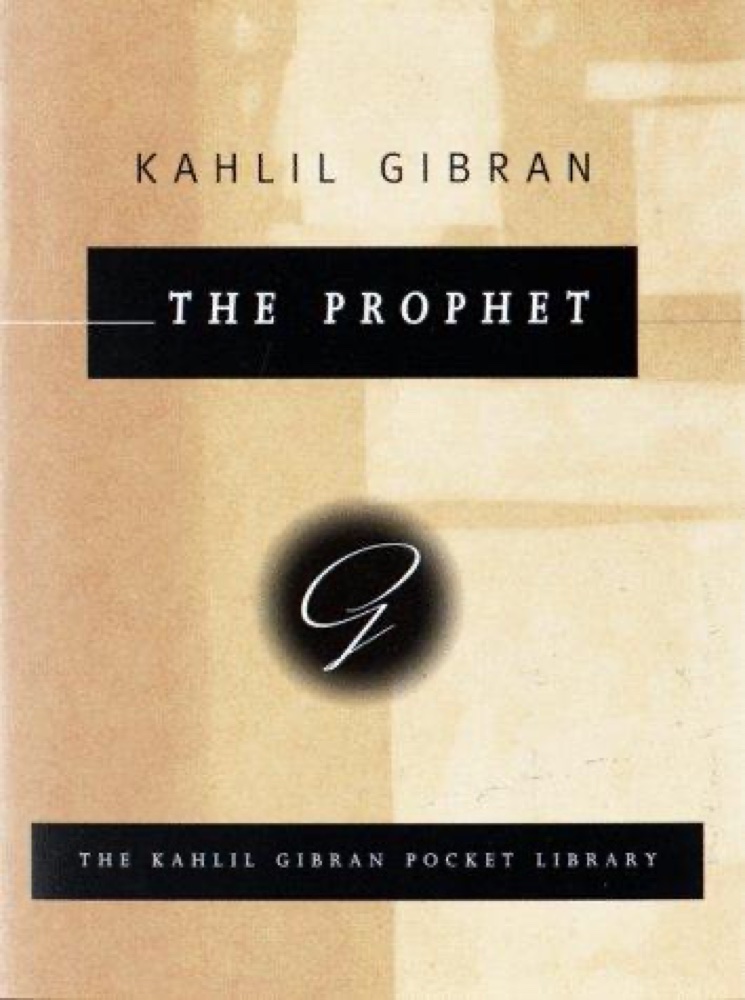
The Prophet is a book of 26 prose-poetry essays written in English by the Lebanese-American writer and artist Kahlil Gibran and first published in 1923. Its slender frame narrative follows Almustafa, a prophet who has lived twelve years in the fictional city of Orphalese and now awaits the ship that will carry him home. Before he departs, a seeress named Almitra and the townspeople gather to ask him to share his wisdom, and Almustafa answers with a series of poetic meditations on the great themes of human life.
Each chapter takes up a single subject, among them love, marriage, children, giving, work, joy and sorrow, freedom, reason and passion, pain, self-knowledge, friendship, prayer, beauty, religion, and death. Gibran's language is deliberately lyrical and aphoristic, drawing on Biblical cadence and Romantic and mystical traditions to counsel readers toward inner freedom, acceptance, and a reverence for life. Rather than telling a plot, the book offers a distilled philosophy of living meant to be returned to again and again.
Though critics were initially cool, The Prophet became one of the best-selling books of all time. It has been translated into more than 100 languages and has never gone out of print, selling millions of copies and becoming a fixture at weddings, funerals, and moments of personal reflection. Its enduring popularity made Gibran one of the world's best-selling poets and a foundational voice for later spiritual and New Age readers.
Key characters
- AlmustafaThe prophet who shares his wisdom before departing Orphalese
- AlmitraA seeress, the first to believe in Almustafa, who asks him to speak
Book details
- First published
- 1923
- Length
- 107 pages
- Reading time
- 1 hour
- Author
- Kahlil Gibran
- Genre
- Classics
- Goodreads rating
- 4.23 (336k ratings) →
- First line
- “Almustafa, the chosen and the beloved, who was a dawn unto his own day, had waited twelve years in the city of Orphalese for his ship that was to return and bear him back to the isle of his birth.”
Movie & TV adaptations
- IMDb
If you liked this, read…
- 1SiddharthaA lyrical, spiritual short novel about the search for meaning and enlightenment
- 2Jonathan Livingston SeagullA brief allegorical fable offering inspirational life philosophy
- 3Thus Spoke ZarathustraA philosophical work framed as a wandering prophet delivering discourses
Keep reading
 The Book of Mirdad: The Strange Story of a Monastery Which Was Once Called the Ark
 Confessions
 The Conference of the Birds
 The Soul of Rumi: A New Collection of Ecstatic Poems – Coleman Barks's Sublime Renderings of the 13th-Century Sufi Mystic's Insights into Divine Love and the Human Heart
 Sacred Journey of the Peaceful Warrior
 The Dhammapada
 Evidence: Poems
 The Essential Rumi
 The Zahir
 De Profundis
 Rubaiyat of Omar Khayyam
 Be Here Now
 Prince Lestat
 The Treasured Writings of Kahlil Gibran
 The Imitation of Christ
 Ben-Hur: A Tale of the Christ
 Paradiso
 Les Misérables
 The Red Book: Liber Novus
 A Soldier of the Great War
 Siddhartha
 The Bacchae
 Phantastes
 The Letters of Abélard and Héloïse
 Gilead
 The Book of Awakening: Having the Life You Want by Being Present to the Life You Have
 Faust
Faust
 A Voice in the Wind
 Childe Harold's Pilgrimage
 Manuscript Found in Accra
 The Divan
 The Woman in the White Kimono
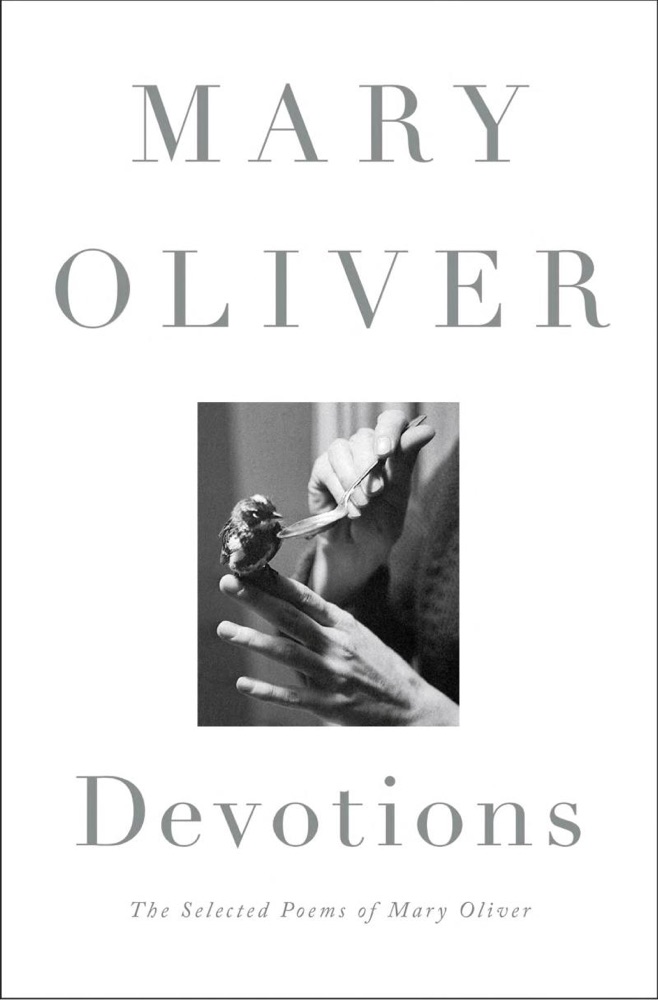 Devotions: The Selected Poems of Mary Oliver
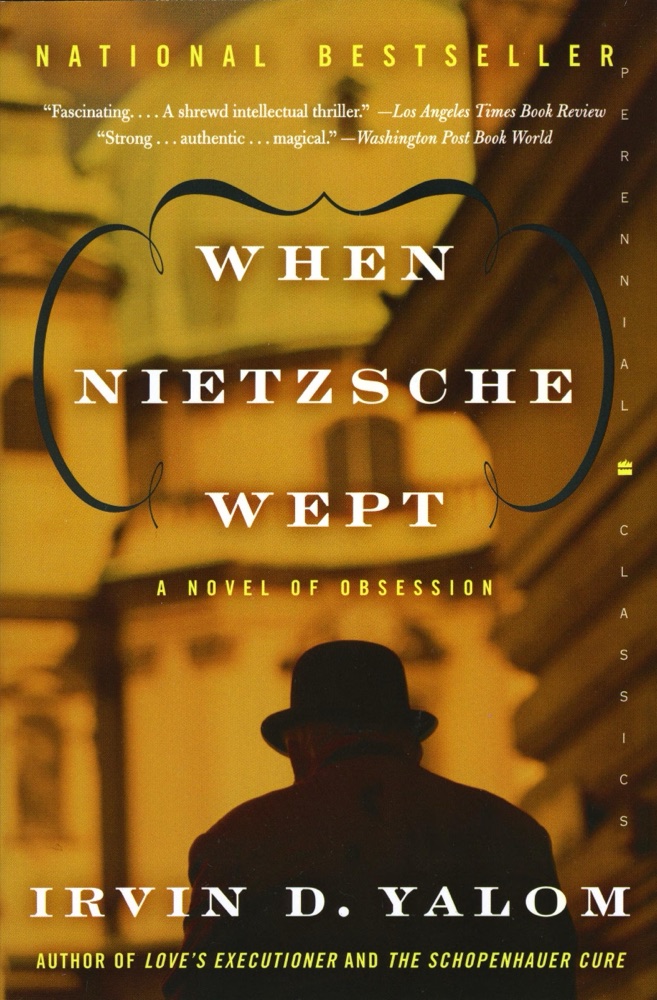 When Nietzsche Wept
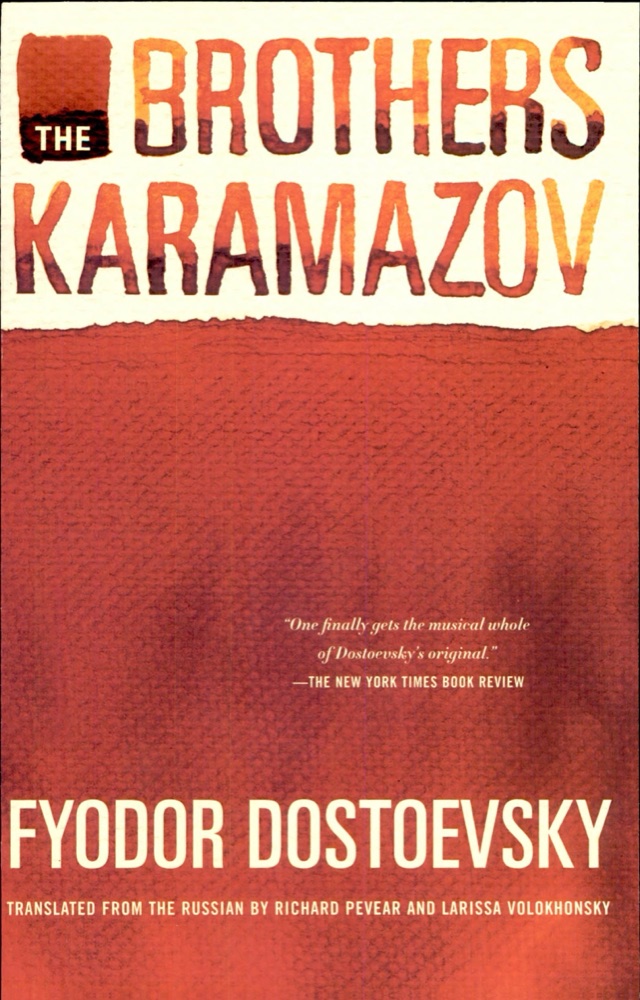 The Brothers Karamazov
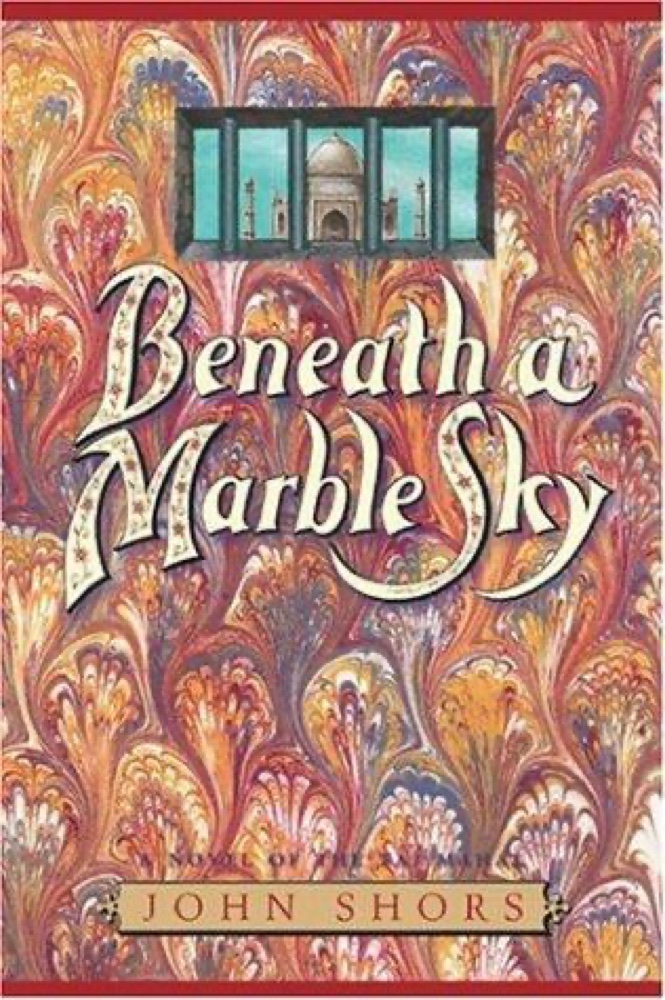 Beneath a Marble Sky
 The Two Gentlemen of Verona
 The Fifth Mountain
 The Mountain Shadow
 Perelandra
 Reclaim Your Heart: Personal Insights on Breaking Free from Life's Shackles
 Narcissus and Goldmund
 Either/Or: A Fragment of Life
 The Complete Poems of Emily Dickinson
 Morning and Evening, Based on the English Standard Version
 The Kindly Ones
 Under the Udala Trees
 Eat, Pray, Love
 Have a Little Faith: a True Story
 Purgatorio
 Thirst
 Dusk, Night, Dawn: On Revival and Courage
 The Home and the World
 A Well-Tempered Heart
 A Course in Miracles
 Letters to a Young Poet
 The Passion
 Shōgun
 The Gay Science
 Rilke's Book of Hours: Love Poems to God