
 The Last Year of the War
Quotes from the Book
The choices we make about the lives we live determine the kinds of legacies we leave.
When it is time for you to leave this school, leave your job, or even leave this earth, you make sure you have worked hard to make sure it mattered you were even here.
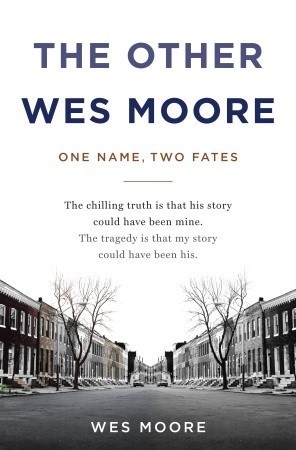
The chilling truth is that his story could have been mine. The tragedy is that my story could have been his.
I sat back, allowing Wes's words to sink in. Then I responded, "I guess it's hard sometimes to distinguish between second chances and last chances.
Try again. Fail again. Fail better." (quoted from Samuel Buckett)... Failing does not make us a failure. But not trying to do better, to be better, does make us fools.
Life’s impermanence, I realized, is what makes every single day so precious. It’s what shapes our time here. It’s what makes it so important that not a single moment be wasted.
The common bond of humanity and decency that we share is stronger than any conflict, any adversity. Fighting for your convictions is important. But finding peace is paramount. Knowing when to fight and when to seek peace is wisdom. Ubuntu was right.
The common bond of humanity and decency that we share is stronger than any conflict, any adversity, any challenge. Fighting for your convictions is important. But finding peace is paramount. Knowing when to fight and when to seek peace is wisdom.
Fighting for your convictions is important. But finding peace is paramount.
-After all this pain and heartache, how are you now able to forgive? You seem so at peace with yourself and your life. How are you so able to move on?... -Because Mr. Mandela asked us to.
Failing doesn't make us a failure. But not trying to do better, to be better, does make us fools.
I realized then how difficult it is to separate the two. The expectations that others place on us help us form our expectations of ourselves.
I guess it’s hard sometimes to distinguish between second chances and last chances.
But there was a more recent author and public figure whose work spoke to the core of a new set of issues I was struggling with: the Bronx's own Colin Powell. His book, My American Journey, helped me harmonize my understanding of America's history and my aspiration to serve her in uniform. In his autobiography he talked about going to the Woolworth's in Columbus, Georgia, and being able to shop but not eat there. He talked about how black GIs during World War II had more freedoms when stationed in Germany than back in the country they fought for. But he embraced the progress this nation made and the military's role in helping that change to come about. Colin Powell could have been justifiably angry, but he wasn't. He was thankful. I read and reread one section in particular: The Army was living the democratic ideal ahead of the rest of America. Beginning in the fifties, less discrimination, a truer merit system, and leveler playing fields existed inside the gates of our military posts more than in any Southern city hall or Northern corporation. The Army, therefore, made it easier for me to love my country, with all its flaws, and to serve her with all of my heart." -The Other Wes Moore: One Name, Two Fates (p. 131)
But what all these responses have in common is that they point to the decisive power of information and stories [...]
...I found myself surrounded by people--starting with my mom, grandparents, uncles, and aunts, and leading to a string of wonderful role models and mentors--who kept pushing me to see more than what was directly in front of me, to see the boundless possibilities of the wider world and the unexplored possibilities within myself. People who taught me that no accident of birth--not being black or relatively poor, being from Baltimore or the Bronx or fatherless--would ever define or limit me.
I hear you, but it's not the process you should focus on; it's the joy you will feel after you go through the process." - Zinzi (pg170)The Other Wes Moore
I was taught to remember, but never question. Wes was taught to forget, and never ask why. We learned our lessons well and were showing them off to a tee. We sat there, just a few feet from each other, both silent, pondering an absence.
Later in life I learned that the way many governors projected the numbers of beds they’d need for prison facilities was by examining the reading scores of third graders. Elected officials deduced that a strong percentage of kids reading below their grade level by third grade would be needing a secure place to stay when they got older.
Wes didn't think Tony was a hypocrite exactly--he knew why his brother felt obliged to warn him off. But it was clear that Tony didn't have any better ideas or he would've made those moves himself.
In the United States, we see these same faces, and our reflex is to pick up our pace and cross the street. And in this reflexive gesture, the dimensions of our tragedy are laid bare.
Wes wanted to be just like Tony. Tony wanted Wes to be nothing like him.
Watch on YouTube
About Wes Moore
We have collected 22 quotes from 1 book by Wes Moore on BookQuoters.
More about the author →Book details
- First published
- 2010
- Author
- Wes Moore
- Genre
- Nonfiction
- Goodreads rating
- 3.87 (61k ratings) →
Keep reading
The Last Year of the War
 Greenlights
 The Resistance
 My Beloved World
 A Promised Land
 Chances Are...
 All the Colors of the Dark
 Surrender: 40 Songs, One Story
 Along for the Ride
 The Last Thing He Told Me
 Speak: Find Your Voice, Trust Your Gut, and Get from Where You Are to Where You Want to Be
 Wide Awake
 Shoe Dog: A Memoir by the Creator of NIKE
 The Zahir
 Golden Fool
 The Hour I First Believed
 The Sea Keeper's Daughters
 Becoming
 The Sun Does Shine: How I Found Life and Freedom on Death Row
 Gifted Hands: The Ben Carson Story
 The Measure of a Man: A Spiritual Autobiography
 Cutting for Stone
 Tempted
 Devil at My Heels: A Heroic Olympian's Astonishing Story of Survival as a Japanese POW in World War II
 Royal Assassin
 Born to Run
 Varina
 Scenes from My Life: A Memoir
 Perfect Match
 The Shape of Mercy
 Fool's Fate
 The Power of One
 I Know This Much Is True
 Children of the Mind
 Wooden: A Lifetime of Observations and Reflections On and Off the Court
 Defending Jacob
 These Precious Days: Essays
 Good Dirt
 A Stolen Life
 Here for It; Or, How to Save Your Soul in America: Essays
 Brave Story
 The Autobiography of Eleanor Roosevelt
 Dreams of Falling
 Will
Will
 An Invisible Thread
 I Take My Coffee Black: Reflections on Tupac, Musical Theater, Faith, and Being Black in America
 The Beauty of Living Twice
 Patron Saints of Nothing
 My Government Means to Kill Me
 The Lincoln Highway
 A Sudden Light
 James
James
 Lost December
 Tuesdays with Morrie
 Be Useful: Seven Tools for Life
 The Blue Sweater: Bridging the Gap Between Rich and Poor in an Interconnected World
 The Sympathizer
 Odd Hours
 Life Will Be the Death of Me: . . . and you too!
 A Brightness Long Ago