 Antigone
Quotes from the Book
To throw away an honest friend is, as it were, to throw your life away
I have no desire to suffer twice, in reality and then in retrospect.
Fear? What has a man to do with fear? Chance rules our lives, and the future is all unknown. Best live as we may, from day to day.
Time, which sees all things, has found you out.
How dreadful the knowledge of the truth can be When there’s no help in truth.
Alas, how terrible is wisdom when it brings no profit to the man that's wise! This I knew well, but had forgotten it, else I would not have come here.
The tyrant is a child of Pride Who drinks from his sickening cup Recklessness and vanity, Until from his high crest headlong He plummets to the dust of hope.
The truth is what I cherish and that's my strength
Oblivion - what a blessing...for the mind to dwell a world away from pain.
All my care is you, and all my pleasure yours.
How terrible-- to see the truth when the truth is only pain to him who sees!
In time you will know this well: For time, and time alone, will show the just man, though scoundrels are discovered in a day.
Let every man in mankind's frailty consider his last day; and let none presume on his good fortune until he find Life, at his death, a memory without pain.
...count no man happy till he dies, free of pain at last.
The pain we inflict upon ourselves hurt most of all.
Whatever is sought for can be caught, you know, whatever is neglected slips away.
It's perfect justice: natures like yours are hardest on themselves.
Weep not, everything must have its day.
Never honor the gods in one breath and take the gods for fools the next.
They are dying, the old oracles sent to Laius, now our masters strike them off the rolls. Nowhere Apollo's golden glory now -- the gods, the gods go down.
And if you find I've lied, from this day on call the prophet blind.
Give me a life wherever there is an opportunity to live, and better life than was my father's.
Despite so many ordeals, my advanced age and the nobility of my soul make me conclude that all is well.
(...) I, for one, prize less The name of king than deeds of kingly power; And so would all who learn in wisdom’s school.
It is but sorrow to be wise when wisdom profits not.
A sight to touch e’en hatred’s self with pity.
King as thou art, free speech at least is mine. To make reply; in this I am thy peer.
Did you know?
- The play was first performed in Athens around 429 BC at the Theatre of Dionysus.
- Aristotle held up 'Oedipus Rex' in his 'Poetics' as an exemplary model of tragedy.
- Sigmund Freud named the 'Oedipus complex' after the play's protagonist.
- The Greek title 'Oedipus Tyrannus' is often rendered in Latin as 'Oedipus Rex.'
- Oedipus's daughters Antigone and Ismene appear as silent (mute) roles in the play.
- Though grouped with 'Oedipus at Colonus' and 'Antigone,' the three Theban plays were not written as a connected trilogy.
About Sophocles
Sophocles (c. 497/496 - 406/405 BC) was one of the three great tragedians of classical Athens, alongside Aeschylus and Euripides. He is credited with writing over 120 plays, of which seven survive complete, including the three Theban plays.
More about the author →More by Sophocles
All books by Sophocles →
About the book
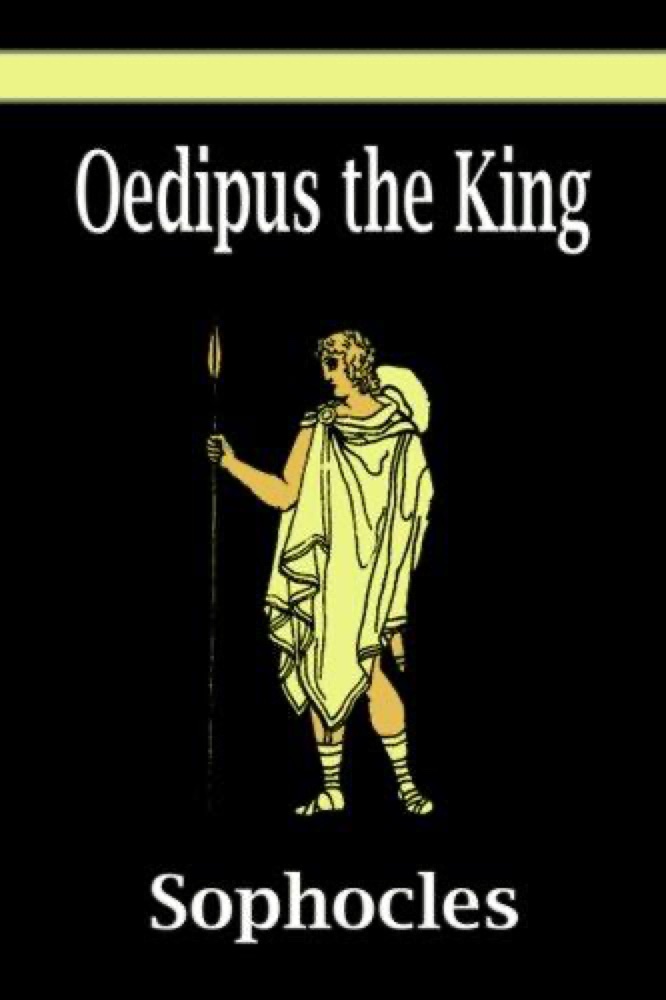
"Oedipus Rex" (also known as "Oedipus Tyrannus" or "Oedipus the King") is an Athenian tragedy by Sophocles, first performed around 429 BC at the Theatre of Dionysus in Athens. Oedipus, the King of Thebes, seeks the cause of a plague ravaging his city and learns from an oracle that it stems from the unpunished murder of the previous king, Laius. Determined to find the killer, Oedipus pursues an investigation that gradually and inexorably reveals a horrifying truth about his own origins and past actions.
At the heart of the play lie the tensions between fate and free will, knowledge and ignorance, and literal and metaphorical blindness. Sophocles builds relentless dramatic irony as Oedipus, confident and resolute, moves closer to a self-knowledge that destroys him, while the blind prophet Tiresias sees the truth that the sighted king cannot. The oracle functions as a self-fulfilling prophecy, yet the play leaves open how far Oedipus is a victim of destiny and how far his own choices drive him toward the outcome.
"Oedipus Rex" has exerted an outsized influence on Western thought and drama. Aristotle, in his "Poetics," treated it as a model of tragic construction, praising its plot and use of reversal and recognition. Centuries later, Sigmund Freud drew on the myth to name the "Oedipus complex," cementing the story's place in modern psychology. The play remains one of the most studied and performed works of the ancient Greek theatrical canon.
Key characters
- OedipusKing of Thebes who investigates a plague and uncovers the truth of his own past
- JocastaQueen of Thebes and wife of Oedipus
- CreonJocasta's brother and Oedipus's brother-in-law
- TiresiasBlind prophet who knows the terrible truth
- The PriestSpokesman for the plague-stricken Thebans who appeal to Oedipus
- The MessengerBrings news that helps unravel Oedipus's origins
- The ShepherdFormer servant of Laius who holds the secret of Oedipus's birth
Book details
- First published
- -429
- Author
- Sophocles
- Genre
- Literature
- Goodreads rating
- 3.73 (242k ratings) →
Series & reading order
- 1 Oedipus Rex
- 2 Oedipus at Colonus
- 3 Antigone
Movie & TV adaptations
- IMDb
- IMDb
- IMDb
If you liked this, read…
- 1AntigoneSophocles' Theban play continuing the fate of Oedipus's family.
- 2Oedipus at ColonusSophocles' account of Oedipus's final days in exile.
- 3AgamemnonAeschylus tragedy exploring fate, guilt, and inherited doom.
- 4MedeaEuripides tragedy driven by prophecy, passion, and catastrophe.
Keep reading
 The Oedipus Cycle: Oedipus Rex/Oedipus at Colonus/Antigone
 Prometheus Bound
Antigone
Prometheus Bound
Antigone
 Ajax
Ajax
 Faust
Faust
 Kushiel's Dart
 Hamlet
 Medea
Medea
 Measure for Measure
 Crime and Punishment
 Emperor of Thorns
 Uncle Tom's Cabin
 Fool's Fate
 King Lear
 Don Quixote
 The Wheel of Osheim
 The Odyssey
 Beyond Good and Evil
 The Count of Monte Cristo
 The Gospel of Loki
 Cuckold
 The Oresteia
 Agamemnon
 The Blinding Knife
 Lord Jim
 The Consolation of Philosophy
 Sacred Hunger
 The Curse of Chalion
 The Broken Eye
 The Complete Essays
 The Once and Future King
 Moby-Dick
 A Tale of Two Cities
 For Whom the Bell Tolls
 Dracula
 Julian
 The Signature of All Things
 Lilith
 The Man in the Iron Mask
 Kushiel's Chosen
 Ecce Homo
 The Idiot
 The Story of My Life
 Daniel Deronda
 Embers
 The Magus
 The Prisoner of Heaven
 Prince Lestat
 Great Expectations
 Fool's Errand
 Golden Fool
 The Green Mile
 The Immoralist
 Omerta
 Iphigenia in Aulis
 Poor Richard's Almanack
 The Poisonwood Bible
 Paradise Lost
 Scaramouche
 Of Human Bondage