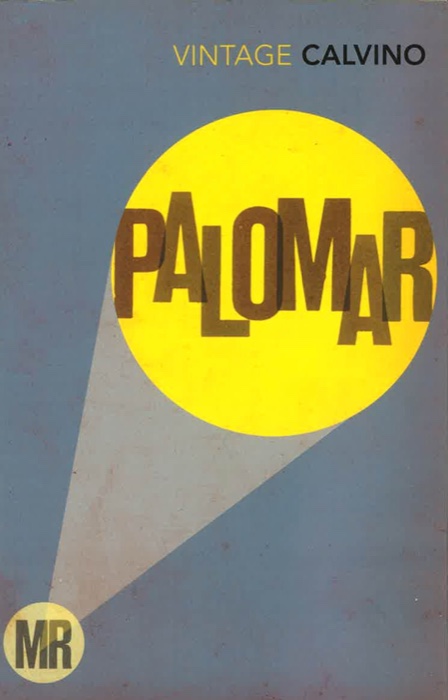
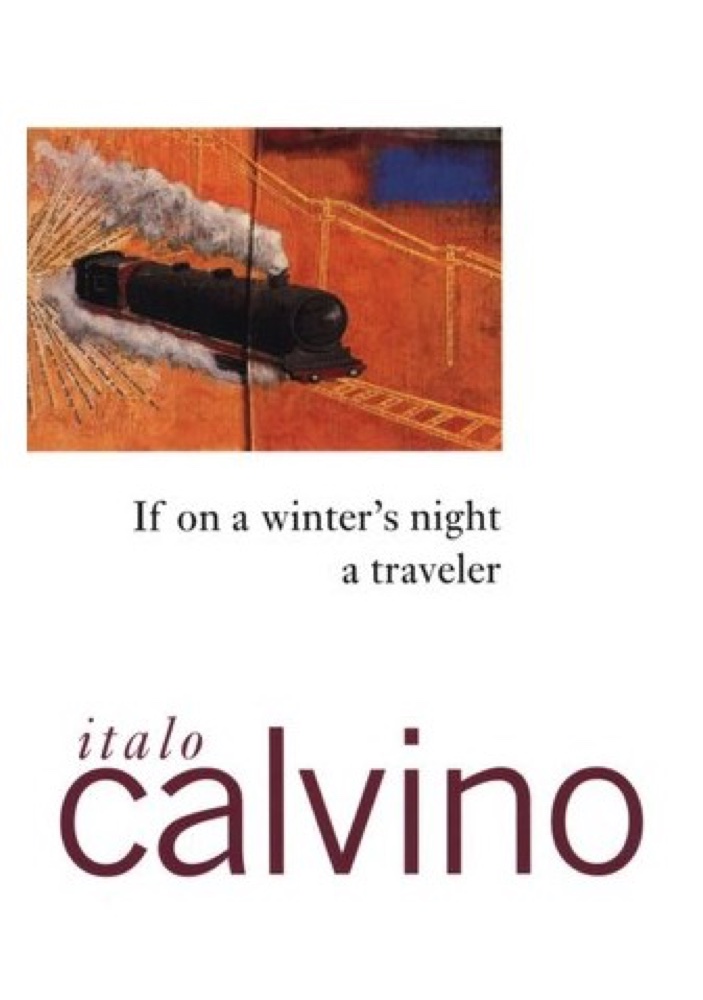
 If on a Winter's Night a Traveler
Quotes from the Book
A person's life consists of a collection of events, the last of which could also change the meaning of the whole, not because it counts more than the previous ones but because once they are included in a life, events are arranged in an order that is not chronological but, rather, corresponds to an inner architecture.
A person, for example, reads in adulthood a book that is important for him, and it makes him say, "How could I have lived without reading it!" and also, "What a pity I did not read it in my youth!" Well, these statements do not have much meaning, especially the second, because after he has read that book, his life becomes the life of a person who has read that book, and it is of little importance whether he read it early or late, because now his life before that reading also assumes a form shaped by that reading.
What remains uncertain, rather, is whether this gain in evidence and (we might as well say it) splendor is due to the slow retreat of the sky, which as it moves away, sinks deeper and deeper into darkness, or whether on the contrary, it is the moon that is coming forward, collecting the previously scattered light and depriving the sky of it, concentrating it all in the round mouth of its funnel.
Contemplating the stars he has become accustomed to considering himself an anonymous and incorporeal dot, almost forgetting that he exists; to deal now with human beings, he cannot help involving himself, and he no longer knows where his self is to be found.
In seguito a una serie di disavventure intellettuali che non meritano d'essere ricordate, il signor Palomar ha deciso che la sua principale attività sarà guardare le cose dal di fuori.
La vita d'una persona consiste in un insieme d'avvenimenti di cui l'ultimo potrebbe anche cambiare il senso di tutto l'insieme, non perché conti di più dei precedenti ma perché inclusi in una vita gli avvenimenti si dispongono in un ordine che non è cronologico, ma risponde a un'architettura interna.
The lawn mower attends with defeaning shudder to the tonsure; a light odor of fresh hay intoxicates the air; the leveled grass finds again a bristling infancy; but the bite of the blades reveals unevenness, mangy clearings, yellow patches.
Il signor Palomar, continuando a osservare le giraffe in corsa, si rende conto d'una complicata armonia che comanda quel trepestio disarmonico, d'una proporzione interna che lega tra loro le più vistose sproporzioni anatomiche, d'una grazia naturale che vien fuori da quelle movenze sgraziate. L'elemento unificatore è dato dalle macchie del pelo, disposte in figure irregolari ma omogenee, dai contorni netti e angolosi; esse si accordano come un esatto equivalente grafico ai movimenti segmentati dell'animale. Più che di macchie si dovrebbe parlare d'un manto nero la cui uniformità è spezzata da nervature chiare che s'aprono seguendo un disegno a losanghe: una discontinuità di pigmentazione che già annuncia la discontinuità dei movimenti. A questa punto la bambina del signor Palomar, che si è stancata da un pezzo di guardare le giraffe, lo trascina verso la grotta dei pinguini. Il signor Palomar, cui i pinguini dànno angoscia, la segue a malincuore...
Or else, given that there is world that side of the window and world this side, perhaps the "I," the ego, is simply the window through which the world looks at the world.
A model is by definition that in which nothing has to be changed, that which works perfectly; whereas reality, as we see clearly, does not work and constantly falls to pieces; so we must force it, more or less roughly, to assume the form of the model.
If the ancients had been able to see it as I see it now, Mr. Palomar thinks, they would have thought they had projected their gaze into the heaven of Plato's ideas, or in the immaterial space of the postulates of Euclid; but instead, thanks to some misdirection or other, this sight has been granted to me, who fear it is too beautiful to be true, too gratifying to my imaginary universe to belong to the real world. But perhaps it is this same distrust of our senses that prevents us from feeling comfortable in the universe. Perhaps the first rule I must impose on myself is this: stick to what I see.
A stone, a figure, a sign, a word reaching us isolated from its context is only that stone, figure, sign, or word: we can try to define them, to describe them as they are, and no more than that; whether, beside the face they show us, they also have a hidden face, is not for us to know. The refusal to comprehend more than what the stones show us is perhaps the only way to evince respect for their secret; trying to guess is a presumption, a betrayal of that true, lost meaning.
If all material were transparent—the ground that supports us, the envelope that sheathes our body—everything would be seen not as a fluttering of impalpable wings but as an inferno of grinding and ingesting. Perhaps at this moment a god of the nether world situated in the center of the earth with his eye that can pierce granite is watching us from below, following the cycle of living and dying, the lacerated victims dissolving in the bellies of their devourers, until they, in their turn, are swallowed by another belly.
The iguana room of the Jardin des Plantes, with its illuminated cases, where dozing reptiles are hidden among branches and rocks and sand of the forest or the desert of their origin, reflects the order of the world, whether it be the reflection on earth of the sky of ideas or the external manifestation of the secret of the nature of creation, of the norm concealed in the depths of that which exists. Is it this atmosphere, more than the reptiles in themselves, that obscurely attracts Mr. Palomar? A damp, soft warmth soaks the air like a sponge; a sharp stink, heavy, rotten, forces him to hold his breath; shadow and light lie stagnant in a motionless mixture of days and nights: are these the sensations of a man who peers out beyond the human? Beyond the glass of every cage there is the world as it was before man, or as it will be, to show that the world of man is not eternal and is not unique.
Le riflessioni che il negozio del macellaio ispira a chi vi entra con la borsa della spesa coinvolgono cognizioni tramandate per secoli in varie branche del sapere: la competenza delle carni e del tagli, il miglior modo di cuocere ogni pezzo, i riti che permettono di placare il rimorso per l'uccisione d'altre vite al fine di nutrire la propria.
The splendor of the salmon canapés radiant with mayonnaise disappears, swallowed by the dark shopping bags of the customers. Certainly every one of these men and women knows exactly what he wants, heads straight for his objective with a decisiveness admitting no hesitancy; and rapidly he dismantles mountains of vol-au-vents, white puddings, cervelats. Mr. Palomar would like to catch in their eyes some reflection of those treasures' spell, but the faces and actions are only impatient and hasty, of people concentrated on themselves, nerves taut, each concerned with what he has and what he does not have. Nobody seems to him worthy of the Pantagruelic glory that unfolds in those cases, on the counters. A greed without joy or youth drives them; and yet a deep, atavistic bond exists between them and those foods, their consubstance, flesh of their flesh.
Watch on YouTube
About Italo Calvino
We have collected 221 quotes from 11 books by Italo Calvino on BookQuoters.
More about the author →More by Italo Calvino
All books by Italo Calvino →
Book details
- Author
- Italo Calvino
- Genre
- Literature
- Goodreads rating
- 3.90 (11k ratings) →
Keep reading
 Ficciones
 Memories, Dreams, Reflections
 Primeval and Other Times
 The Angel Esmeralda
 The Man Without Qualities
 The Island of the Day Before
 The Man in the High Castle
 Pebble in the Sky
 Twilight of the Idols/The Anti-Christ
 The Stories of Vladimir Nabokov
 Manifestoes of Surrealism
 The Star Diaries
 The Toilers of the Sea
 The Empusium
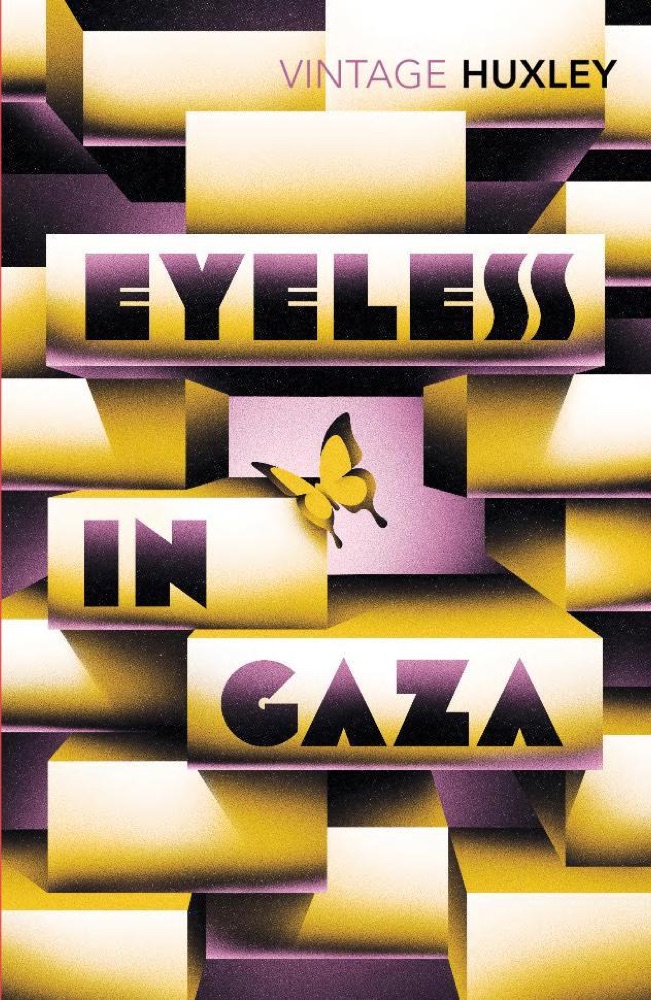 Eyeless in Gaza
 Blue Octavo Notebooks
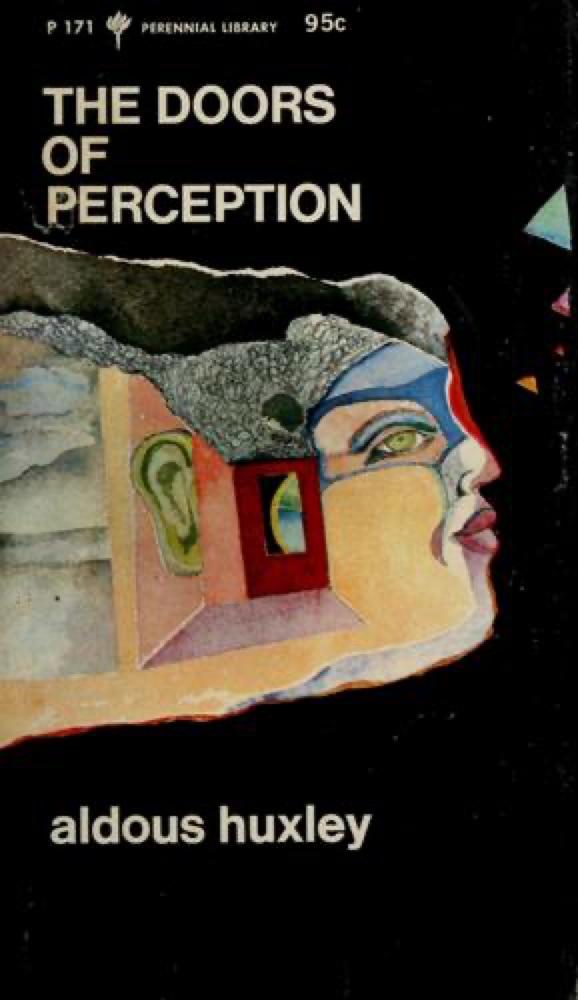 The Doors of Perception
 Libra
Libra
 The Man Who Laughs
 The Aleph and Other Stories
 The Baron in the Trees
 Underworld
 The Moor's Last Sigh
 The Face of Another
 Time Regained
 Saturday
 Swann's Way
 The Double
 The Myth of Sisyphus and Other Essays
 The Dwarf
 The Elementary Particles
 The Castle of Crossed Destinies
 The Charioteer
 Moravagine
 The Leopard
 Soul Mountain
 The Birth of Tragedy
 Sexing the Cherry
 The Doors of Perception & Heaven and Hell
 The History of the Siege of Lisbon
 Illuminations: Essays and Reflections
 The Gone-Away World
 Flights
 The Professor
 In Search of Lost Time
 Zeno's Conscience
 Oblomov
 Phaedo
 Bend Sinister
 Man and His Symbols
 The Volcano Lover: A Romance
 The Magic Mountain
 Think of a Number
 Sexus
Sexus
 The Zürau Aphorisms
 The Robe
 A Room with a View
 Shadow & Claw
 Selected Stories
 The Etched City