
 First Person Singular: Stories
Quotes from the Book
This is why dreams can be such dangerous things: they smolder on like a fire does, and sometimes they consume us completely.
Adversity is like a strong wind. I don't mean just that it holds us back from places we might otherwise go. It also tears away from us all but the things that cannot be torn, so that afterward we see ourselves as we really are, and not merely as we might like to be.
He was like a song I'd heard once in fragments but had been singing in my mind ever since.
Grief is a most peculiar thing; we’re so helpless in the face of it. It’s like a window that will simply open of its own accord. The room grows cold, and we can do nothing but shiver. But it opens a little less each time, and a little less; and one day we wonder what has become of it.
I don't know when we'll see each other again or what the world will be like when we do. We may both have seen many horrible things. But I will think of you every time I need to be reminded that there is beauty and goodness in the world.
I dont think any of us can speak frankly about pain until we are no longer enduring it.
We lead our lives like water flowing down a hill, going more or less in one direction until we splash into something that forces us to find a new course.
Sometimes," he sighed, "I think the things I remember are more real than the things I see.
If you aren't the woman I think you are, then this isn't the world I thought it was.
Hopes are like hair ornaments. Girls want to wear too many of them. When they become old women they look silly wearing even one.
I had to wonder if men were so blinded by beauty that they would feel privileged to live their lives with an actual demon, so long as it was a beautiful demon.
Sometimes we get through adversity only by imagining what the world might be like if our dreams should ever come true.
Can't you see? Every step I have taken, since I was that child on the bridge, has been to bring myself closer to you.
Now I know that our world is no more permanent than a wave rising on the ocean. Whatever our struggles and triumphs, however we may suffer them, all too soon they bleed into a wash, just like watery ink on paper.
If a few minutes of suffering could make me so angry, what would years of it do? Even a stone can be worn down with enough rain.
I never seek to defeat the man I am fighting, " he explained. "I seek to defeat his confidence. A mind troubled by doubt cannot focus on the course to victory. Two men are equals - true equals - only when they both have equal confidence.
Water is powerful. It can wash away earth, put out fire, and even destroy iron.
From this experience, I understood the danger of focusing only on what isn't there. What if I came to the end of my life and realized that I'd spent every day watching for a man who would never come to me? What an unbearable sorrow it would be, to realize I'd never really tasted the things I'd eaten, or seen the places I'd been, because I'd thought of nothing but the Chairman even while my life was drifting away from me. And yet if I drew my thoughts back from him, what life would I have? I would be like a dancer who had practiced since childhood for a performance she would never give.
If you have experienced an evening more exciting than any in your life, you're sad to see it end; and yet you still feel grateful that it happened.
A mind troubled by doubt cannot focus on the course of victory.
We can never flee the misery that is within us.
If you keep your destiny in mind, every moment in life becomes an opportunity for moving closer to it.
Waiting patiently doesn't suit you. I can see you have a great deal of water in your personality. Water never waits. It changes shape and flows around things, and finds the secret paths no one else has thought about. [Mameha]
Of course, a sign doesn't mean anything unless you know how to interpret it.
We none of us find as much kindness in this world as we should.
Was life nothing more than a storm that constantly washed away what had been there only a moment before, and left behind something barren and unrecognizable?
You cannot say to the sun, 'More sun,' or to the rain, 'Less rain.' To a man, geisha can only be half a wife. We are the wives of nightfall. And yet, to learn kindness after so much unkindness, to understand that a little girl with more courage than she knew, would find her prayers were answered, can that not be called happiness? After all these are not the memoirs of an empress, nor of a queen. These are memoirs of another kind.
I could no more have stopped myself from feeling that sadness than you could stop yourself from smelling an apple that has been cut open on the table before you.
Did you know?
- The novel is written as a first-person memoir narrated by the fictional geisha Nitta Sayuri.
- Arthur Golden spent years researching the book and interviewed former geisha, including Mineko Iwasaki.
- Mineko Iwasaki later sued Golden, alleging he broke an agreement to keep her identity anonymous; the case was settled in 2003.
- The book spent years on the New York Times bestseller list and was translated into more than thirty languages.
- It was adapted into a 2005 film directed by Rob Marshall.
- Golden's mother came from the Ochs-Sulzberger family associated with The New York Times.
About Arthur Golden
Arthur Golden (born 1956, Chattanooga, Tennessee) is an American writer who studied Japanese art and history at Harvard, Columbia, and Boston University. He is best known as the author of the bestselling 1997 novel Memoirs of a Geisha, his debut work.
More about the author →About the book
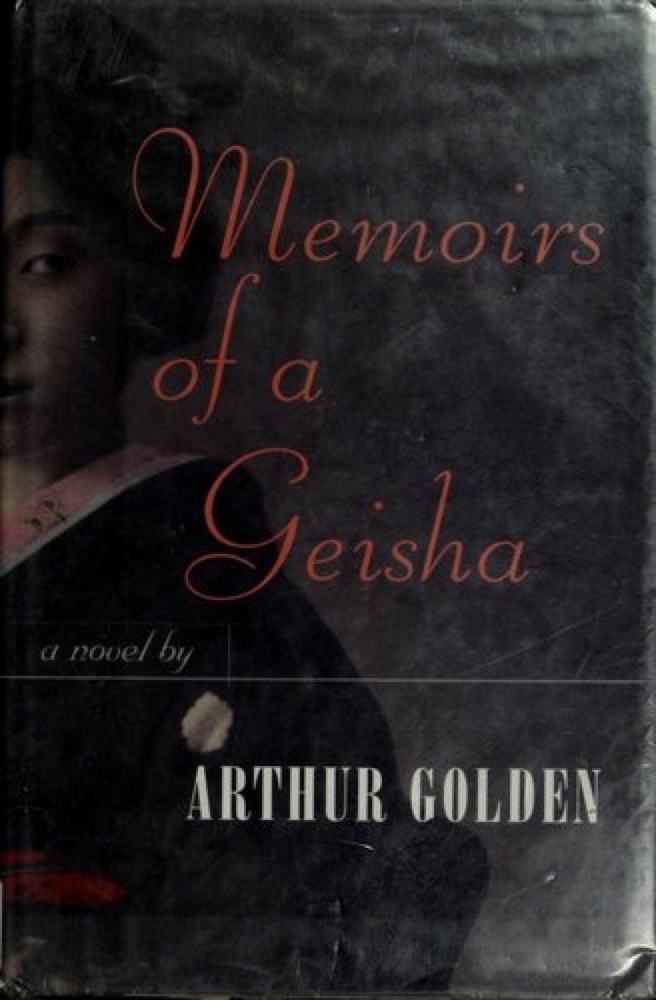
"Memoirs of a Geisha" is a 1997 historical novel by Arthur Golden, framed as the first-person memoir of a woman named Nitta Sayuri. It opens in 1929, when nine-year-old Chiyo Sakamoto, a poor fisherman's daughter with striking gray eyes, is sold away from her seaside village and taken to an okiya (geisha house) in the Gion district of Kyoto. There she endures cruelty and hardship as she is trained, against long odds, to become one of the district's most celebrated geisha.
At its heart the book traces themes of survival, ambition, and transformation, following Sayuri's rise through a rigidly hierarchical world of mentors, rivals, and wealthy patrons before, during, and after the Second World War. Through the rivalry with the cruel Hatsumomo, the guidance of the geisha Mameha, and Sayuri's own quiet longing for the man she calls the Chairman, Golden portrays the geisha not as a courtesan but as an artist and entertainer navigating a life largely shaped by others.
The novel became a major international bestseller, spending years on bestseller lists, selling millions of copies, and being translated into dozens of languages. It was adapted into a 2005 film directed by Rob Marshall. The book also drew controversy: Mineko Iwasaki, a former geisha Golden interviewed and named in his acknowledgments, later sued him, contending he had breached an agreement of anonymity; the suit was settled in 2003.
Key characters
- Chiyo Sakamoto / Nitta SayuriThe narrator; a fisherman's daughter who becomes a celebrated Kyoto geisha
- HatsumomoA beautiful, cruel geisha of the same okiya who becomes Sayuri's rival
- MamehaAn accomplished geisha who becomes Sayuri's mentor and older sister
- The Chairman (Iwamura Ken)A kind businessman for whom Sayuri harbors a lifelong love
- Nobu ToshikazuThe Chairman's scarred business partner who takes an interest in Sayuri
- Mother (Nitta)The stern proprietress of the okiya where Sayuri is raised
- PumpkinA fellow young girl in the okiya and Sayuri's sometime friend and rival
Book details
- First published
- 1997
- Length
- 448 pages
- Reading time
- 27 hours
- Author
- Arthur Golden
- Genre
- Classics
- Goodreads rating
- 4.16 (2.1M ratings) →
Movie & TV adaptations
- IMDb
If you liked this, read…
- 1Snow Flower and the Secret FanLisa See's historical novel of women's bonds and constrained lives in old Asia
- 2The Samurai's GardenGail Tsukiyama's quiet, atmospheric novel set in 1930s Japan
- 3Geisha, a LifeMineko Iwasaki's own memoir, offering a real geisha's account of the world Golden depicted
Keep reading
First Person Singular: Stories
 Dream Count
 Rebecca
 Embers
 The Lake
 The Palace of Illusions
 Swann's Way
 The Valley of Amazement
 Killing Commendatore
 Schoolgirl
 Men Without Women
 The Mermaid Chair
 Animal Dreams
 Lit
Lit
 This Side of Paradise
 The Dead-Tossed Waves
 And the Mountains Echoed
 Little Bee
 My Friends
 Year of Wonders
 The Woman Destroyed
 The Sweet Far Thing
 The Sea, the Sea
 The Likeness
 Goodbye Days
 Extraordinary Means
 Three Comrades
 Q & A
Q & A
 Sexing the Cherry
 A Great and Terrible Beauty
 The Gift of Rain
 The Year of the Flood
 The Dark and Hollow Places
 Like the Flowing River
 The Secret History
 Any Human Heart
 The Dream of Perpetual Motion
 Traveling Mercies: Some Thoughts on Faith
 Fool's Fate
 The Handmaid's Tale
 The Goldfinch
 Hollow City
 The Stone Diaries
 The Hour I First Believed
 Chances Are...
 Beautiful Ugly
 The Chronology of Water
 Ghost Music
 Six Years
 Great House
 Book of a Thousand Days
 Making Faces
 Kitchen
 The Reader
 Enduring Love
 Under the Udala Trees
 The Mill on the Floss
 Finding Parker
 Brideshead Revisited: The Sacred and Profane Memories of Captain Charles Ryder
 The World and Other Places: Stories