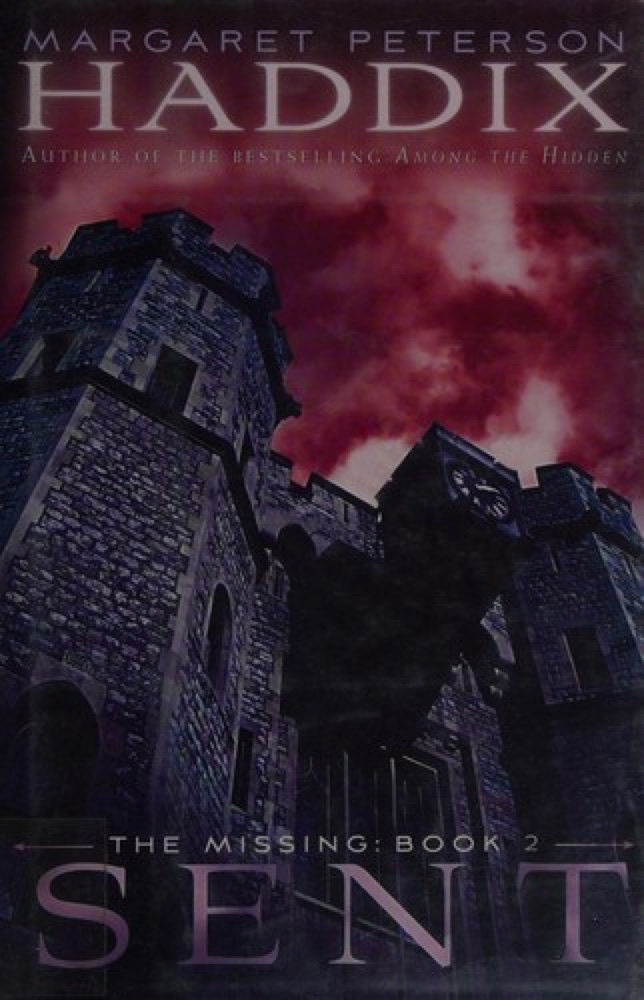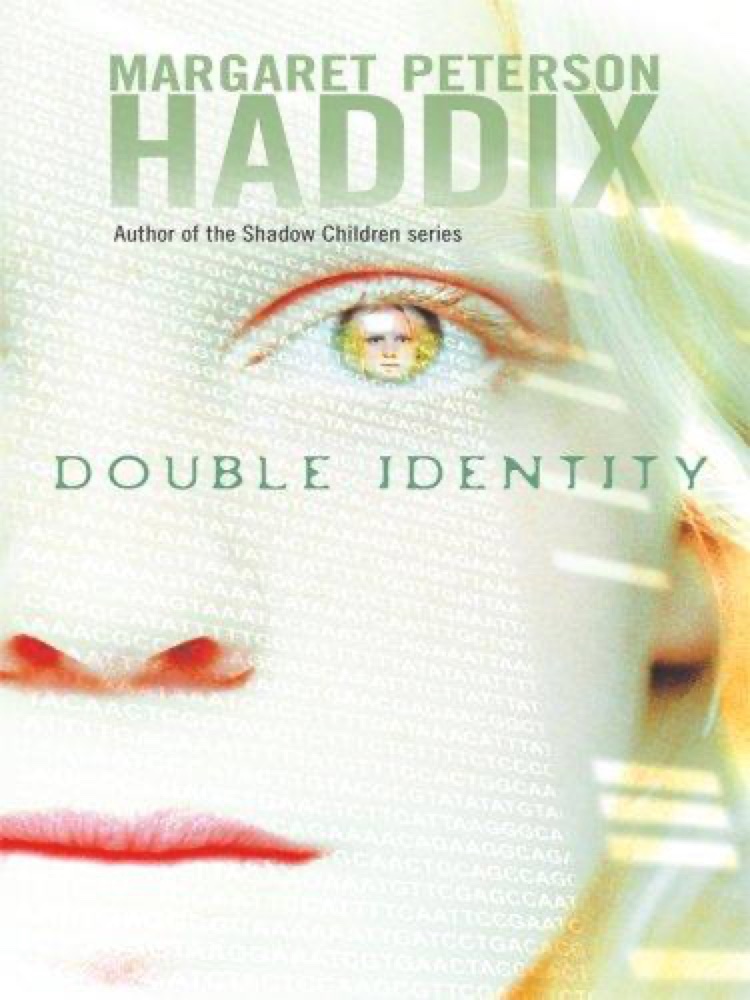

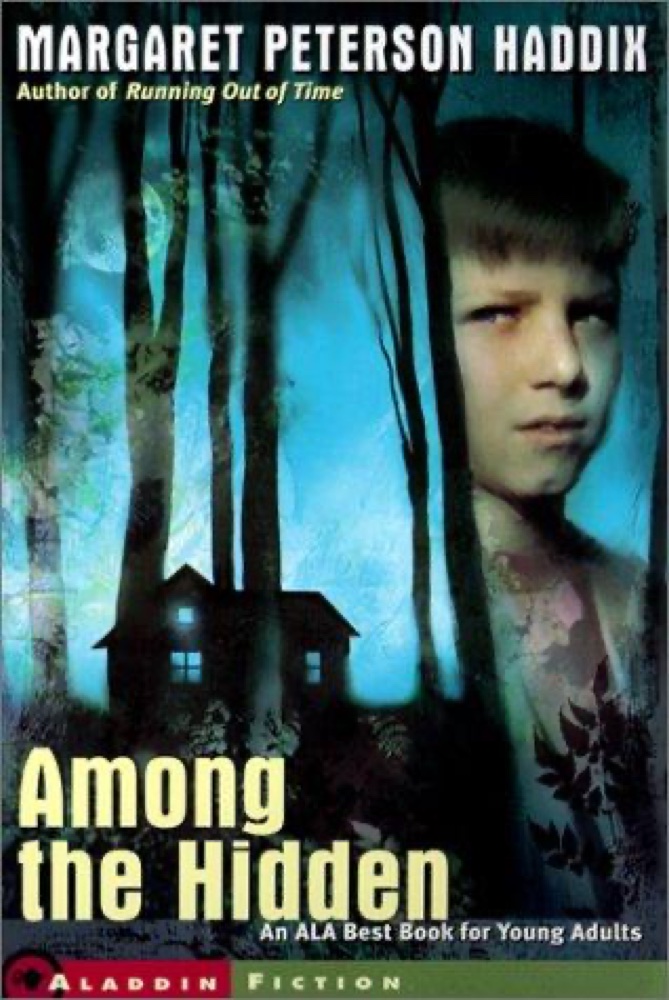
Margaret Peterson Haddix · 218 pages
Rating: (14.3K votes)
“A thousand times today I've started to open my mouth, started to squeak out, "Can you tell me...? But then I'd look into the front seat, at my mother's silent shaking, my father's grim profile, the mournful bags under his eyes, and all the questions I might ask seemed abusive. Assault and battery, a question mark used like a club. My parents are old and fragile. I'd have to heartless to want to hurt them.”
― Margaret Peterson Haddix, quote from Double Identity
“The sudden silence is horrifying, and it seems to catch my mother off guard. A tiny whimper escapes her, the sound amplified in the stillness. Surely, my father hears her now; surely he and I can't go on pretending she isn't crying.”
― Margaret Peterson Haddix, quote from Double Identity
“That porch is a happy-looking place, and my father - burdened, stoop-shouldered, cadaverously thin - doesn't seem to belong on it.”
― Margaret Peterson Haddix, quote from Double Identity
“Unlike my mother, my father does not cry quietly. His wails roll out like a wave of pain, and I scramble to roll up my window. My mother cannot hear that. I cannot bear to hear it myself. I am not used to my father's crying. I've had no time to harden my heart against him.”
― Margaret Peterson Haddix, quote from Double Identity
“Oh, Myr," he chokes out. "I hate having to ask this of you..."
He glances towards the car again, and I crouch down in the shadows, hoping it's too dark for him to see whether the window is open or closed. The woman pats his arm, cradling her hand against his elbow.
"You know I'd do anything for you and Hil," she says. I like her voice. It's throaty and rich.
"You'd do anything?" my father repeats numbly. "Even now? After -?"
"Even now," the woman says firmly.”
― Margaret Peterson Haddix, quote from Double Identity
“He did not know what love was. And he did not know what good it was. But he knew he carried with him, a scabrous spot of rot, of contagion, for which there was no cure. Rage would not cure it. Indulgence made it worse, flamed it, made it grow like cancer. And it had ruined his life. Not now, not in this moment. Long before. The world had seemed a good and liveable place. Brutal, yes. but there was a certain joy in that. The brutality on the football fields, in the tonks, was celebration. Men were maimed without malice, sometimes--often even--in friendship. Lonely, yes. Running was lonely. Sweat was lonely. The pain of preparation was lonely. There's no way to share a pulled hamstring with somebody else. There's no way to farm out part of a twisted knee. But who in god's name ever assumed otherwise? Once you know that it was all bearable”
― Harry Crews, quote from A Feast of Snakes
“No words need be wasted over the fact that all these narcotics are harmful. The question whether even a small quantity of alcohol is harmful or whether the harm results only from the abuse of alcoholic beverages is not at issue here. It is an established fact that alcoholism, cocainism, and morphinism are deadly enemies of life, of health, and of the capacity for work and enjoyment; and a utilitarian must therefore consider them as vices. But this is far from demonstrating that the authorities must interpose to suppress these vices by commercial prohibitions, nor is it by any means evident that such intervention on the part of the government is really capable of suppressing them or that, even if this end could be attained, it might not therewith open up a Pandora's box of other dangers, no less mischievous than alcoholism and morphinism.
Whoever is convinced that indulgence or excessive indulgence in these poisons is pernicious is not hindered from living abstemiously or temperately. This question cannot be treated exclusively in reference to alcoholism, morphinism, cocainism, etc., which all reasonable men acknowledge to be evils. For if the majority of citizens is, in principle, conceded the right to impose its way of life upon a minority, it is impossible to stop at prohibitions against indulgence in alcohol, morphine, cocaine, and similar poisons. Why should not what is valid for these poisons be valid also for nicotine, caffeine, and the like? Why should not the state generally prescribe which foods may be indulged in and which must be avoided because they are injurious? In sports too, many people are prone to carry their indulgence further than their strength will allow. Why should not the state interfere here as well? Few men know how to be temperate in their sexual life, and it seems especially difficult for aging persons to understand that they should cease entirely to indulge in such pleasures or, at least, do so in moderation. Should not the state intervene here too?
More harmful still than all these pleasures, many will say, is the reading of evil literature. Should a press pandering to the lowest instincts of man be allowed to corrupt the soul? Should not the exhibition of pornographic pictures, of obscene plays, in short, of all allurements to immorality, be prohibited? And is not the dissemination of false sociological doctrines just as injurious to men and nations?
Should men be permitted to incite others to civil war and to wars against foreign countries? And should scurrilous lampoons and blasphemous diatribes be allowed to undermine respect for God and the Church?
We see that as soon as we surrender the principle that the state should not interfere in any questions touching on the individual's mode of life, we end by regulating and restricting the latter down to the smallest detail. The personal freedom of the individual is abrogated. He becomes a slave of the community, bound to obey the dictates of the majority. It is hardly necessary to expatiate on the ways in which such powers could be abused by malevolent persons in authority.
The wielding, of powers of this kind even by men imbued with the best of intentions must needs reduce the world to a graveyard of the spirit. All mankind's progress has been achieved as a result of the initiative of a small minority that began to deviate from the ideas and customs of the majority until their example finally moved the others to accept the innovation themselves. To give the majority the right to dictate to the minority what it is to think, to read, and to do is to put a stop to progress once and for all.
Let no one object that the struggle against morphinism and the struggle against
"evil" literature are two quite different things. The only difference between them is that some of the same people who favor the prohibition of the former will not agree to the prohibition of the latter.”
― Ludwig von Mises, quote from Liberalism: The Classical Tradition
“In the midst of a turbulent, often chaotic, life we are called to reach out, with courageous honesty to our innermost self, with relentless care to our fellow human beings, and with increasing prayer to our God.”
― Henri J.M. Nouwen, quote from Reaching Out: The Three Movements of the Spiritual Life
“Gina always believed there was magic in the world. "But it doesn't work in the way it does in fairy tales," she told me. "It doesn't save us. We have to save ourselves.”
― Charles de Lint, quote from The Very Best of Charles de Lint
“Normally he was fond of most things. He was a good-natured and cheerful young man, who liked life and the great majority of those who lived it contemporaneously with himself. He had no enemies and many friends.
But today he had noticed from the moment he had got out of bed that something was amiss with the world. Either he was in the grip of some divine discontent due to the highly developed condition of his soul, or else he had a grouch. One of the two.”
― P.G. Wodehouse, quote from A Damsel in Distress
BookQuoters is a community of passionate readers who enjoy sharing the most meaningful, memorable and interesting quotes from great books. As the world communicates more and more via texts, memes and sound bytes, short but profound quotes from books have become more relevant and important. For some of us a quote becomes a mantra, a goal or a philosophy by which we live. For all of us, quotes are a great way to remember a book and to carry with us the author’s best ideas.
We thoughtfully gather quotes from our favorite books, both classic and current, and choose the ones that are most thought-provoking. Each quote represents a book that is interesting, well written and has potential to enhance the reader’s life. We also accept submissions from our visitors and will select the quotes we feel are most appealing to the BookQuoters community.
Founded in 2023, BookQuoters has quickly become a large and vibrant community of people who share an affinity for books. Books are seen by some as a throwback to a previous world; conversely, gleaning the main ideas of a book via a quote or a quick summary is typical of the Information Age but is a habit disdained by some diehard readers. We feel that we have the best of both worlds at BookQuoters; we read books cover-to-cover but offer you some of the highlights. We hope you’ll join us.