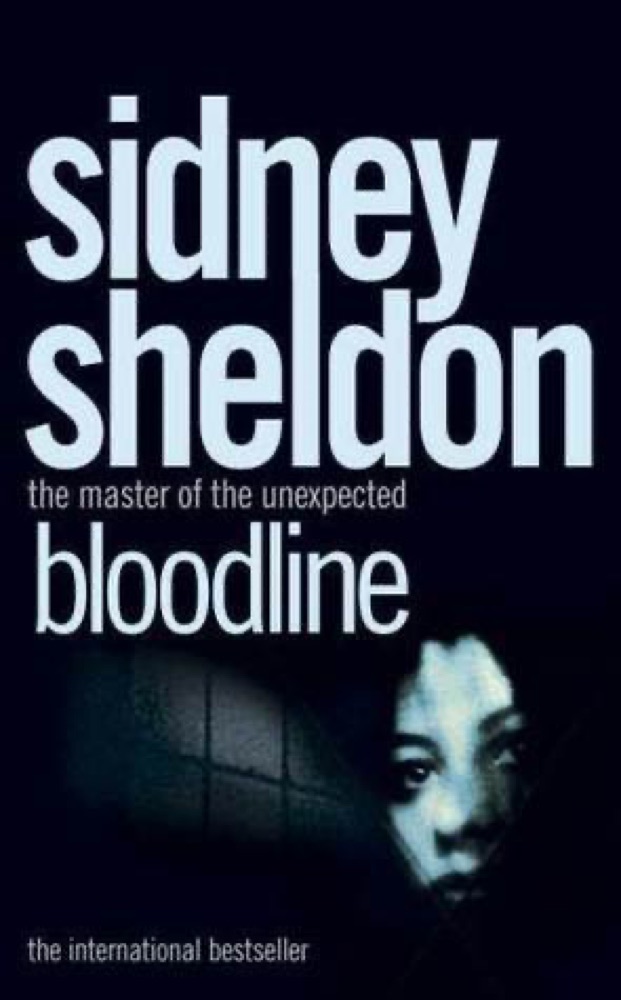

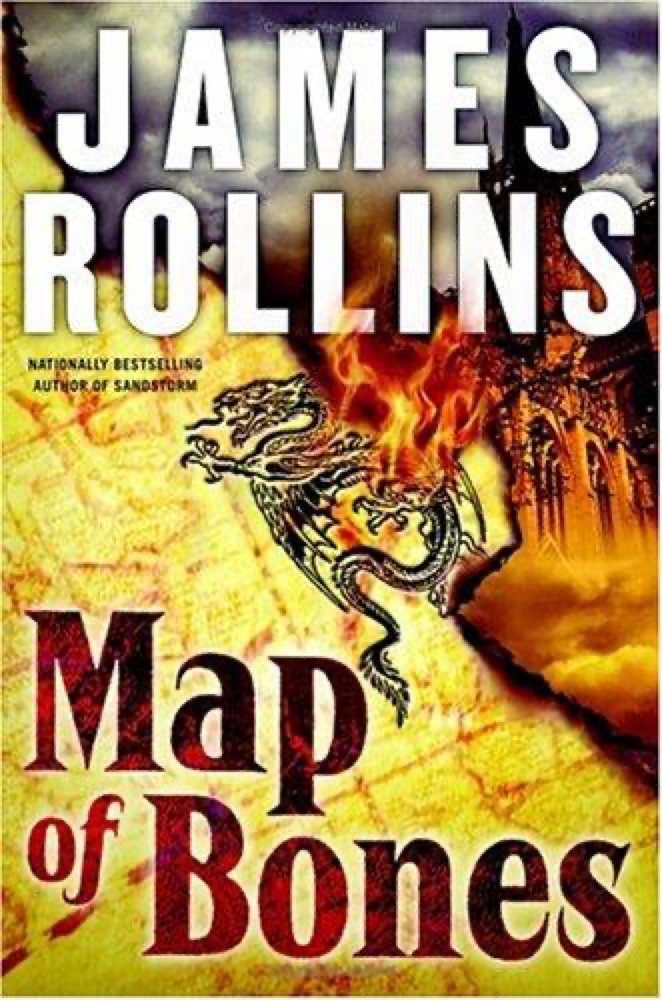
Quotes from Bloodline

James Rollins ·  464 pages

Rating: (16.4K votes)


“The accumulation of grief over one lifetime is more then one heart can bear."Robert explained."Only the heartless could withstand more.Or the very young,those too naive to truly understand loss.”
― James Rollins, quote from Bloodline


“The only one disappointed by the ease of entry was the team’s explosives and demolitions expert. “Aw, man,” Kowalski groused. “I was all set to blow some crap up.”
― James Rollins, quote from Bloodline


“On the existence and threat of modern-day secret societies: We are opposed around the world by a monolithic and ruthless conspiracy that relies primarily on covert means for expanding its sphere of influence . . . building a tightly knit, highly efficient machine that combines military, diplomatic, intelligence, economic, scientific and political operations. —JOHN F. KENNEDY, FROM A SPEECH GIVEN AT THE WALDORF-ASTORIA HOTEL ON APRIL 27, 1961”
― James Rollins, quote from Bloodline


“thousand years ago the average life expectancy of mankind was only twenty-five years. It took another nine hundred years to extend that to thirty-seven. Today the average is seventy-eight. So, in the past hundred years, we more than doubled life expectancy. That”
― James Rollins, quote from Bloodline


About the author

James Rollins
Born place: in Chicago, IL, The United States
See more on GoodReads

Popular quotes

“That being said, I fucking HATE shopping with other people. I insist on doing it alone because it’s the only activity that truly centers me. It’s meditative and personal.”
― quote from White Girl Problems


“Visiting America in the early nineteenth century, Alexis de Tocqueville observd that 'the sects that exist in the United States are innumerable,' and yet 'all sects preach the same moral law in the name of God.' Tocqueville termed religion the first of America's political institutions, which means that it had a profoundly public effect in regulating morality and mores throughout the society. And he saw Christianity as countering the powerful human instincts of selfishness and ambition by holding out an ideal of charity and devotion to the welfare of others.”
― Dinesh D'Souza, quote from What's So Great About Christianity


“When we returned from our jog, several Pirahãs were huddled in a corner of our house, and there was a strong smell of alcohol in the air. Those in the huddle looked conspiratorial and stared at us. Some seemed angry, others ashamed. Others just stared down at something on the ground that they were all surrounding. As I approached, they parted. Pokó’s baby was on the ground, dead. They had forced cachaça down its throat and killed it. “What happened to the baby?” I asked, almost in tears. “It died. It was in pain. It wanted to die,” they replied. I just picked up the baby and held it, with tears now beginning to stream down my cheeks. “Why would they kill a baby?” I asked myself in confusion and grief.”
― Daniel L. Everett, quote from Don't Sleep, There Are Snakes: Life and Language in the Amazonian Jungle


“Interpretation first appears in the culture of late classical antiquity, when the power and credibility of myth had been broken by the “realistic” view of the world introduced by scientific enlightenment. Once the question that haunts post-mythic consciousness—that of the seemliness of religious symbols—had been asked, the ancient texts were, in their pristine form, no longer acceptable. Then interpretation was summoned, to reconcile the ancient texts to “modern” demands. Thus, the Stoics, to accord with their view that the gods had to be moral, allegorized away the rude features of Zeus and his boisterous clan in Homer’s epics. What Homer really designated by the adultery of Zeus with Leto, they explained, was the union between power and wisdom. In the same vein, Philo of Alexandria interpreted the literal historical narratives of the Hebrew Bible as spiritual paradigms. The story of the exodus from Egypt, the wandering in the desert for forty years, and the entry into the promised land, said Philo, was really an allegory of the individual soul’s emancipation, tribulations, and final deliverance. Interpretation thus presupposes a discrepancy between the clear meaning of the text and the demands of (later) readers. It seeks to resolve that discrepancy. The situation is that for some reason a text has become unacceptable; yet it cannot be discarded. Interpretation is a radical strategy for conserving an old text, which is thought too precious to repudiate, by revamping it. The interpreter, without actually erasing or rewriting the text, is altering it. But he can’t admit to doing this. He claims to be only making it intelligible, by disclosing its true meaning. However far the interpreters alter the text (another notorious example is the Rabbinic and Christian “spiritual” interpretations of the clearly erotic Song of Songs), they must claim to be reading off a sense that is already there.”
― Susan Sontag, quote from Against Interpretation and Other Essays


“To be disappointed is to reassess our self and our inner world, and to be called to the larger foundational reality that lies beyond any false self we had only projected upon the outer world.”
― David Whyte, quote from Consolations: The Solace, Nourishment and Underlying Meaning of Everyday Words


Interesting books

THE YEAR OF THE FROG
(7)
THE YEAR OF THE FROG
by Juls Amor
Water Walker
(1.9K)
Water Walker
by Ted Dekker
Enlightenment
(15)
Enlightenment
by Kim Cormack
Jukebox: a stylish London crime novel
(49)
Jukebox: a stylish L...
by Saira Viola
Selling the Invisible: A Field Guide to Modern Marketing
(7.5K)
Selling the Invisibl...
by Harry Beckwith
Fading Away
(39)
Fading Away
by Dannielle Wicks

About BookQuoters

BookQuoters is a community of passionate readers who enjoy sharing the most meaningful, memorable and interesting quotes from great books. As the world communicates more and more via texts, memes and sound bytes, short but profound quotes from books have become more relevant and important. For some of us a quote becomes a mantra, a goal or a philosophy by which we live. For all of us, quotes are a great way to remember a book and to carry with us the author’s best ideas.

We thoughtfully gather quotes from our favorite books, both classic and current, and choose the ones that are most thought-provoking. Each quote represents a book that is interesting, well written and has potential to enhance the reader’s life. We also accept submissions from our visitors and will select the quotes we feel are most appealing to the BookQuoters community.

Founded in 2023, BookQuoters has quickly become a large and vibrant community of people who share an affinity for books. Books are seen by some as a throwback to a previous world; conversely, gleaning the main ideas of a book via a quote or a quick summary is typical of the Information Age but is a habit disdained by some diehard readers. We feel that we have the best of both worlds at BookQuoters; we read books cover-to-cover but offer you some of the highlights. We hope you’ll join us.