

“What?" she asked.
"You're beautiful."
She rolled her eyes. "Flattery will get you laid."
"I sure hope so.”
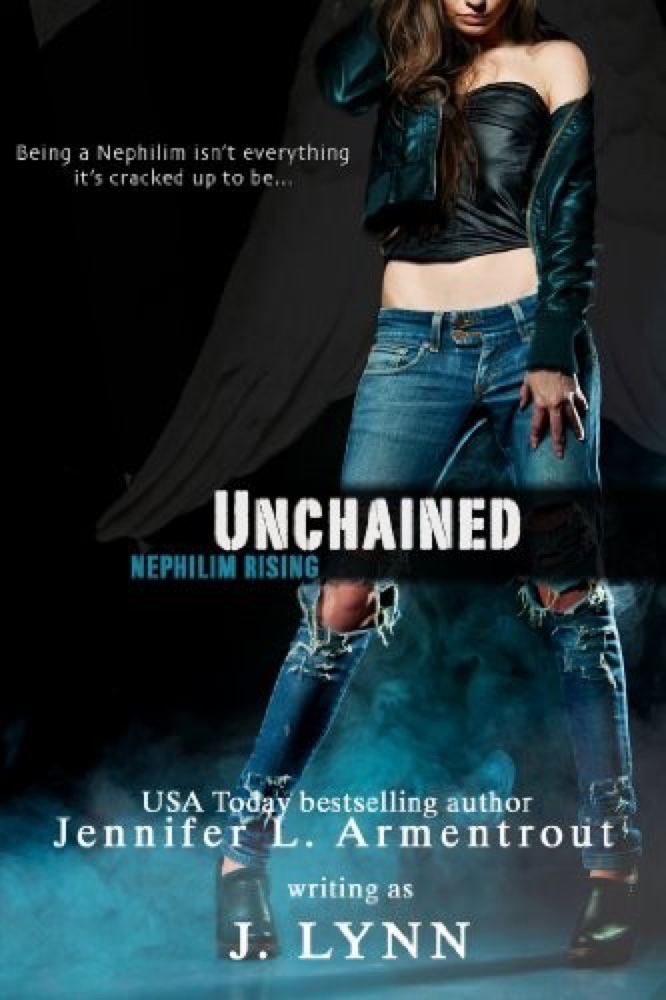
― J. Lynn, quote from Unchained
“It was like a date - a weird, twisted date that would probably end with them killing something”
― J. Lynn, quote from Unchained
“Holy f*ck, everything they'd said was true.”
― J. Lynn, quote from Unchained
“I see you as Lily. I see you for who you are, even though you don't.” -Julian”
― J. Lynn, quote from Unchained
“I’m going to start from the beginning. All I ask is that you don’t interrupt and you silently pray Luke returns with a milkshake quickly, because they make me happy. And you want to keep me happy.” -Lily”
― J. Lynn, quote from Unchained
“Men are not content with a simple life: they are acquisitive, ambitious, competitive, and jealous; they soon tire of what they have, and pine for what they have not; and they seldom desire anything unless it belongs to others.”
― Will Durant, quote from The Story of Philosophy: The Lives and Opinions of the World's Greatest Philosophers
“((لكني آمل أن تستخدمي عقلك. استخدمي عقلك، لا تتشتتي، فبمجرد أن ترتكبي ذلك الخطأ – أن تتشتتي بسبب رجل – لن تعود حياتك ملكك، ستكونين أنت من يتحمل العناء، المرأة دائمًا هي من تتحمل العناء.))”
― Alice Munro, quote from Lives of Girls and Women
“The Mongols loved competitions of all sorts, and they organized debates among rival religions the same way they organized wrestling matches. It began on a specific date with a panel of judges to oversee it. In this case Mongke Khan ordered them to debate before three judges: a Christian, a Muslim, and a Buddhist. A large audience assembled to watch the affair, which began with great seriousness and formality. An official lay down the strict rules by which Mongke wanted the debate to proceed: on pain of death “no one shall dare to speak words of contention.” Rubruck and the other Christians joined together in one team with the Muslims in an effort to refute the Buddhist doctrines. As these men gathered together in all their robes and regalia in the tents on the dusty plains of Mongolia, they were doing something that no other set of scholars or theologians had ever done in history. It is doubtful that representatives of so many types of Christianity had come to a single meeting, and certainly they had not debated, as equals, with representatives of the various Muslim and Buddhist faiths. The religious scholars had to compete on the basis of their beliefs and ideas, using no weapons or the authority of any ruler or army behind them. They could use only words and logic to test the ability of their ideas to persuade. In the initial round, Rubruck faced a Buddhist from North China who began by asking how the world was made and what happened to the soul after death. Rubruck countered that the Buddhist monk was asking the wrong questions; the first issue should be about God from whom all things flow. The umpires awarded the first points to Rubruck. Their debate ranged back and forth over the topics of evil versus good, God’s nature, what happens to the souls of animals, the existence of reincarnation, and whether God had created evil. As they debated, the clerics formed shifting coalitions among the various religions according to the topic. Between each round of wrestling, Mongol athletes would drink fermented mare’s milk; in keeping with that tradition, after each round of the debate, the learned men paused to drink deeply in preparation for the next match. No side seemed to convince the other of anything. Finally, as the effects of the alcohol became stronger, the Christians gave up trying to persuade anyone with logical arguments, and resorted to singing. The Muslims, who did not sing, responded by loudly reciting the Koran in an effort to drown out the Christians, and the Buddhists retreated into silent meditation. At the end of the debate, unable to convert or kill one another, they concluded the way most Mongol celebrations concluded, with everyone simply too drunk to continue.”
― Jack Weatherford, quote from Genghis Khan and the Making of the Modern World
“At the happy ending of the Tempest, Prospero brings the kind back togeter with his son, and finds Miranda's true love and punishes the bad duke and frees Ariel and becomes a duke himself again. Everyone - except Caliban - is happy, and everyone is forgiven, and everyone is fine, and they all sail away on calm seas. Happy endings.
That's how it is in Shakespeare.
But Shakespeare was wrong.
Sometimes there isn't a Prospero to make everything fine again.
And sometimes the quality of mercy is strained.”
― Gary D. Schmidt, quote from Lizzie Bright and the Buckminster Boy
“Knowledge is freedom and with freedom comes understanding.”
― Julie Garwood, quote from For the Roses
BookQuoters is a community of passionate readers who enjoy sharing the most meaningful, memorable and interesting quotes from great books. As the world communicates more and more via texts, memes and sound bytes, short but profound quotes from books have become more relevant and important. For some of us a quote becomes a mantra, a goal or a philosophy by which we live. For all of us, quotes are a great way to remember a book and to carry with us the author’s best ideas.
We thoughtfully gather quotes from our favorite books, both classic and current, and choose the ones that are most thought-provoking. Each quote represents a book that is interesting, well written and has potential to enhance the reader’s life. We also accept submissions from our visitors and will select the quotes we feel are most appealing to the BookQuoters community.
Founded in 2023, BookQuoters has quickly become a large and vibrant community of people who share an affinity for books. Books are seen by some as a throwback to a previous world; conversely, gleaning the main ideas of a book via a quote or a quick summary is typical of the Information Age but is a habit disdained by some diehard readers. We feel that we have the best of both worlds at BookQuoters; we read books cover-to-cover but offer you some of the highlights. We hope you’ll join us.