 The Collected Stories
Quotes from the Book
Spring was moving in the air above and in the earth below and around him, penetrating even his dark and lowly little house with its spirit of divine discontent and longing.
Believe me, my young friend, there is nothing - absolutely nothing - half so much worth doing as simply messing about in boats.
All this he saw, for one moment breathless and intense, vivid on the morning sky; and still, as he looked, he lived; and still, as he lived, he wondered.
After all, the best part of a holiday is perhaps not so much to be resting yourself, as to see all the other fellows busy working.
Here today, up and off to somewhere else tomorrow! Travel, change, interest, excitement! The whole world before you, and a horizon that's always changing!
But Mole stood still a moment, held in thought. As one wakened suddenly from a beautiful dream, who struggles to recall it, but can recapture nothing but a dim sense of the beauty in it, the beauty! Till that, too, fades away in its turn, and the dreamer bitterly accepts the hard, cold waking and all its penalties.
When the girl returned, some hours later, she carried a tray, with a cup of fragrant tea steaming on it; and a plate piled up with very hot buttered toast, cut thick, very brown on both sides, with the butter running through the holes in great golden drops, like honey from the honeycomb. The smell of that buttered toast simply talked to Toad, and with no uncertain voice; talked of warm kitchens, of breakfasts on bright frosty mornings, of cosy parlour firesides on winter evenings, when one's ramble was over and slippered feet were propped on the fender, of the purring of contented cats, and the twitter of sleepy canaries.
Home! That was what they meant, those caressing appeals, Those soft touches wafted through the air, those invisible little hands pulling and tugging, all one way.
No animal, according to the rules of animal-etiquette, is ever expected to do anything strenuous, or heroic, or even moderately active during the off-season of winter.
He saw clearly how plain and simple - how narrow, even - it all was; but clearly, too, how much it all meant to him, and the special value of some such anchorage in one's existence. He did not at all want to abandon the new life and its splendid spaces, to turn his back on sun and air and all they offered him and creep home and stay there; the upper world was all too strong, it called to him still, even down there, and he knew he must return to the larger stage. But it was good to think he had this to come back to, this place which was all his own, these things which were so glad to see him again and could always be counted upon for the same simple welcome.
Badger hates Society, and invitations, and dinner, and all that sort of thing.
Beyond the Wild Wood comes the wild world,"said the Rat."And that's something that doesn't matter, either to you or to me. I've never been there, and I'm never going' nor you either, if you've got any sense at all.
The Mole was bewitched, entranced, fascinated. By the side of the river he trotted as one trots, when very small, by the side of a man who holds one spellbound by exciting stories; and when tired at last, he sat on the bank, while the river still chattered on to him, a babbling procession of the best stories in the world, sent from the heart of the earth to be told at last to the insatiable sea.
There’s nothing––absolutely nothing––half so much worth doing as messing about in boats.
Secrets had an immense attraction to him, because he never could keep one, and he enjoyed the sort of unhallowed thrill he experienced when he went and told another animal, after having faithfully promised not to.
when tired at last, he sat on the bank, while the river still chattered on to him, a babbling procession of the best stories in the world, sent from the heart of the earth to be told at last to the insatiable sea.
It's not the sort of night for bed, anyhow.
Toad, with no one to check his statements or to criticize in an unfriendly spirit, rather let himself go. Indeed, much that he related belonged more properly to the category of what-might-have-happened-had-I-only-thought-of-it-in-time-instead-of-ten-minutes-afterwards. Those are always the best and raciest adventures; and why should they not be truly ours, as much as the somewhat inadequate things that really come off?
It'll be all right, my fine fellow," said the Otter. "I'm coming along with you, and I know every path blindfold; and if there's a head that needs to be punched, you can confidently rely upon me to punch it.
Everything seems asleep, and yet going on all the time. It is a goodly life that you lead, friend; no doubt the best in the world, if only you are strong enough to lead it!
There seemed to be no end to this wood, and no beginning, and no difference in it, and, worse of all, no way out
It seemed a place where heroes could fitly feast after victory, where weary harvesters could line up in scores along the table and keep their Harvest Home with mirth and song, or where two or three friends of simple tastes could sit about as they pleased and eat and smoke and talk in comfort and contentment.
It's a goodly life that you lead, friends; no doubt the best in the world, if only you are strong enough to lead it!' 'Yes, it's the life, the only life, to live,' responded the Water Rat dreamily, and without his usual whole-hearted conviction. 'I did not exactly say that,' the stranger replied cautiously, 'but no doubt it's the best. I've tried it, and I know. And because I've tried it - six months of it - and know it's the best, here I am, footsore and hungry, tramping away from it, tramping southward, following the old call, back to the old life, the life which is mine and which will not let me go.
We shall creep out quietly into the butler's pantry--" cried the Mole. "--with out pistols and swords and sticks--" shouted ther Rat. "--and rush in upon them," said Badger. "--and whack 'em, and whack 'em, and whack 'em!" cried the Toad in ecstasy, running round and round the room, and jumping over the chairs.
Then suddenly the Mole felt a great Awe fall upon him, an awe that turned his muscles to water, bowed his head, and rooted his feet to the ground. It was no panic terror - indeed he felt wonderfully at peace and happy - but it was an awe that smote and held him and, without seeing, he knew it could only mean that some august presence was very, very near.
The smell of that buttered toast simply spoke to Toad, and with no uncertain voice; talked of warm kitchens, of breakfasts on bright frosty mornings, of cozy parlour firesides on winter evenings, when one's ramble was over and slippered feet were propped on the fender; of the purring of contented cats, and the twitter of sleepy canaries.
The past was like a bad dream; the future was all happy holiday as I moved Southwards week by week, easily, lazily, lingering as long as I dared, but always heeding the call!
For my life, I confess to you, feels to me today somewhat narrow and circumscribed.
Did you know?
- The stories began as bedtime tales and letters Kenneth Grahame wrote for his son Alastair, nicknamed 'Mouse'.
- The first edition, published by Methuen in 1908, carried only a frontispiece by W. Graham Robertson, a friend of Grahame.
- A. A. Milne adapted part of the book into the stage play Toad of Toad Hall in 1929.
- The book ranked No. 16 in the BBC's 2003 The Big Read survey of Britain's best-loved novels.
- The god Pan appears in the chapter 'The Piper at the Gates of Dawn', the only overtly mystical episode in the book.
- Grahame retired early from his post as Secretary of the Bank of England before writing the novel.
About Kenneth Grahame
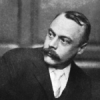
Kenneth Grahame (1859-1932) was a British author who worked for many years as Secretary of the Bank of England before retiring to write. He is best remembered for The Wind in the Willows, which grew out of stories he told his young son.
More about the author →About the book
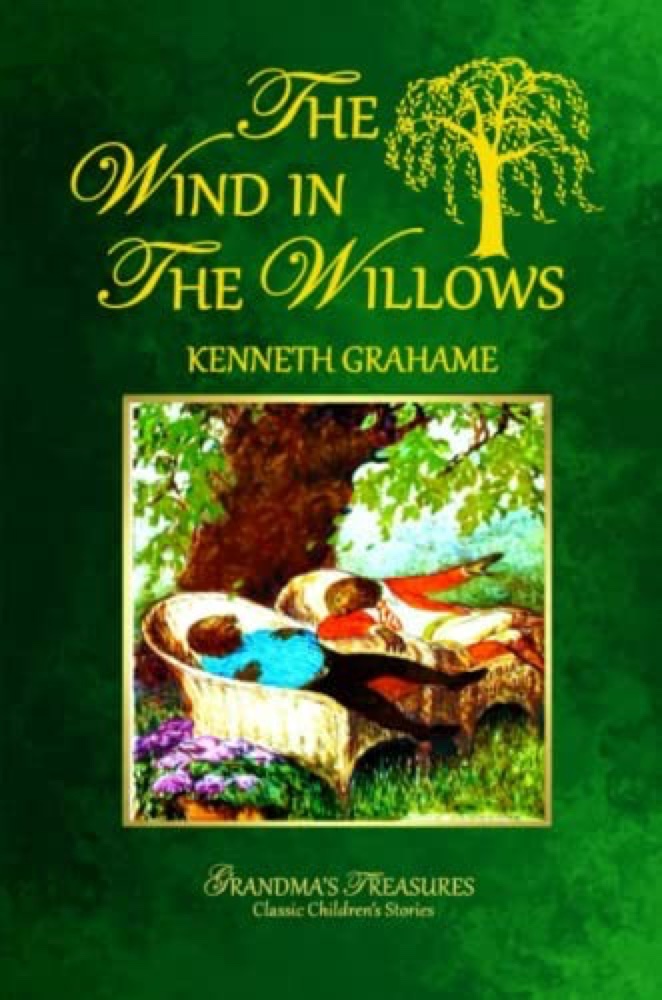
The Wind in the Willows is a 1908 children's novel by the British writer Kenneth Grahame, set among the animals of an English riverbank and its surrounding countryside. It follows the home-loving Mole, who abandons his spring-cleaning to discover the wider world, and his friendship with the easygoing Water Rat, the wise Badger, and above all the wealthy, impulsive Mr. Toad. Much of the story turns on Toad's reckless obsession with motorcars, which lands him in trouble, and on his friends' efforts to reform him and reclaim Toad Hall after it is seized by invaders from the Wild Wood.
At heart the book is a celebration of friendship, home, and the gentle rhythms of the natural world, contrasting the comfort of the riverbank with the dangers of the Wild Wood and the temptations of the open road. Its episodic chapters blend comic adventure with lyrical, almost mystical passages, most famously the pastoral interlude in which the god Pan appears. Grahame drew on bedtime stories he first told his young son, and the countryside he loved shapes the book's affectionate, unhurried tone.
Though early reviews were mixed, the novel became a lasting bestseller and one of the most beloved classics of English children's literature. Its characters, especially the boastful Mr. Toad, entered popular culture, inspiring stage works such as A. A. Milne's Toad of Toad Hall and numerous film and television adaptations. It has remained continuously in print for more than a century and regularly appears on lists of the greatest children's books.
Key characters
- MoleTimid, home-loving creature who ventures out into the wider world
- Rat (Ratty)Charming water rat who loves the river and befriends Mole
- Mr. ToadWealthy, boastful, impulsive owner of Toad Hall, obsessed with motorcars
- BadgerWise, gruff elder who acts as a voice of reason
- OtterSociable riverbank neighbor
Book details
- First published
- 1908
- Length
- 302 pages
- Reading time
- 4 hours
- Author
- Kenneth Grahame
- Genre
- Classics
- Goodreads rating
- 4.02 (246k ratings) →
- First line
- “The Mole had been working very hard all the morning, spring-cleaning his little home.”
Movie & TV adaptations
- IMDb
- IMDb
- IMDb
If you liked this, read…
- 1Watership DownAnother beloved English novel of animal characters and the countryside
- 2Winnie-the-PoohGentle, episodic tales of animal friends by A. A. Milne, who also adapted this book
- 3The Tale of Peter RabbitClassic English children's story of anthropomorphic animals in a rural setting
Keep reading
The Collected Stories
 Roughing It
 The Illustrated Man
 Out of the Silent Planet
 Dombey and Son
 O Pioneers!
 Jacob's Room
 Provinces of Night
 On the Road
 The Sword in the Stone
 Little, Big
 The Magician's Nephew
 Bleak House
 The Adventures of Tom Sawyer
 Independent People
 The Grass Harp, Including A Tree of Night and Other Stories
 The Wind Through the Keyhole
 Under the Volcano
 Peace Like a River
 Amy Snow
 Light in August
 Prodigal Summer
 The People in the Trees
 Winter's Tale
 The Waste Lands
 Weaveworld
 Fathers and Sons
 Nation
 Messenger
 Something Wicked This Way Comes
 The Silver Chair
 The Pox Party
 The Collected Poems of Emily Dickinson
 The Shipping News
 Bag of Bones
 My Family and Other Animals
 The Sea, the Sea
 Dhalgren
 Lonesome Dove
 Our Mutual Friend
 Birdsong
 The Complete Stories and Poems
 Out of Oz
 The Stories of John Cheever
 Lonesome Traveler
 A Passage to India
 Look Homeward, Angel
 The Merry Adventures of Robin Hood
 Emily's Quest
 The 13½ Lives of Captain Bluebear
 The Blue Castle
 Through the Looking Glass
 The Dragonbone Chair
 Omensetter's Luck
 Bradbury Stories: 100 of His Most Celebrated Tales
 Miss Lonelyhearts
 The Voyage Out
 Longbourn
 20th Century Ghosts
 Victory