
 The Time Machine
Quotes from the Book
No one would have believed in the last years of the nineteenth century that this world was being watched keenly and closely by intelligences greater than man's and yet as mortal as his own; that as men busied themselves about their various concerns they were scrutinised and studied, perhaps almost as narrowly as a man with a microscope might scrutinise the transient creatures that swarm and multiply in a drop of water.
Perhaps I am a man of exceptional moods. I do not know how far my experience is common. At times I suffer from the strangest sense of detachment from myself and the world about me; I seem to watch it all from the outside, from somewhere inconceivably remote, out of time, out of space, out of the stress and tragedy of it all. This feeling was very strong upon me that night. Here was another side to my dream.
This isn't a war," said the artilleryman. "It never was a war, any more than there's war between man and ants.
We must remember what ruthless and utter destruction our own species has wrought, not only upon animals, such as vanished bison and the dodo, but upon its own inferior races. The Tasmanians . . . were entirely swept out of existence in a war of extermination waged by European immigrants, in the space if fifty years. Are we such apostles of mercy as to complain if the Martians warred in the same spirit?
By the toll of a billion deaths man has bought his birthright of the earth, and it is his against all comers; it would still be his were the Martians ten times as mighty as they are. For neither do men live nor die in vain.
We can't have any weak or silly. Life is real again, and the useless and cumbersome and mischievous have to die. They ought to die. They ought to be willing to die. It's a sort of disloyalty, after all, to live and taint the race.
Yet across the gulf of space, minds that are to our minds as ours are to those of the beasts that perish, intellects vast and cool and unsympathetic, regarded this earth with envious eyes, and slowly and surely drew their plans against us.
They haven't any spirit in them - no proud dreams and no proud lusts; and a man who hasn't one or the other-Lord! What is he but funk and precautions.
Few people realise the immensity of vacancy in which the dust of the material universe swims.
With wine and food, the confidence of my own table, and the necessity of reassuring my wife, I grew by insensible degrees courageous and secure.
The man was running away with the rest, and selling his papers for a shilling each as he ran—a grotesque mingling of profit and panic.
We will peck them to death to-morrow, my dear.
So some respectable dodo in the Mauritius might have lorded it in his nest, and discussed the arrival of that shipful of pitiless sailors in want of animal food. “We will peck them to death tomorrow, my dear.
Perhaps I am a man of exceptional moods. I do not know how far my experience is common. At times I suffer from the strangest sense of detachment from myself and the world about me; I seem to watch it all from the outside, from somewhere inconceivably remote, out of time, out of space, out of the stress and tragedy of it all.
For a time I believed that mankind had been swept out of existence, and that I stood there alone, the last man left alive.
Suddenly, like a thing falling upon me from without, came fear.
In the next place, wonderful as it seems in a sexual world, the Martians were absolutely without sex, and therefore without any of the tumultuous emotions that arise...
I was a battleground of fear and curiosity.
Life is real again, and the useless and cumbersome and mischievous have to die.
we should remember how repulsive our carnivorous habits would seem to an intelligent rabbit.
A shell in the pit," said I, "if the worst comes to worst will kill them all." The intense excitement of the events had no doubt left my perceptive powers in a state of erethism. I remember that dinner table with extraordinary vividness even now. My dear wife's sweet anxious face peering at me from under the pink lampshade, the white cloth with it silver and glass table furniture—for in those days even philosophical writers had luxuries—the crimson-purple wine in my glass, are photographically distinct. At the end of it I sat, tempering nuts with a cigarette, regretting Ogilvy's rashness, and denouncing the shortsighted timidity of the Martians. So some respectable dodo in the Mauritius might have lorded it in his nest, and discussed the arrival of that shipful of pitiless sailors in want of animal food. "We will peck them to death tomorrow, my dear.
For that moment I touched an emotion beyond the common range of men, yet one the poor brutes we dominate know only too well. I felt as a rabbit might feel returning to his burrow, and suddenly confronted by the work of a dozen busy navvies digging the foundations of a house. I felt the first inkling of a thing that presently grew quite clear in my mind, that oppressed me for many days, a sense of dethronement, a persuasion that I was no longer master, but an animal among animals; under the Martian heel.
I went to a box room at the top of the house and locked myself in, in order to be alone with my aching miseries.
No one would have believed in the last years of the nineteenth century that this world was being watched keenly and closely by intelligences greater than man’s and yet as mortal as his own; that as men busied themselves about their various concerns they were scrutinised and studied, perhaps almost as narrowly as a man with a microscope might scrutinise the transient creatures that swarm and multiply in a drop of water. With infinite complacency men went to and fro over this globe about their little affairs, serene in their assurance of their empire over matter. It is possible that the infusoria under the microscope do the same. No one gave a thought to the older worlds of space as sources of human danger, or thought of them only to dismiss the idea of life upon them as impossible or improbable. It is curious to recall some of the mental habits of those departed days. At most terrestrial men fancied there might be other men upon Mars, perhaps inferior to themselves and ready to welcome a missionary enterprise. Yet across the gulf of space, minds that are to our minds as ours are to those of the beasts that perish, intellects vast and cool and unsympathetic, regarded this earth with envious eyes, and slowly and surely drew their plans against us. And early in the twentieth century came the great disillusionment
Now whenever things are so that a lot of people feel they ought to be doing something, the weak, and those who go weak with a lot of complicated thinking, always make for a sort of do-nothing religion, very pious and superior, and submit to persecution and the will of the Lord.
Yet so vain is man, and so blinded by his vanity,
It's just men and ants. There's the ants builds their cities,live their lives, have wars, revolutions, until men want them out of the way, and then they go out of the way. That's what we are now _ just ants.
With infinite complacency men went to and fro over this globe about their little affairs, serene in their assurance of their empire over matter.
Did you know?
- The novel was first serialized in 1897 in Pearson's Magazine in the UK and in Cosmopolitan in the US before appearing as a book in 1898.
- Much of the invasion is set in real locations around Woking, Surrey, where Wells was living while he wrote it.
- The Martians are ultimately defeated by Earth's bacteria, to which they have no immunity, rather than by human weapons.
- Orson Welles's 1938 radio adaptation, presented as a series of live news bulletins, reportedly alarmed some listeners.
- Wells later described the book as another assault on human self-satisfaction.
About H.G. Wells
H. G. Wells (1866-1946) was an English writer often called a father of science fiction, whose early "scientific romances" include The Time Machine, The Invisible Man, and The Island of Doctor Moreau. He was also a prolific journalist, historian, and social commentator.
More about the author →More by H.G. Wells
All books by H.G. Wells →

About the book
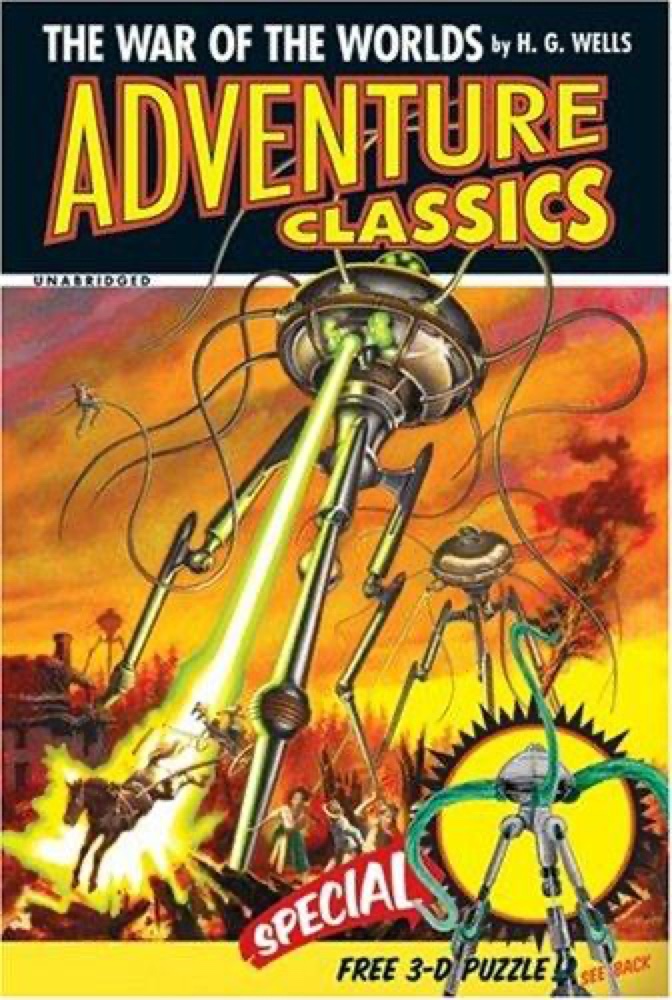
"The War of the Worlds" is H. G. Wells's account of a Martian invasion of Victorian England, told by an unnamed narrator who watches cylinders fall near Woking in Surrey. The creatures that emerge build towering tripod fighting-machines armed with a devastating heat-ray and a poisonous black smoke, and they sweep across the countryside toward London, driving the population into panicked flight. Separated from his wife, the narrator struggles to survive amid the ruin, sheltering at times with a broken curate and a scheming artilleryman, until the invaders are unexpectedly brought down not by human weapons but by Earth's bacteria, to which they have no immunity.
Beneath the spectacle, the novel is a pointed meditation on empire, complacency, and humanity's place in nature. Writing at the height of the British Empire, Wells inverts the colonial encounter by making technologically superior aliens treat humans the way European powers treated the peoples they conquered, and he repeatedly punctures Victorian self-satisfaction by showing how quickly civilization collapses. Themes of evolutionary struggle, the indifference of the cosmos, and the fragility of human dominance run throughout, giving the adventure a darker, more philosophical undercurrent.
First serialized in 1897 and published as a book in 1898, "The War of the Worlds" became one of the foundational works of science fiction and the template for the alien-invasion story. Its influence spread far beyond the page: Orson Welles's 1938 radio dramatization famously alarmed listeners, and the tale has been retold in films, a hit musical album, and countless imitations. It remains one of the most commented-on works in the science fiction canon and a lasting emblem of the genre's power to unsettle.
Key characters
- The narratorUnnamed Surrey writer who recounts his struggle to survive the invasion
- The narrator's brotherMedical student in London whose flight from the city is recounted in parallel
- The curatePanicked, unstable clergyman who shelters with the narrator
- The artillerymanSoldier with grandiose plans for humanity's survival underground
Book details
- First published
- 1898
- Length
- 319 pages
- Reading time
- 4 hours
- Author
- H.G. Wells
- Genre
- Classics
- Goodreads rating
- 3.83 (358k ratings) →
- First line
- “No one would have believed in the last years of the nineteenth century that this world was being watched keenly and closely by intelligences greater than man's and yet as mortal as his own.”
Movie & TV adaptations
- IMDb
- IMDb
- IMDb
- IMDb
If you liked this, read…
- 1The Time MachineAnother of Wells's foundational scientific romances exploring humanity's fate
- 2The Day of the TriffidsJohn Wyndham's catastrophe novel in the same British apocalyptic tradition
- 3The Island of Doctor MoreauWells's dark meditation on science, nature, and what it means to be human
Keep reading
 Consider Phlebas
 That Hideous Strength
 Out of the Silent Planet
 2001: A Space Odyssey
 Waiting for the Barbarians
 The Martian Chronicles
 The Man in the High Castle
 The Sirens of Titan
 The Lost World
 Babylon's Ashes
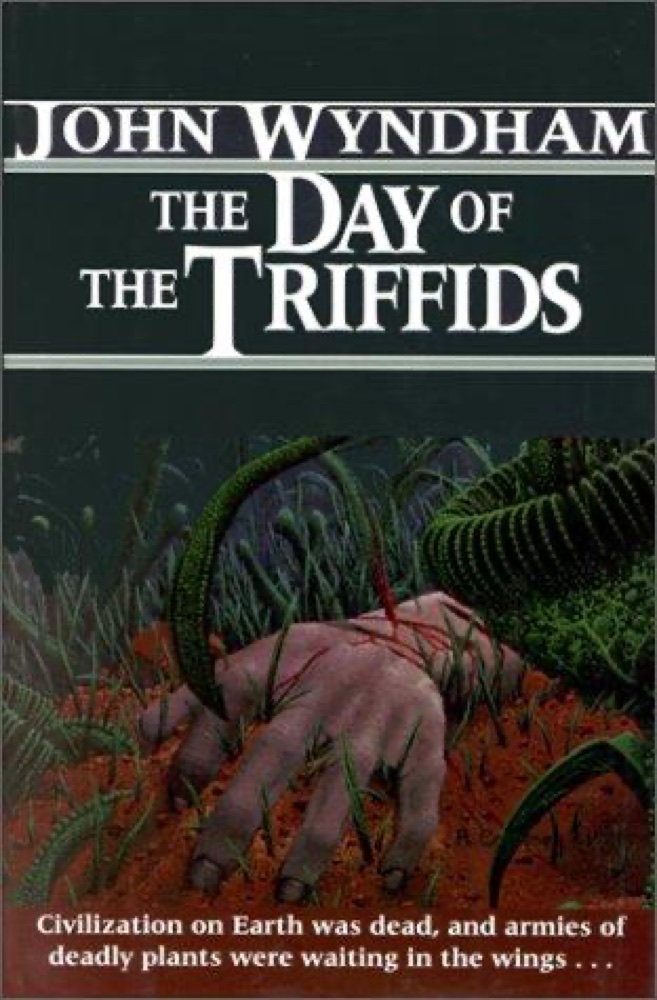 The Day of the Triffids
 Childhood's End
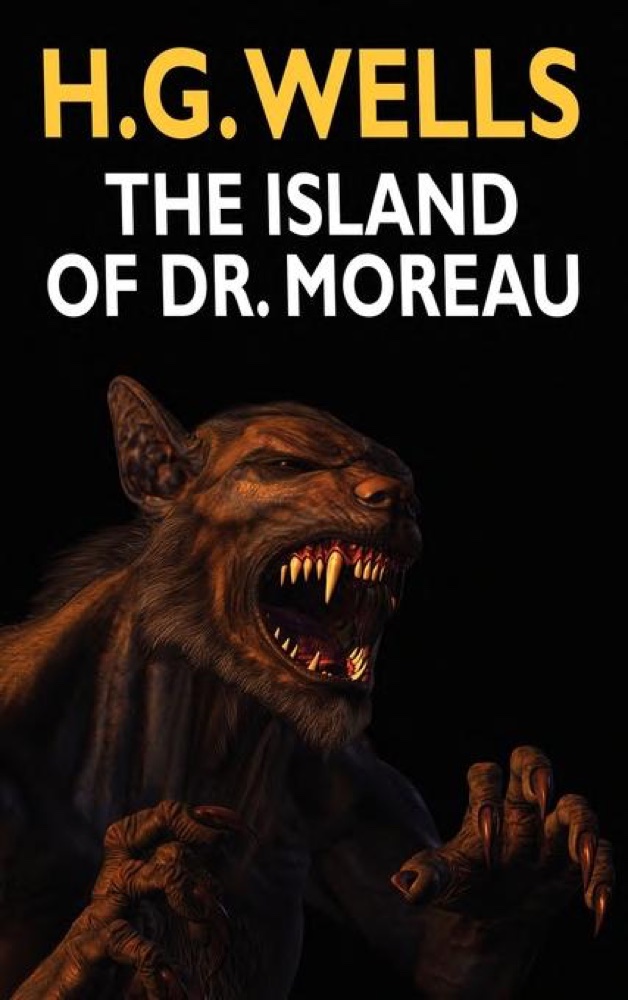 The Island of Dr. Moreau
 Caliban’s War
 The Damnation Game
 The Forever War
 Victory
 Heart of Darkness
 Hyperion
 Against the Day
 Lord Jim
 Red Mars
 The Naked and the Dead
 The Gone-Away World
 Do Androids Dream of Electric Sheep?
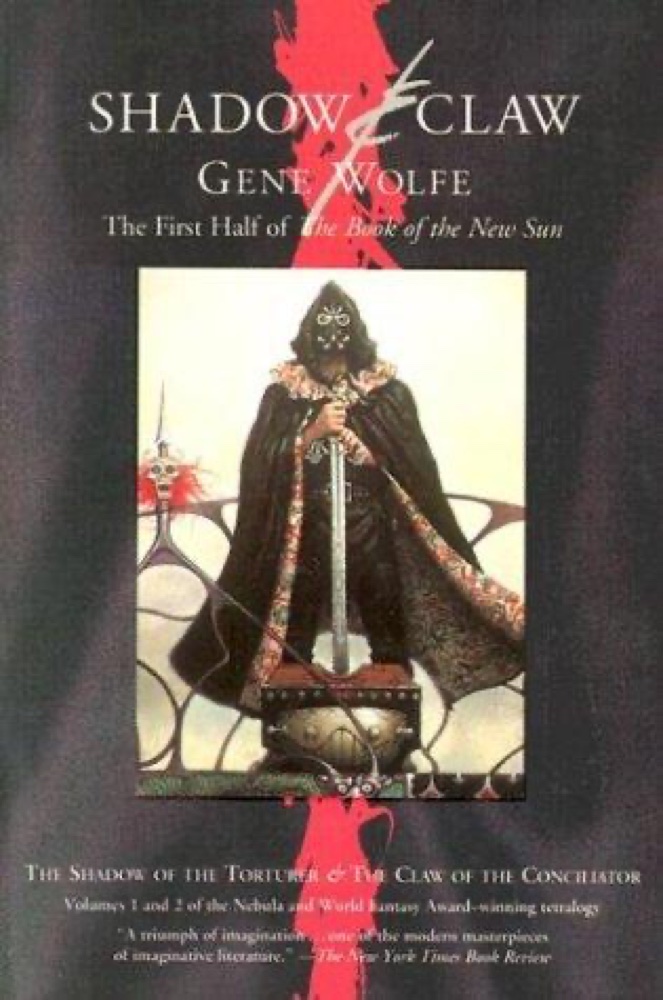 Shadow & Claw
 All Quiet on the Western Front
 Earth Abides
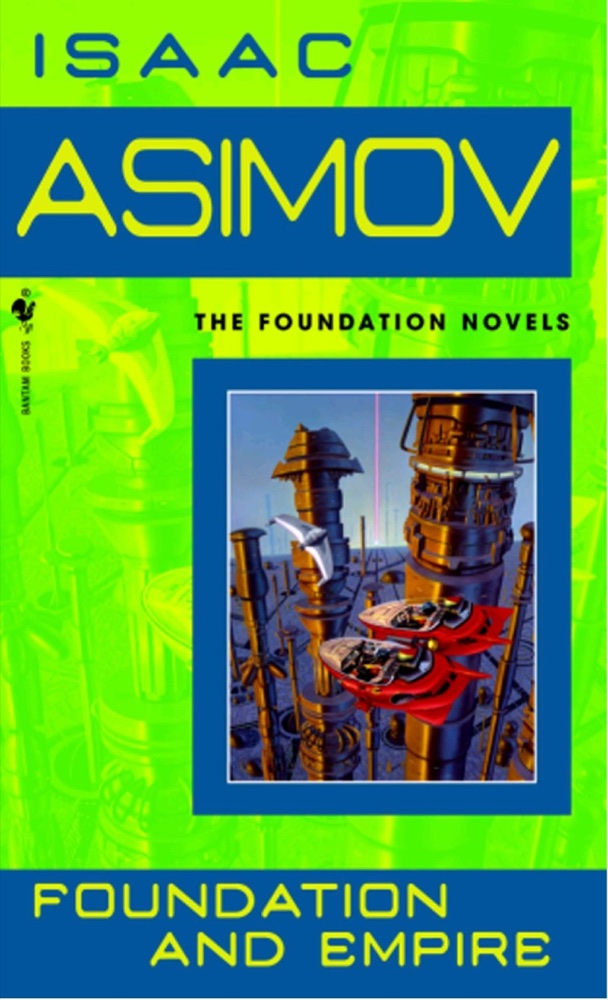 Foundation and Empire
 The French Lieutenant's Woman
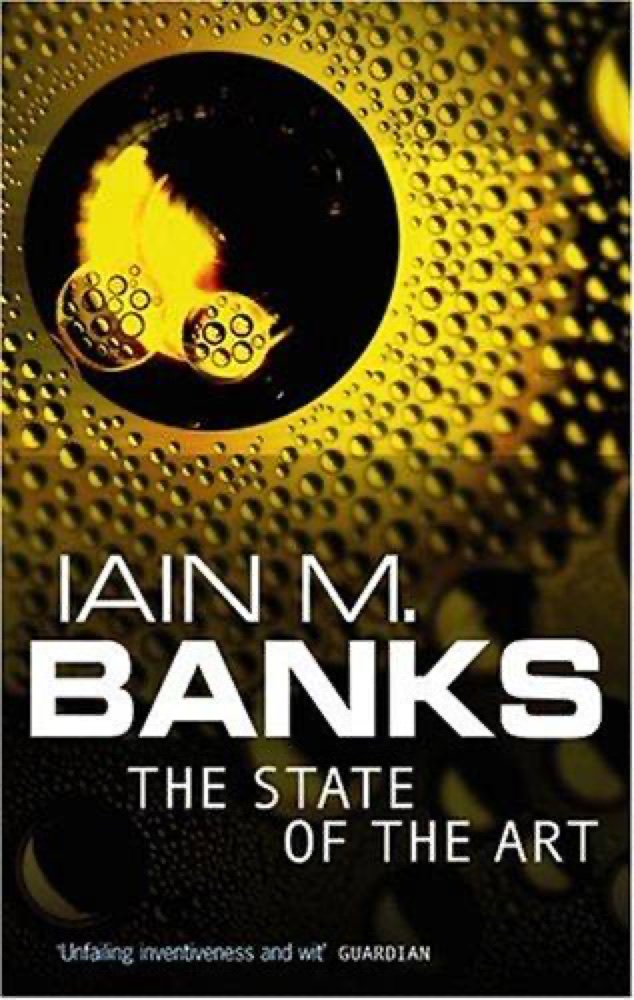 The State of the Art
 The Empusium
 The Magus
 The Wars
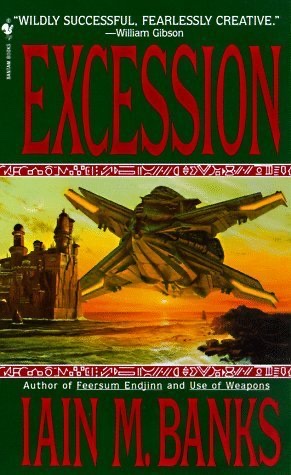 Excession
 The People in the Trees
 The Fear Institute
 The Children of Men
 The Long Way to a Small, Angry Planet
 Re: Colonised Planet 5, Shikasta
 The Sea, the Sea
 Alas, Babylon
 Regeneration
 The Monstrumologist
 Lord of the Flies
 When the Sleeper Wakes
 Wanderers
 The Plague
 Tree of Smoke
The Time Machine
Tree of Smoke
The Time Machine
 Cage of Souls
 The Sailor Who Fell from Grace with the Sea
 The Kraken Wakes
 Fathers and Sons
 Lord Foul's Bane
 Solaris
 The Fall of Hyperion
 Gravity's Rainbow
 20th Century Ghosts
 Annihilation