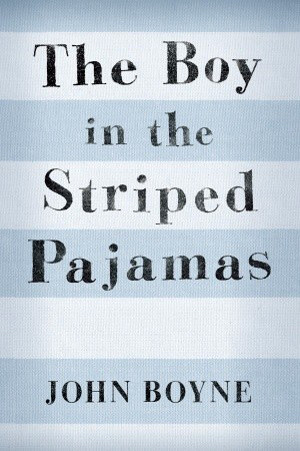

 The Heart's Invisible Furies
Quotes from the Book
Sitting around miserable all day won't make you any happier.
What exactly was the difference? He wondered to himself. And who decided which people wore the striped pajamas and which people wore the uniforms?
The thing about exploring is that you have to know whether the thing you've found is worth finding. Some things are just sitting there, minding their own business, waiting to be discovered. Like America. And other things are probably better off left alone. Like a dead mouse at the back of the cupboard.
Don't make it worse by thinking it's more painful than it actually is.
He looked down and did something quite out of character for him: he took hold of Shmuel's tiny hand in his and squeezed it tightly. "You're my best friend, Shmuel," he said. "My best friend for life.
Bruno: We're not supposed to be friends, you and me. We're meant to be enemies. Did you know that?
. . .only the victims and survivors can truly comprehend the awfulness of that time and place; the rest of us live on the other side of the fence, staring through from our own comfortable place, trying in our own clumsy ways to make sense of it all.
Their lost voices Must continue to be heard.
In his heart, he knew that there was no reason to be impolite to someone, even if they did work for you. There was such a thing as manners after all.
Heil Hitler," he said, which, he presumed, was another way of saying, "Well, goodbye for now, have a pleasant afternoon.
Well you've been brought here against your will, just like I have. If you ask me, we're all in the same boat. And it's leaking.
Very slowly he turned his head back to look at Shmuel, who wasn't crying anymore, merely staring at the floor and looking as if he was trying to convince his soul not to live inside his tiny body anymore, but to slip away and sail to the door and rise up into the sky, gliding through the clouds until it was very far away.'' -The Boy in the Striped Pajamas
Bruno: Why do you wear pajamas all day? Shmuel: The soldiers. They took all our clothes away. Bruno: My dad's a soldier, but not the sort that takes people's clothes away.
Just because a man glances up at the sky at night does not make him an astronomer, you know.
But still there are moments when a brother and sister can lay down their instruments of torture for a moment and speak as civilized human beings and Bruno decided to make this one of those moments.
The people I see from my window. In the huts, in the distance. They're all dressed the same.' 'Ah, those people,' said Father, nodding his head and smiling slightly. 'Those people...well, they're not people at all, Bruno.' Bruno frowned. 'They're not?' he asked, unsure what Father meant by that.
He looked the boy up and down as if he had never seen a child before and wasn't quite sure what he was supposed to do with one: eat it, ignore it or kick it down the stairs.
You’re my best friend, Shmuel,’ he said. ‘My best friend for life.
It reminds me of how grandmother always had the right costume for me to wear. You wear the right outfit and you feel like the person you're pretending to be.
And then the room went very dark and somehow, despite the chaos that followed, Bruno found that he was still holding Shmuel's hand in his own and nothing in the world would have persuaded him to let it go.
And who decided which people wore the striped pajamas and which people wore the uniforms?
He suddenly became convinced that if he didn’t do something sensible, something to put his mind to some use, then before he knew it he would be wondering round the streets having fights with himself and inviting domestic animals to social occasions too.
Bruno opened his eyes in wonder at the things he saw. In his imagination he had tough that all the huts were full of happy families, some of whom sat outside on rocking chairs in the evening and told stories about how things were so much better when they were children and they'd had nowadays. He thought that all the boys and girls who lived there would be in different groups, playing tennis or football, skipping and drawing out squares for hopscotch on the ground. As it turned out, all the things he thought might be there-wern't.'' -The boy in the striped Pajamas
Those people... well, they're not people at all, Bruno
In his imagination he had thought that all the huts were full of happy families, some of whom sat outside on rocking chairs in the evening and told stories about how things were so much better when they were children and they'd had respect for their elders, not like the children nowadays. He thought that all the boys and girls who lived here would be in different groups, playing tennis or football, skipping and drawing out squares for hopscotch on the ground. He had thought that there would be a shop in the centre, and maybe a small café like the ones he had known in Berlin; he had wondered whether there would be a fruit and vegetable stalls. As it turned out, all the things that he thought might be there - weren't.
He decided to talk to the Hopeless Case
It's so unfair, I don't see whij I have to be stuck over here on this side of the fence where there's no one to talk to and no one to play with and you get to have dozens of friends are probably playing for hours every day, I'll have to speak to Father about it.
Can I ask you something? He added after a moment. 'yes,' said Shmuel. Bruno thought about it. He wanted to phrase the question just right. 'why are there so many people on that side of the fence?' He asked. 'And what are you all doing there?
Did you know?
- The novel is subtitled "A Fable," reflecting Boyne's view that it relies on moral truth rather than historical accuracy.
- Boyne has said he wrote the first draft in roughly two and a half days with little sleep, then revised through about ten further drafts.
- The book reached number one on The New York Times Best Seller list in 2008.
- As of 2022 it had sold more than 11 million copies and been translated into over 50 languages.
- The Auschwitz-Birkenau State Museum has said the novel should be avoided by anyone who studies or teaches about the Holocaust, citing historical inaccuracies.
- Boyne published a sequel, "All the Broken Places," in 2022.
About John Boyne
John Boyne (born 30 April 1971) is an Irish novelist from Dublin who studied English at Trinity College Dublin and creative writing at the University of East Anglia. He has written numerous novels for adults and younger readers and is among the most widely translated Irish writers.
More about the author →More by John Boyne
All books by John Boyne →
About the book
"The Boy in the Striped Pyjamas," subtitled "A Fable," is a 2006 novel by the Irish writer John Boyne. It follows Bruno, a nine-year-old German boy whose father, a Nazi officer, is made commandant of a concentration camp. Uprooted from Berlin to a bleak new home beside the camp, the bored and lonely Bruno wanders along a fence and befriends Shmuel, a Jewish boy his own age on the other side, and the two form an unlikely friendship across the wire.
Boyne tells the story almost entirely from Bruno's uncomprehending child's-eye view, and the book turns on that innocence: Bruno never grasps what the camp is, mishearing and mangling the names and words around him. This narrow perspective drives the novel's central themes of innocence, prejudice, complicity, and the human cost of the Holocaust, building toward a stark and tragic conclusion that has made the book a fixture of classroom discussion.
A major commercial success, the novel has sold more than 11 million copies and been translated into dozens of languages, and it was adapted into a 2008 film directed by Mark Herman. Because Boyne framed it as a fable resting on moral truth rather than historical accuracy, the book has also drawn sustained criticism from Holocaust scholars and institutions, including the Auschwitz-Birkenau State Museum, over its historical implausibility. A sequel, "All the Broken Places," followed in 2022.
Key characters
- BrunoNine-year-old German boy, the commandant's son and the novel's protagonist
- ShmuelJewish boy of Bruno's age held in the camp, whom Bruno befriends through the fence
- RalfBruno's father, the Nazi commandant of the camp
- GretelBruno's older sister
Book details
- First published
- 2006
- Length
- 216 pages
- Reading time
- 3 hours
- Author
- John Boyne
- Genre
- Fiction
- Goodreads rating
- 4.16 (993k ratings) →
Movie & TV adaptations
- IMDb
If you liked this, read…
- 1The Book ThiefAlso views the Nazi era and the Holocaust through a child's eyes
- 2Number the StarsA children's novel about the Holocaust centered on young friendship and courage
- 3The Diary of a Young GirlA firsthand young person's account of the Holocaust that pairs well thematically
Keep reading
 Let the Right One In
 Messenger
 Highly Illogical Behavior
 The Giver
 Another Country
 Giovanni's Room
 The Chocolate War
 Ender's Shadow
 Knots and Crosses
 The Sisters Brothers
 The Burgess Boys
 About a Boy
 A Single Man
 Where Things Come Back
 So Long, See You Tomorrow
 Tamar
Tamar
 Strangers on a Train
 The Wars
 Mayflies
 Tenth of December
 The Son
 Dinner at the Homesick Restaurant
 Shadow Puppets
 The Twelve
 Made You Up
 The Institute
 The Son
 Bone Crossed
 Lovecraft Country
 A Death in the Family
 The Given Day
 Live by Night
 Native Son
 When the Emperor Was Divine
 Purple Hibiscus
 The Kingdoms
 The Accidental Tourist
 The Night Manager
 Between Shades of Gray
 The Magician's Nephew
 Dress Your Family in Corduroy and Denim
 The Whisper Man
 The Metamorphosis
 Mister Pip
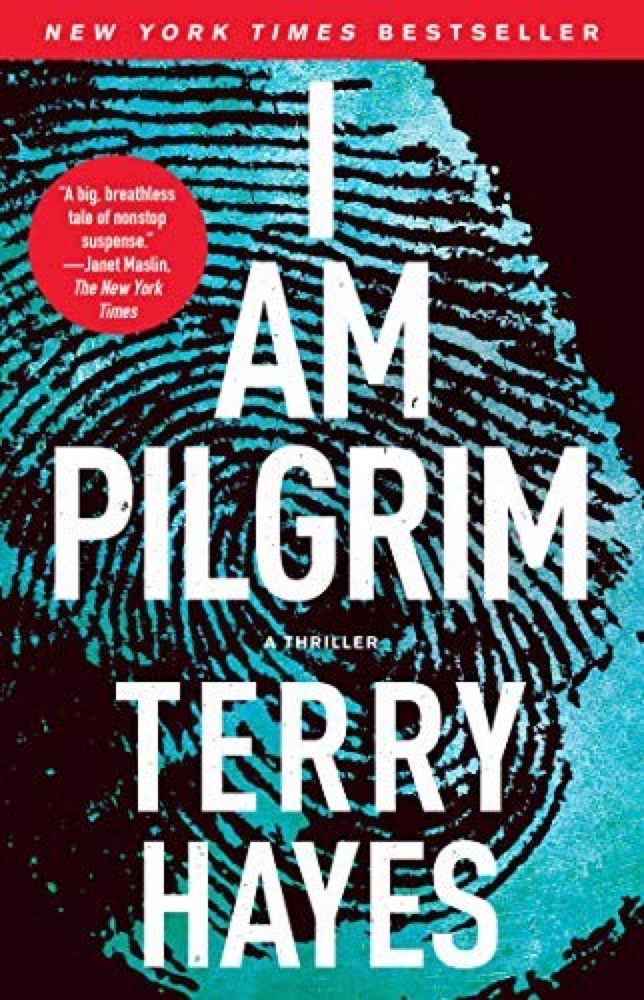 I Am Pilgrim
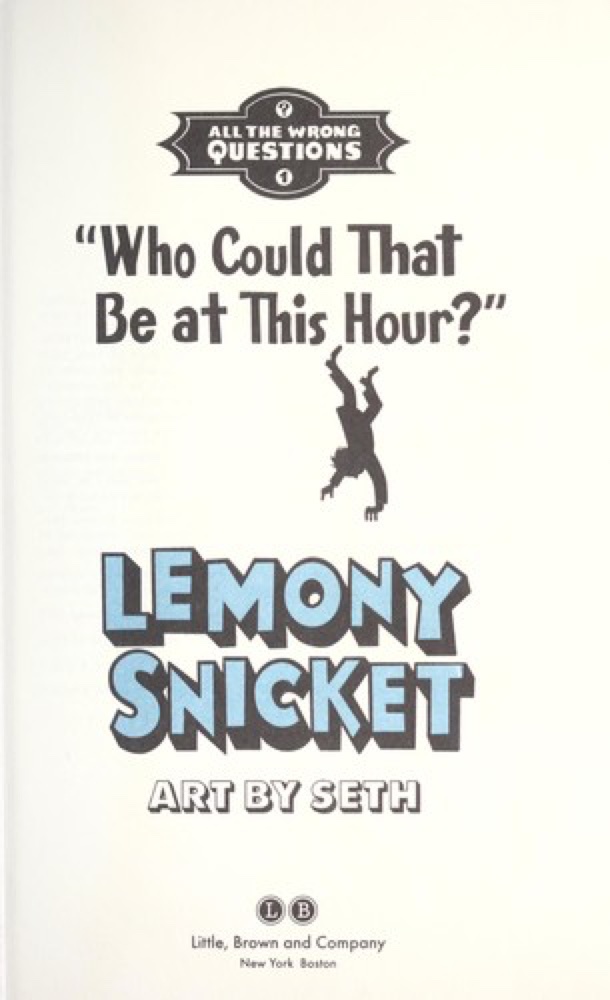 Who Could That Be at This Hour?
 The Round House
 The Soulkeepers
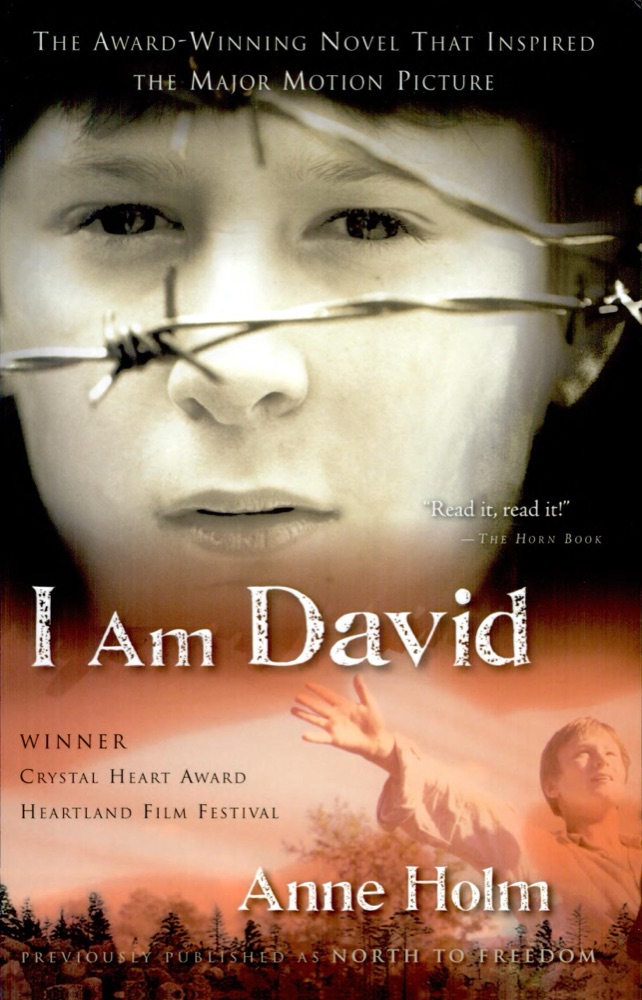 I Am David
 Intruder in the Dust
 Ordinary People
 Apt Pupil
 Notes on Your Sudden Disappearance
 Pastoralia
 At Swim, Two Boys
 Clockers
 The Brothers K
 The Mysterious Benedict Society
 A Spot of Bother