
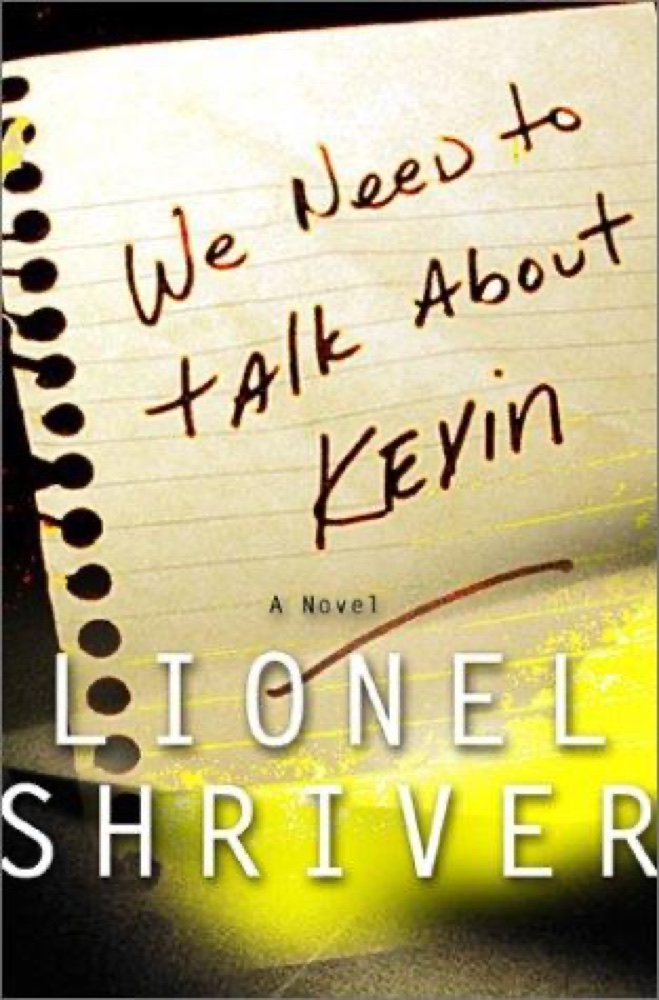
 We Need to Talk About Kevin
Quotes from the Book
What would I like to get away from? Complexity. Anxiety. A feeling I've had my whole life that at any given time there's something I'm forgetting, some detail or chore, something that I'm supposed to be doing or should have already done. That nagging sensation - I get up with it, I go through the day with it, I go to sleep with it. When I was a kid, I had a habit of coming home from school on Friday afternoons and immediately doing my homework. So I'd wake up on Saturday morning with this wonderful sensation, a clean, open feeling of relief and possibility and calm. There'd be nothing I had to do. Those Saturday mornings, they were a taste of real freedom that I've hardly ever experienced as an adult. I never wake up in Elmsford with the feeling that I've done my homework.
I have never in all my life considered you other people.
The energy it sapped from him, not being able to protect her. You wouldn't think that something you couldn't do and were not doing would take any energy, but it did.
He'd been unable to discern whether this frantic bustle of hers was what it claimed to be - an ardent determination to live every remaining day to the fullest - or quite the opposite: an evasion. An equally ardent determination to distract herself, from what only she could know, and thus a complete failure to inhabit her life in the scarcest respect.
Pregnancy had seemed a reasonable excuse for letting her metal-smithing tools languish, but that accounted for only eighteen months of the last twenty-six years. Motherhood wasn't the real problem, though it took him a long time to figure out what was. She needed resistance, the very quality that metal most demonstrably offered up. Suddenly Glynis had no difficulty to overcome, no hard artisan's life with galleries filching half the too-small price of a mokume brooch that had taken three weeks to forge. No, her husband made a good living, and if she slept late and dawdled the afternoon away reading Lustre, American Craft Magazine and Lapidary Journal, the phone bill would still get paid. For that matter, she needed need itself. She could overcome her anguish about embarking on an object that, once completed, might not meet her exacting standards only if she had no choice. In this sense, his helping had hurt her. By providing the financial cushion that should have facilitated making all the metal whathaveyou she liked, he had ruined her life. Wrapped in a slackening bow, ease was a poisonous present.
[T]he cardboard bookcase of her character had already collapsed under the strain.
It was a short session of the simple being-ness that he had long coveted for The Afterlife. What Glynis had called "doing nothing," The smelling and seeing and hearing and small noticings of sheer animal presence in the world surely constituted activity of a sort, perhaps the most important kind. This was a form of companionship that he'd been especially cherishing with Glynis of late: devoid of conversation, but so surprising in its contrast to being by yourself.
I don't understand why doctors don't advise everybody to lay on twenty extra pounds while they've got the chance. I might not advocate outright obesity, but there's a reason for fat - it's a resource.
Individually, the experience of most people was of accelerating impotence and incomprehension. They lived in a world of superstition. They relied on voodoo - charms, fetishes, and crystal balls whose caprices they were helpless to govern, yet without which the conduct of daily life came to a standstill. Faith that the computer would switch on one more time and do as it was asked had more a religious than a rational cast. When the screen went black, the gods were angry.
Glynis no sólo trabajaba (o había trabajado) con metal; era metal. Rígida, poco dispuesta a cooperar e inflexible. Dura, refractaria y de una radiante rebeldía. El cuerpo largo, estilizado y anguloso como las joyas y la cubertería que una vez diseñó; en la escuela de artes y oficios no había elegido su medio por casualidad. Se identificaba naturalmente con cualquier material que se negara encarnizadamente a hacer lo que uno quería, cuya forma fuese resistente al cambio y sólo respondiera al trato violento. El metal era un escándalo. Si alguna vez se lo maltrataba, sus abolladuras y arañazos captaban la luz como rencores ocultos.
Un millón de dólares. Racionalmente admitía que un kilo ya no era lo mismo que antes, y que tendría que pagar la plusvalía. Con todo, la cifra nunca había perdido la imponente rotundidad de su infancia; daba igual cuántos otros tipos comunes y corrientes también llegaran a ser «millonarios», la palabra todavía seguía teniendo su aquél.
Puesto que el resentimiento produce el equivalente psíquico de la acidez, a Glynis le molestaba el propio resentimiento. No haber tenido nunca mucho de que quejarse con razón era una razón más para sentirse ofendida.
Según el gilipollas del jefe, de lo que se trataba era precisamente de malgastar el dinero. Una empresa que mantiene en su local una temperatura tropical en pleno enero, y ártica en agosto, alentaba a los clientes a creer que el negocio iba viento en popa. Era un signo de prosperidad, igual que estar gordo solía ser símbolo de abundancia. Antes uno se podía permitir sobrealimentarse; ahora se podía permitir sobrecalefaccionarse.
No obstante, incluso cuando los médicos se hacían los amables, no solían controlar el alcance de su capacidad para serlo. Por muy gentilmente que se expresaran, más de un mensaje de los que se veían obligados a comunicar era cruel, y si no, una mentira y, por tanto, aún más cruel. Personalmente Shep no entendía por qué alguien querría ser médico.
Por sí mismo no tenía valor, naturalmente. El dinero era un medio. Pero cuando se trataba de llegar a fin de mes nadie lo desestimaba rápidamente como algo que «no preocupaba». Comida, vivienda, ropa. Seguridad, en la medida en que tal cosa existiera, y por tanto también la capacidad de salvarse. Eficacia, poder, influencia. Desahogo, libertad, elección. Generosidad, caridad, si no amor, por sus hijos, por su mujer, por su padre, la evidencia palpable del amor. Educación, si no sabiduría, el requisito previo de información precisa. Si no felicidad, confort, que, de ser necesario, podía hacer las veces de felicidad. Billetes de avión: experiencias, belleza y la posibilidad de escapar.
―La democracia es una broma. ―Sí. Muy incisivo ―dijo Jackson, satisfecho―. Una buena tesis también. En teoría es posible que el cincuenta y uno por ciento de la población desplume todo lo que puede al otro cuarenta y nueve por ciento. Ese tipo de Venezuela, ¿cómo se llama? Howard Chávez, algo así. Así hace él las cosas. En serio, él sólo envía cheques a los marginados. Les das a los gorrones dinero ajeno y después te votan.
Nanako, la nueva recepcionista, me ha hablado de esos chicos japoneses que nunca salen de la habitación. ¿Cómo los llaman? ¿Haikumo? Los padres les dejan la comida delante de la puerta, recogen la ropa sucia, a veces vacían la cuña. Los chicos no hablan, y nunca salen de la habitación. Ni asoman la cabeza por la puerta. La mayoría de ellos viven conectados al ordenador. Allí es un gran fenómeno. Deberías estudiarlo, Jacks, es un tema ideal para ti. Toda una subcultura de chicos que mandan el mundo a la mierda, que dicen dejadme en paz, no nos interesa vuestra mierda. Y no hablamos de chicos disfuncionales de ocho años; muchos de los que optan por excluirse ya tienen veinte o más. Nanako piensa que es una reacción a la enrarecida competencia japonesa. Antes de arriesgarse a perder, se niegan a jugar. La versión intramuros de la Otra Vida, sin el billete de avión.
¿Os habéis fijado alguna vez en cómo los bohemios, esos… artistas, están convencidos de que les debemos el sustento? Como si todos tuviéramos que sentirnos muy agradecidos por el mero hecho de que se dediquen a crear sentido y belleza para nosotros, que somos unos pobres e incultos neandertales. Mientras tanto, ellos viven pasando la gorra delante de nuestras narices, pidiendo otra beca del gobierno o un ático en el centro, cortesía del hermano mayor, el Mezquino Capitalista.
¿Alguna vez has intentado hacer realidad una fantasía sexual? No tiene gracia. Es desagradable e incómodo, o afectado. Cuando vas a hacerla realidad, no te excita. La fantasía funciona mejor mientras sigue siendo una fantasía. La dejas salir al mundo y termina pareciendo una placenta deforme y toda ensangrentada.
El tema del amianto…, a ella le imprime cierto rumbo. Hace que el cáncer parezca algo más importante que una pequeña desgracia personal, que parezca algo más que pura y absurda mala suerte. La conecta con el mundo. Con la historia, con la política, con la justicia. Y entiendo por qué se aferra a eso. Porque creo que ésa es la parte más dura cuando uno enferma, vivir en un universo separado de todos los demás, como exiliado en un país extranjero.
Los chicos nunca parecían darse cuenta de que «sus» habitaciones eran un acto de generosidad por parte del padre, que había pagado toda la casa. Legal, moral y económicamente, Shep tenía derecho a entrar en ese cuarto siempre que quisiera. Con todo, cierta vaga conciencia de que en realidad los niños no tenían territorio podría haber explicado por qué defendían con semejante fiereza su ilusión de tenerlo.
La televisión digital era magia. Internet también. Incluso el coche del padre, la maquina con la que antes los chicos conseguían dominar por primera vez el mundo físico, ahora la controlaba un ordenador. El diagnostico de un fallo no implicaba ponerse a desmontar un motor y pringarse de aceite. En el concesionario, el coche se enchufaba a otro ordenador impenetrable. Si al mobiliario técnico de la vida de Zach le pasaba algo —y en estos días las máquinas no chisporrotean encima de uno ni empiezan a soltar extraños bufidos ni se ponen a chillar—, a él nunca se le pasaría por la cabeza la idea de arreglarlo con sus propias manos. Para esas cosas había brujos, aunque el concepto mismo de reparación ya se había vuelto arcano; mucho más probable era ir a comprarse otra máquina que trabajaba mágicamente y que luego, mágicamente también, dejaba de funcionar. En conjunto, la especie humana estaba volviéndose cada vez más autoritaria en lo tocante a los mecanismos del universo. Individualmente, la experiencia de la mayoría eran una impotencia y una falta de comprensión flagrantes. La gente vivía en un mundo de supersticiones. Se fiaba del vudú, de hechizos y fetiches, de bolas de cristal cuyos caprichos no se podían manejar pero sin los cuales el gobierno de la vida cotidiana se paralizaba. La fe en que el ordenador se encendería una vez más y haría lo que se le pedía tenía un tinte religioso más que racional. Cuando la pantalla se oscurecía, los dioses estaban enfadados.
Watch on YouTube
About Lionel Shriver
We have collected 131 quotes from 6 books by Lionel Shriver on BookQuoters.
More about the author →More by Lionel Shriver
We Need to Talk About Kevin
 The Post-Birthday World
 The Mandibles: A Family, 2029–2047
 The New Republic
Book details
- Author
- Lionel Shriver
- Genre
- Fiction
- Goodreads rating
- 3.76 (9k ratings) →
Keep reading
 Dancing Girls and Other Stories
 Without Feathers
 Lost Illusions
 Nada
Nada
 A Sunny Place for Shady People
 I'll Be There
 Liliana's Invincible Summer: A Sister's Search for Justice
 Stories
 Upside Down: A Primer for the Looking-Glass World
 The House of the Spirits
 Hopscotch
 Ripper
 A Heart So White
 Emma in the Night
 Brodie's Report
 Cujo
Cujo
 Like Water for Chocolate
 Ordesa
 Socrates In Love
 The Charioteer
 Doctor Glas
 Days and Nights of Love and War
 Beauty and Sadness
 Confessions of a Crap Artist
 The Wild Ass's Skin
 As You Wish
 Peeling the Onion
 La reina del sur
 Brave New World / Brave New World Revisited
 Nadja
Nadja
 The Time of the Hero
 The Ingredients of Love
 Things We Lost in the Fire
 Paris Spleen
 Of Love and Shadows
 The Yellow Eyes of Crocodiles
 On Heroes and Tombs
 The Invention of Morel
 Strange Pilgrims
 Returning to Reims
 Still Born
 The Labyrinth of Solitude and Other Writings
 Cronopios and Famas
 Instrumental: A Memoir of Madness, Medication and Music
 The Little Virtues
 Forsaken
 Miss Kim Knows and Other Stories
 Distant Star
 South of No North
 At Last Comes Love
 The Yellow World
 Firmin: Adventures of a Metropolitan Lowlife
 The Sound of Things Falling
 Minor Mage
 Happening
 Blow-Up and Other Stories
 Aunt Julia and the Scriptwriter
 The Feast of the Goat
 Everything You and I Could Have Been If We Weren't You and I
 The Narrow Road Between Desires