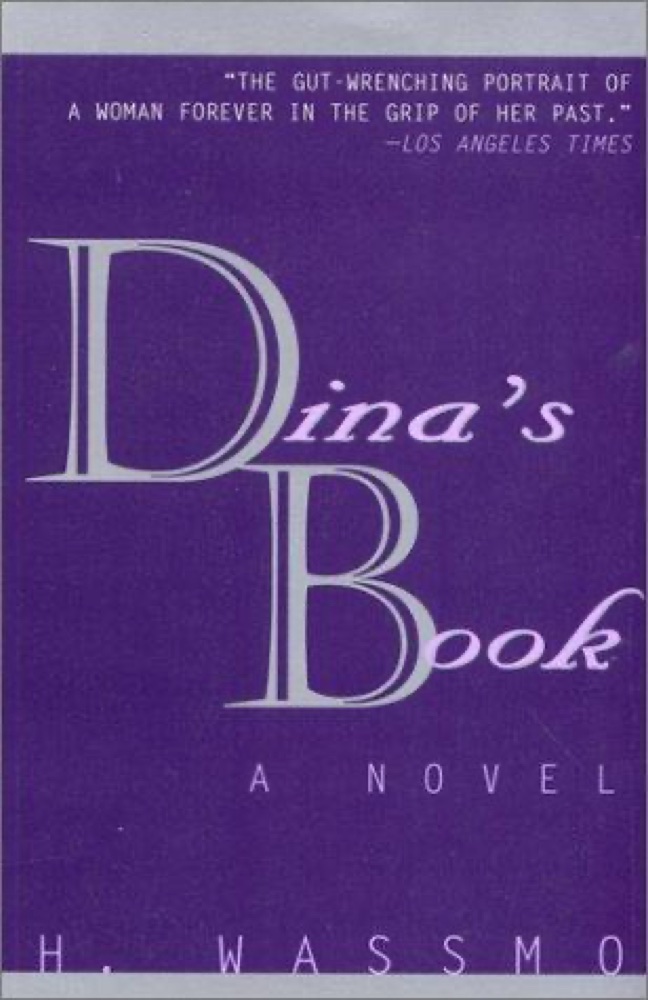

“This woman was eighteen years old. With eyes as old as stones.”
― Herbjørg Wassmo, quote from Dina's Book
“Humor is the most faithful supporting actor in a tragedy. So”
― Herbjørg Wassmo, quote from Dina's Book
“Aplinkiniais keliais vaikšto tie, kurie slapstosi. Tu neturi ko slėpti. Įsikalk tai į galvą. Tu turi teisę ateiti ir išeiti, kada man patinka”
― Herbjørg Wassmo, quote from Dina's Book
“Vazduh izmedju njih je bio fosforescentan.”
― Herbjørg Wassmo, quote from Dina's Book
“Kada dodje, imaće lice tudjina da bi se sakrio od mene.”
― Herbjørg Wassmo, quote from Dina's Book
“You crossed the water, left me ashore
It killed me enough, but you wanted more
You blew up the bridge, a mad terrorist
Waved from your side, through me a kiss
I started to follow but realized too late
There was nothing but air underneath my feet"
—from the song "Bridge" on the Collateral Damage album”
― Gayle Forman, quote from Where She Went
“Your life right now is a reflection of your past thoughts. That includes all the great things, and all the things you consider not so great. Since you attract to you what you think about most, it is easy to see what your dominant thoughts have been on every subject of your life, because that is what you have experienced. Until now!”
― Rhonda Byrne, quote from The Secret
“Words bend our thinking to infinite paths of self-delusion, and the fact that we spend most of our mental lives in brain mansions built of words means that we lack the objectivity necessary to see the terrible distortion of reality which language brings.”
― Dan Simmons, quote from Hyperion
“-Pero siempre se corre un riesgo cuando uno... besa a alguien nuevo”
― Scott Westerfeld, quote from Pretties
“The first language humans had was gestures. There was nothing primitive about this language that flowed from people’s hands, nothing we say now that could not be said in the endless array of movements possible with the fine bones of the fingers and wrists. The gestures were complex and subtle, involving a delicacy of motion that has since been lost completely.
During the Age of Silence, people communicated more, not less. Basic survival demanded that the hands were almost never still, and so it was only during sleep (and sometimes not even then) that people were not saying something or other. No distinction was made between the gestures of language and the gestures of life. The labor of building a house, say, or preparing a meal was no less an expression than making the sign for I love you or I feel serious. When a hand was used to shield one’s face when frightened by a loud noise something was being said, and when fingers were used to pick up what someone else had dropped something was being said; and even when the hands were at rest, that, too, was saying something. Naturally, there were misunderstandings. There were times when a finger might have been lifted to scratch a nose, and if casual eye contact was made with one’s lover just then, the lover might accidentally take it to be the gesture, not at all dissimilar, for Now I realize I was wrong to love you. These mistakes were heartbreaking. And yet, because people knew how easily they could happen, because they didn’t go round with the illusion that they understood perfectly the things other people said, they were used to interrupting each other to ask if they’d understood correctly. Sometimes these misunderstandings were even desirable, since they gave people a reason to say, Forgive me, I was only scratching my nose. Of course I know I’ve always been right to love you. Because of the frequency of these mistakes, over time the gesture for asking forgiveness evolved into the simplest form. Just to open your palm was to say: Forgive me."
"If at large gatherings or parties, or around people with whom you feel distant, your hands sometimes hang awkwardly at the ends of your arms – if you find yourself at a loss for what to do with them, overcome with sadness that comes when you recognize the foreignness of your own body – it’s because your hands remember a time when the division between mind and body, brain and heart, what’s inside and what’s outside, was so much less. It’s not that we’ve forgotten the language of gestures entirely. The habit of moving our hands while we speak is left over from it. Clapping, pointing, giving the thumbs-up, for example, is a way to remember how it feels to say nothing together. And at night, when it’s too dark to see, we find it necessary to gesture on each other’s bodies to make ourselves understood.”
― Nicole Krauss, quote from The History of Love
BookQuoters is a community of passionate readers who enjoy sharing the most meaningful, memorable and interesting quotes from great books. As the world communicates more and more via texts, memes and sound bytes, short but profound quotes from books have become more relevant and important. For some of us a quote becomes a mantra, a goal or a philosophy by which we live. For all of us, quotes are a great way to remember a book and to carry with us the author’s best ideas.
We thoughtfully gather quotes from our favorite books, both classic and current, and choose the ones that are most thought-provoking. Each quote represents a book that is interesting, well written and has potential to enhance the reader’s life. We also accept submissions from our visitors and will select the quotes we feel are most appealing to the BookQuoters community.
Founded in 2023, BookQuoters has quickly become a large and vibrant community of people who share an affinity for books. Books are seen by some as a throwback to a previous world; conversely, gleaning the main ideas of a book via a quote or a quick summary is typical of the Information Age but is a habit disdained by some diehard readers. We feel that we have the best of both worlds at BookQuoters; we read books cover-to-cover but offer you some of the highlights. We hope you’ll join us.