
“So, ah, I'm not sure if you know this, but you're not wearing a shirt."
"Distracting, isn't it?”
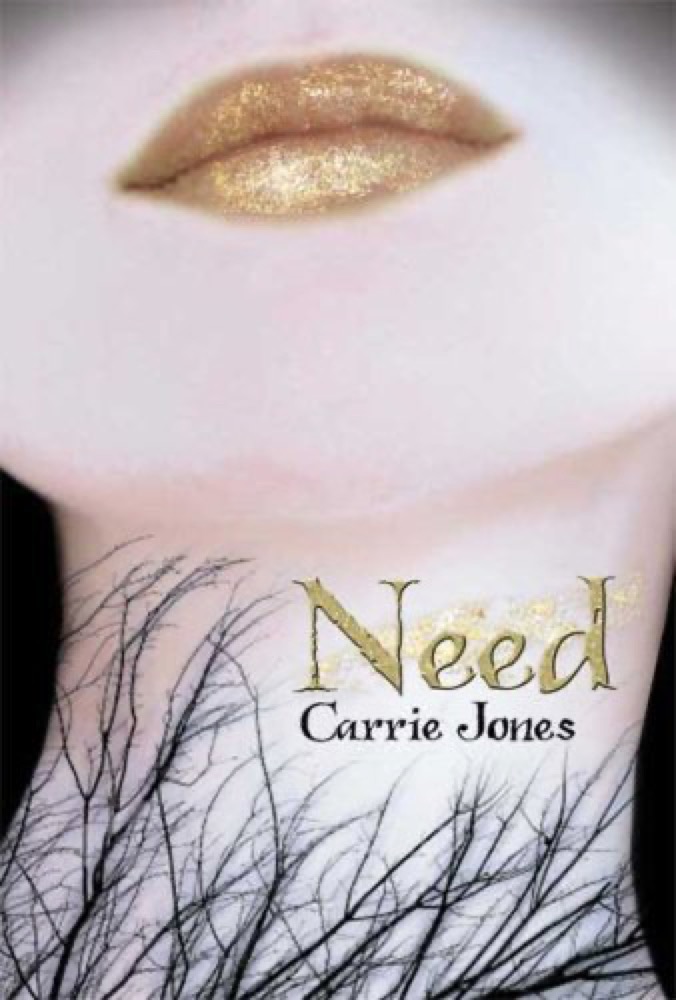
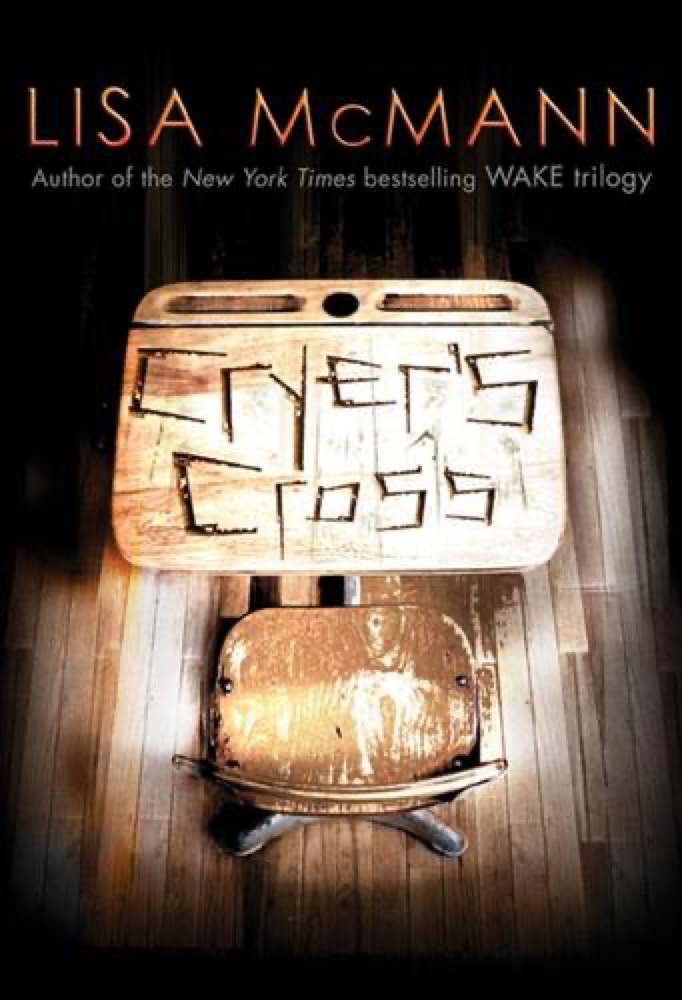
― Lisa McMann, quote from Cryer's Cross
“It's the intent, not the word, that makes something harsh.”
― Lisa McMann, quote from Cryer's Cross
“I highly regret this day in advance.”
― Lisa McMann, quote from Cryer's Cross
“If you want to touch me, Kendall, touch me. Don't hide behind those little girl slaps.”
― Lisa McMann, quote from Cryer's Cross
“Jacian Obregon. It sounds like a melody. Or a tragedy.”
― Lisa McMann, quote from Cryer's Cross
“A trapped soul waits for redemption.
It waits. And waits.
For her to take her last breath.”
― Lisa McMann, quote from Cryer's Cross
“WE
We feel the heat, and for a moment, We believe! Life is back. But this heat is intense, not gentle. Not submissive but searing. Painful.
We moan, scream, Our face cracking like gunfire... like a whip. Thirty-five, one hundred. One hundred! ONE HUNDRED!
The fire consumes our wooden host. It burns, breaks, explodes. Releases Our remaining souls to travel to Our final resting places.
Or.
To find new places to hide.
And wait.
Touch me.”
― Lisa McMann, quote from Cryer's Cross
“Go force your condescending man-logic on the next house. You can go now.”
― Lisa McMann, quote from Cryer's Cross
“WE
When it is over, we breathe and ache like old oak, like peeling birch. One of Our lost souls set free. We move, a chess piece in a dark room, cast-iron legs moving a centimeter at a time, crying out in silent carved graffiti. Calling to Our next victim, Our next savior. We carve on Our face:
Touch me.
Save my soul. ”
― Lisa McMann, quote from Cryer's Cross
“Jacián!" She yells again, and then she says something in Spanish.
A moment later he comes down the hallway. "I'm going to tell Grandfather you said that," he says. "What do you want?”
― Lisa McMann, quote from Cryer's Cross
“She knows some of her thoughts are irrational. She knows it and has always known it, even in fifth grade, when she used to layer on clothes - four shirts, three pairs of underwear, shorts under her jeans - anxiously, frantically crying her eyes out for fear people could see her naked through her clothes.
What an awful time that was. Fear like that is constant, tiring.”
― Lisa McMann, quote from Cryer's Cross
“The minute I heard my first love story, I started looking for you, not knowing how blind that was.”
― Rumi, quote from The Book of Love: Poems of Ecstasy and Longing
“Certainty is an unrealistic and unattainable ideal.
We need to have pastors who are schooled in apologetics and engaged intellectually with our culture so as to shepherd their flock amidst the wolves.
People who simply ride the roller coaster of emotional experience are cheating themselves out of a deeper and richer Christian faith by neglecting the intellectual side of that faith. They know little of the riches of deep understanding of Christian truth, of the confidence inspired by the discovery that one’s faith is logical and fits the facts of experience, and of the stability brought to one’s life by the conviction that one’s faith is objectively true.
God could not possibly have intended that reason should be the faculty to lead us to faith, for faith cannot hang indefinitely in suspense while reason cautiously weighs and reweighs arguments. The Scriptures teach, on the contrary, that the way to God is by means of the heart, not by means of the intellect.
When a person refuses to come to Christ, it is never just because of lack of evidence or because of intellectual difficulties: at root, he refuses to come because he willingly ignores and rejects the drawing of God’s Spirit on his heart. unbelief is at root a spiritual, not an intellectual, problem. Sometimes an unbeliever will throw up an intellectual smoke screen so that he can avoid personal, existential involvement with the gospel. In such a case, further argumentation may be futile and counterproductive, and we need to be sensitive to moments when apologetics is and is not appropriate.
A person who knows that Christianity is true on the basis of the witness of the Spirit may also have a sound apologetic which reinforces or confirms for him the Spirit’s witness, but it does not serve as the basis of his belief.
As long as reason is a minister of the Christian faith, Christians should employ it.
It should not surprise us if most people find our apologetic unconvincing. But that does not mean that our apologetic is ineffective; it may only mean that many people are closed-minded.
Without a divine lawgiver, there can be no objective right and wrong, only our culturally and personally relative, subjective judgments. This means that it is impossible to condemn war, oppression, or crime as evil. Nor can one praise brotherhood, equality, and love as good. For in a universe without God, good and evil do not exist—there is only the bare valueless fact of existence, and there is no one to say that you are right and I am wrong.
No atheist or agnostic really lives consistently with his worldview. In some way he affirms meaning, value, or purpose without an adequate basis. It is our job to discover those areas and lovingly show him where those beliefs are groundless.
We are witnesses to a mighty struggle for the mind and soul of America in our day, and Christians cannot be indifferent to it.
If moral values are gradually discovered, not invented, then our gradual and fallible apprehension of the moral realm no more undermines the objective reality of that realm than our gradual, fallible apprehension of the physical world undermines the objectivity of that realm.
God has given evidence sufficiently clear for those with an open heart, but sufficiently vague so as not to compel those whose hearts are closed.
Because of the need for instruction and personal devotion, these writings must have been copied many times, which increases the chances of preserving the original text. In fact, no other ancient work is available in so many copies and languages, and yet all these various versions agree in content. The text has also remained unmarred by heretical additions. The abundance of manuscripts over a wide geographical distribution demonstrates that the text has been transmitted with only trifling discrepancies.”
― William Lane Craig, quote from Reasonable Faith
“«Un gran escritor no es más que un escritor. La diferencia es de matiz, no de raíz. Todos los saltadores de altura saltan, digamos, dos metros. Si uno salta dos metros y cinco centímetros, ya es un gran deportista. No, no merece la pena fatigarse siquiera con la idea de llegar a ser un pobre gran escritor, un desdichado escritor genial. Coge los mejores libros escritos jamás. Apenas son algo mejores que los libros mediocres. Todos son fundamentalmente libros nada más. Te proporcionarán, cuando los leas, un placer estético algo más intenso. Como un café un poco más dulce. Los soltarás al cabo de treinta páginas para prepararte un bocadillo o para ir al baño. Los leerás a la vez que quién sabe qué novela policiaca. Dentro de unos miles de años también ellos serán tierra y polvo. En estas condiciones, que tú, un ser al que se le ha concedido la oportunidad disparatada de existir y de reflexionar sobre el mundo, te propongas llegar a ser tan solo un genio es humillante, es ínfimo. Es como si abandonaras todo y te internaras de nuevo en el bosque. En cada individuo hay posibilidades ante las cuales la ambición de ser el escritor más importante de todos los tiempos es simplemente denigrante por su simplicidad. Porque ¿qué milagro es importante comparado con el de existir y de saber que existes? De aquí hasta ser el hombre más rico, el más poderoso, el más ingenioso del mundo es como pasar de un billón a un billón uno, incluso menos. No, no quiero llegar a ser un gran escritor, quiero llegar a ser Todo. Sueño sin cesar con un creador que, a través de su arte, llegue a influir de verdad en la vida de las personas, de todas las personas, y después en la vida de las personas, de todas la personas, y después en la vida del universo, hasta las estrellas más lejanas, hasta el final del espacio y del tiempo. Y que a continuación sustituya al universo, que se convierta él mismo en el Mundo. Sólo así creo que podría un hombre, un artista, cumplir su misión. El resto es literatura, una colección de trucos mejor o peor dominados, trozos de papel emborronados con brea por los que nadie da un real, por muy geniales que sean esas líneas de signos que, dentro de poco ni siquiera serán comprendidas».”
― Mircea Cărtărescu, quote from Nostalgia
“He was tall, one of the tallest men she had ever seen. Dressed in jeans, boots and a cotton shirt. Thick black hair grew rakishly long, falling over the collar of his shirt. Intense brown eyes, almost the color of amber, surveyed the diner slowly before coming back to her. Electricity sizzled in the air then, as though invisible currents connected them, forcing her to recognize him on a primitive level. Not that she wouldn’t take notice anyway. He was power, strength, and so incredibly male that her breath caught at the sight of him.”
― Lora Leigh, quote from Elizabeth's Wolf
“Some people may opt out. Their child turns out to be whatever it is that they find impossible to face—for some, the wrong religion; for some, the wrong sexuality; for some, a drug addict. They close the door. Click. Like in mafia movies: “I have no son. He is dead to me.” I have a son and he will never be dead to me.”
― David Sheff, quote from Beautiful Boy: A Father's Journey Through His Son's Addiction
BookQuoters is a community of passionate readers who enjoy sharing the most meaningful, memorable and interesting quotes from great books. As the world communicates more and more via texts, memes and sound bytes, short but profound quotes from books have become more relevant and important. For some of us a quote becomes a mantra, a goal or a philosophy by which we live. For all of us, quotes are a great way to remember a book and to carry with us the author’s best ideas.
We thoughtfully gather quotes from our favorite books, both classic and current, and choose the ones that are most thought-provoking. Each quote represents a book that is interesting, well written and has potential to enhance the reader’s life. We also accept submissions from our visitors and will select the quotes we feel are most appealing to the BookQuoters community.
Founded in 2023, BookQuoters has quickly become a large and vibrant community of people who share an affinity for books. Books are seen by some as a throwback to a previous world; conversely, gleaning the main ideas of a book via a quote or a quick summary is typical of the Information Age but is a habit disdained by some diehard readers. We feel that we have the best of both worlds at BookQuoters; we read books cover-to-cover but offer you some of the highlights. We hope you’ll join us.