
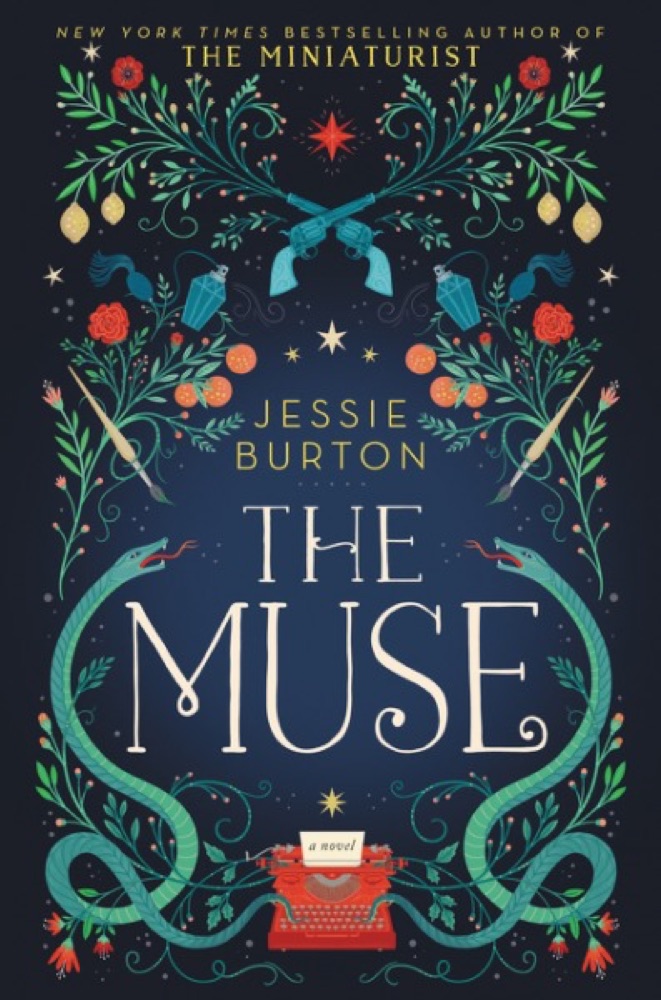
 The Muse
Quotes from the Book
The world ain't ready for true black genius. In every nigger is a cup of African blood from kings and queens of divine nature, mathematicians, craftsmen, men and women of the land. I have known some sisters and brothers would scare Einstein back into East European caves with the magnificence of their minds. We are a people with a practical nature and great vision. We have built nations, discovered treasures for everyday use. Our people are a great race of people, and though the Europeans raped and plundered, we have kept inner riches. You got a cup of African blood and that mean something, means you got a responsibility to be proud of it and use your talents or suffer self-destruction.
I was a woman and did not yet think of myself as a writer. I was a mapmaker.
Before I left home I cut my hair close to my scalp so I could be a free woman with free thoughts, open to all possibilities. I was making a map of the world. In ancient times maps were made to help people find food, water, and the way back home. I needed a map to help me find love and language and since one didn't exist, I'd have to invent one, following the trails and signs left by other travelers. I didn't know what I wanted to be, but I knew I wanted to be the kind of woman who was bold, took chances, and had adventures. I wanted to travel around the world. It was my little-girl dream.
Art is just as important as food, 'cause if your soul ain't nourished, you one empty mutherfucker.
I discover that nothing is ever certain. A name, a birthday, an entire life can be invented, and that being so, can be changed.
wanted that kind of life even though I was a woman and did not yet think of myself as a writer. I was a mapmaker.
About Shay Youngblood
We have collected 6 quotes from 1 book by Shay Youngblood on BookQuoters.
More about the author →Book details
- Author
- Shay Youngblood
- Genre
- Fiction
- Goodreads rating
- 3.83 (1k ratings) →
Keep reading
The Muse
 Well-Read Black Girl: Finding Our Stories, Discovering Ourselves
 In Search of Our Mothers' Gardens: Womanist Prose
 The Book of Negroes
 Singin' and Swingin' and Gettin' Merry Like Christmas
 Erasure
 How to Build a Girl
 The Moth Diaries
 Near to the Wild Heart
 The Diary of Anaïs Nin, Vol. 1: 1931-1934
 Mother Mary Comes to Me
 Spinster: Making a Life of One's Own
 Dust Tracks on a Road
 The Heart of a Woman
 The Woman Warrior
 The Lady's Guide to Petticoats and Piracy
 The World and Other Places: Stories
 NW
NW
 Skin: Talking About Sex, Class And Literature
 A Song Flung Up to Heaven
 Without Reservations: The Travels of an Independent Woman
 No One Tells You This
 The Girls
 An Unnecessary Woman
 Medusa: The Girl Behind the Myth
 The Invention of Wings
 Things I Don't Want to Know
 Dream Count
 A House in the Sky
 Recollections of My Nonexistence: A Memoir
 The Chronology of Water
 Art and Lies
 A Home at the End of the World
 The Folded Clock: A Diary
 Lives of Girls and Women
 A Bend in the River
 Stone Butch Blues
 Middlesex
 The Portrait of a Lady
 To Shake the Sleeping Self: A Journey from Oregon to Patagonia, and a Quest for a Life with No Regret
 Lucky
Lucky
 My Life on the Road
 Truth & Beauty
 The Rules Do Not Apply
 The Female Man
 In Order to Live: A North Korean Girl's Journey to Freedom
 The Journals of Sylvia Plath
 Joan Is Okay
 The Tropic of Serpents
 Min kamp 2
 Like Streams to the Ocean: Notes on Ego, Love, and the Things That Make Us Who We Are
 The Girl Who Circumnavigated Fairyland in a Ship of Her Own Making
 Lakewood
 Unorthodox: The Scandalous Rejection of My Hasidic Roots
 Travels with Charley: In Search of America
 The House of Hidden Meanings
 All the Lovers in the Night
 How We Fight For Our Lives
 Let Me Tell You What I Mean
 My Booky Wook