
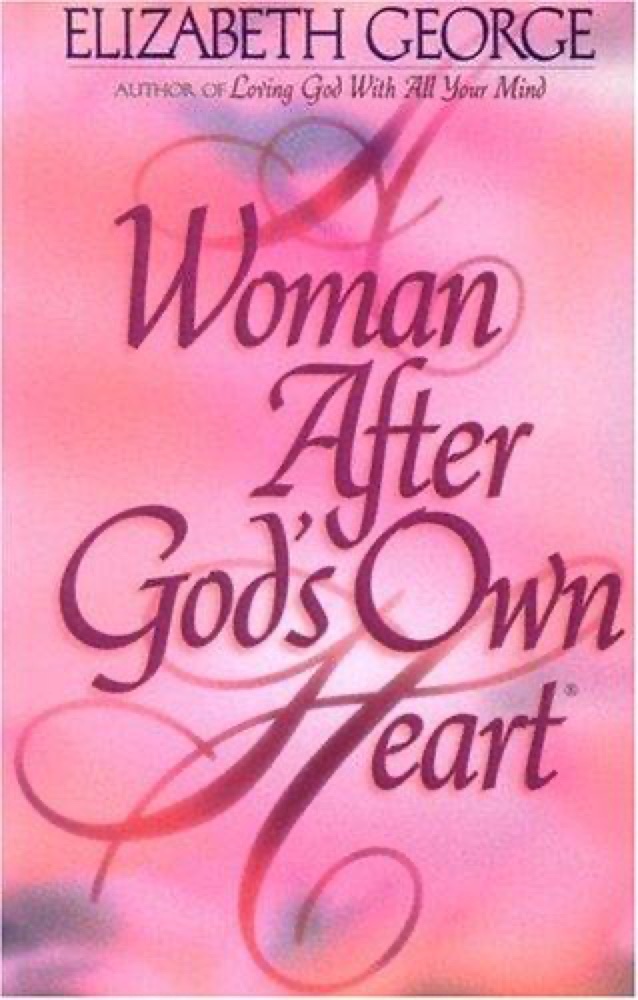
Quotes from A Great Deliverance

Elizabeth George ·  413 pages

Rating: (32.1K votes)


“He had never thought of himself as much of a praying man, but as he sat in the car in the growing darkness and the minutes passed, he knew what it was to pray. It was to will goodness out of evil, hope out of despair, life out of death. It was to will dreams into existence and spectres into reality. It was to will an end to anguish and a beginning to joy.”
― Elizabeth George, quote from A Great Deliverance


“Il ne s'était jamais considéré comme un homme de prière, mais, assis dans la voiture au milieu de l'obscurité qui tombait et des minutes qui s'égrenaient, il comprit ce que le mot « prier » voulait dire. C'était vouloir que le mal se transforme en bien, le désespoir en espérance, que la mort devienne vie. C'était vouloir que les rêves existent et que les spectres deviennent réalité. C'était vouloir que finisse l'angoisse, vouloir que commence la joie.”
― Elizabeth George, quote from A Great Deliverance


“exophthalmic, with a little upturned nose that continually”
― Elizabeth George, quote from A Great Deliverance


“Nigel Parrish waited until they returned from the”
― Elizabeth George, quote from A Great Deliverance


About the author

Elizabeth George
Born place: in Warren, Ohio, The United States
See more on GoodReads

Popular quotes

“I let myself have feelings for you despite not knowing how this would end.”
― Siobhan Vivian, quote from Not That Kind of Girl


“Do not go by oral tradition, by lineage of teaching, by hearsay, by a collection of texts, by logic, by inferential reasoning, by reasoned cogitation, by the acceptance of a view after pondering it, by the seeming competence of a speaker, or because you think, ‘The ascetic is our teacher.’4 But when you know for yourselves, ‘These things are unwholesome; these things are blamable; these things are censured by the wise; these things, if undertaken and practiced, lead to harm and suffering,’ then you should abandon them.”
― Bhikkhu Bodhi, quote from In the Buddha's Words: An Anthology of Discourses from the Pali Canon


“per hour. Handbrake knew that he could keep up with the best of them. Ambassadors might look old-fashioned and slow, but the latest models had Japanese engines. But he soon learned to keep it under seventy. Time and again, as his competitors raced up behind him and made their impatience known by the use of their horns and flashing high beams, he grudgingly gave way, pulling into the slow lane among the trucks, tractors and bullock carts. Soon, the lush mustard and sugarcane fields of Haryana gave way to the scrub and desert of Rajasthan. Four hours later, they reached the rocky hills surrounding the Pink City, passing in the shadow of the Amber Fort with its soaring ramparts and towering gatehouse. The road led past the Jal Mahal palace, beached on a sandy lake bed, into Jaipur’s ancient quarter. It was almost noon and the bazaars along the city’s crenellated walls were stirring into life. Beneath faded, dusty awnings, cobblers crouched, sewing sequins and gold thread onto leather slippers with curled-up toes. Spice merchants sat surrounded by heaps of lal mirch, haldi and ground jeera, their colours as clean and sharp as new watercolor paints. Sweets sellers lit the gas under blackened woks of oil and prepared sticky jalebis. Lassi vendors chipped away at great blocks of ice delivered by camel cart. In front of a few of the shops, small boys, who by law should have been at school, swept the pavements, sprinkling them with water to keep down the dust. One dragged a doormat into the road where the wheels of passing vehicles ran over it, doing the job of carpet beaters. Handbrake honked his way through the light traffic as they neared the Ajmeri Gate, watching the faces that passed by his window: skinny bicycle rickshaw drivers, straining against the weight of fat aunties; wild-eyed Rajasthani men with long handlebar moustaches and sun-baked faces almost as bright as their turbans; sinewy peasant women wearing gold nose rings and red glass bangles on their arms; a couple of pink-faced goras straining under their backpacks; a naked sadhu, his body half covered in ash like a caveman. Handbrake turned into the old British Civil Lines, where the roads were wide and straight and the houses and gardens were set well apart. Ajay Kasliwal’s residence was number”
― Tarquin Hall, quote from The Case of the Missing Servant


“To discourage future dark moments, I believe we must nourish the minds of our young with learning that creates understanding between ethnic and religious groups.”
― Jean Sasson, quote from Growing Up Bin Laden: Osama's Wife and Son Take Us Inside Their Secret World


“And then there was the sad sign that a young woman working at a Tim Hortons in Lethbridge, Alberta, taped to the drive-through window in 2007. It read, “No Drunk Natives.”

Accusations of racism erupted, Tim Hortons assured everyone that their coffee shops were not centres for bigotry, but what was most interesting was the public response. For as many people who called in to radio shows or wrote letters to the Lethbridge Herald to voice their outrage over the sign, there were almost as many who expressed their support for the sentiment. The young woman who posted the sign said it had just been a joke.

Now, I’ll be the first to say that drunks are a problem. But I lived in Lethbridge for ten years, and I can tell you with as much neutrality as I can muster that there were many more White drunks stumbling out of the bars on Friday and Saturday nights than there were Native drunks. It’s just that in North America, White drunks tend to be invisible, whereas people of colour who drink to excess are not.

Actually, White drunks are not just invisible, they can also be amusing. Remember how much fun it was to watch Dean Martin, Red Skelton, W. C. Fields, John Wayne, John Barrymore, Ernie Kovacs, James Stewart, and Marilyn Monroe play drunks on the screen and sometimes in real life? Or Jodie Marsh, Paris Hilton, Cheryl Tweedy, Britney Spears, and the late Anna Nicole Smith, just to mention a few from my daughter’s generation. And let’s not forget some of our politicians and persons of power who control the fates of nations: Winston Churchill, John A. Macdonald, Boris Yeltsin, George Bush, Daniel Patrick Moynihan. Hard drinkers, every one.

The somewhat uncomfortable point I’m making is that we don’t seem to mind our White drunks.

They’re no big deal so long as they’re not driving. But if they are driving drunk, as have Canada’s coffee king Tim Horton, the ex-premier of Alberta Ralph Klein, actors Kiefer Sutherland and Mel Gibson, Super Bowl star Lawyer Milloy, or the Toronto Maple Leafs’ Mark Bell, we just hope that they don’t hurt themselves. Or others.

More to the point, they get to make their mistakes as individuals and not as representatives of an entire race.”
― Thomas King, quote from The Inconvenient Indian: A Curious Account of Native People in North America


Interesting books

Galore
(4.2K)
Galore
by Michael Crummey
Nomad: From Islam to America: A Personal Journey Through the Clash of Civilizations
(4.2K)
Nomad: From Islam to...
by Ayaan Hirsi Ali
The Politics of Jesus
(3K)
The Politics of Jesu...
by John Howard Yoder
The Encyclopedia of Fantastic Victoriana
(123)
Broadway Lights
(2.7K)
Broadway Lights
by Jen Calonita
Timaeus/Critias
(1.1K)
Timaeus/Critias
by Plato

About BookQuoters

BookQuoters is a community of passionate readers who enjoy sharing the most meaningful, memorable and interesting quotes from great books. As the world communicates more and more via texts, memes and sound bytes, short but profound quotes from books have become more relevant and important. For some of us a quote becomes a mantra, a goal or a philosophy by which we live. For all of us, quotes are a great way to remember a book and to carry with us the author’s best ideas.

We thoughtfully gather quotes from our favorite books, both classic and current, and choose the ones that are most thought-provoking. Each quote represents a book that is interesting, well written and has potential to enhance the reader’s life. We also accept submissions from our visitors and will select the quotes we feel are most appealing to the BookQuoters community.

Founded in 2023, BookQuoters has quickly become a large and vibrant community of people who share an affinity for books. Books are seen by some as a throwback to a previous world; conversely, gleaning the main ideas of a book via a quote or a quick summary is typical of the Information Age but is a habit disdained by some diehard readers. We feel that we have the best of both worlds at BookQuoters; we read books cover-to-cover but offer you some of the highlights. We hope you’ll join us.