

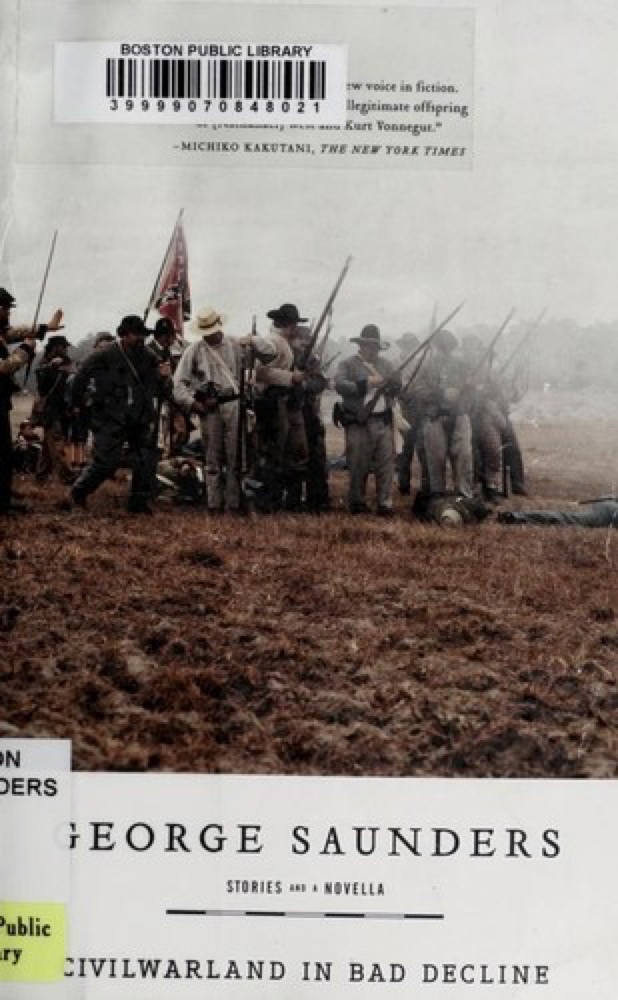
 CivilWarLand in Bad Decline
Quotes from the Book
I am at the moment writing a lengthy indictment against our century. When my brain begins to reel from my literary labors, I make an occasional cheese dip.
Apparently I lack some particular perversion which today's employer is seeking.
...I doubt very seriously whether anyone will hire me.' What do you mean, babe? You a fine boy with a good education.' Employers sense in me a denial of their values.' He rolled over onto his back. 'They fear me. I suspect that they can see that I am forced to function in a century I loathe. This was true even when I worked for the New Orleans Public Library.
Is my paranoia getting completely out of hand, or are you mongoloids really talking about me?
You could tell by the way he talked, though, that he had gone to school a long time. That was probably what was wrong with him.
I mingle with my peers or no one, and since I have no peers, I mingle with no one.
The day before me is fraught with God knows what horrors.
I refuse to "look up." Optimism nauseates me. It is perverse. Since man's fall, his proper position in the universe has been one of misery.
It smells terrible in here.' Well, what do you expect? The human body, when confined, produces certain odors which we tend to forget in this age of deodorants and other perversions. Actually, I find the atmosphere of this room rather comforting. Schiller needed the scent of apples rotting in his desk in order to write. I, too, have my needs. You may remember that Mark Twain preferred to lie supinely in bed while composing those rather dated and boring efforts which contemporary scholars try to prove meaningful. Veneration of Mark Twain is one of the roots of our current intellectual stalemate.
Stop!' I cried imploringly to my god-like mind.
When Fortuna spins you downward, go out to a movie and get more out of life.
My life is a rather grim one. One day I shall perhaps describe it to you in great detail.
I suspect that beneath your offensively and vulgarly effeminate façade there may be a soul of sorts. Have you read widely in Boethius?" "Who? Oh, heavens no. I never even read newspapers." "Then you must begin a reading program immediately so that you may understand the crises of our age," Ignatius said solemnly. "Begin with the late Romans, including Boethius, of course. Then you should dip rather extensively into early Medieval. You may skip the Renaissance and the Enlightenment. That is mostly dangerous propaganda. Now that I think of it, you had better skip the Romantics and the Victorians, too. For the contemporary period, you should study some selected comic books." "You're fantastic." "I recommend Batman especially, for he tends to transcend the abysmal society in which he's found himself. His morality is rather rigid, also. I rather respect Batman.
I avoid that bleak first hour of the working day during which my still sluggish senses and body make every chore a penance. I find that in arriving later, the work which I do perform is of a much higher quality.
Canned food is a perversion,' Ignatius said. 'I suspect that it is ultimately very damaging to the soul.
Leaving New Orleans also frightened me considerably. Outside of the city limits the heart of darkness, the true wasteland begins.
you can always tell employees of the government by the total vacancy which occupies the space where most other people have faces.
I suspect that I am the result of particularly weak conception on the part of my father. His sperm was probably emitted in a rather offhand manner.
A firm rule must be imposed upon our nation before it destroys itself. The United States needs some theology and geometry, some taste and decency. I suspect that we are teetering on the edge of the abyss.
It's not your fate to be well treated," Ignatius cried. "You're an overt masochist. Nice treatment will confuse and destroy you.
...When my brain begins to reel from my literary labors, I make an occassional cheese dip.
Like a bitch in heat, I seem to attract a coterie of policemen and sanitation officials.
So we see that even when Fortuna spins us downward, the wheel sometimes halts for a moment and we find ourselves in a good, small cycle within the larger bad cycle. The universe, of course, is based upon the principle of the circle within the circle. At the moment, I am in an inner circle. Of course, smaller circles within this circle are also possible.
Oh, Fortuna, blind, heedless goddess, I am strapped to your wheel,' Ignatius belched, 'Do not crush me beneath your spokes. Raise me on high, divinity.
with the breakdown of the medieval system, the gods of chaos, lunacy, and bad taste gained ascendancy.
Between notes, he had contemplated means of destroying Myrna Minkoff but had reached no satisfactory conclusion. His most promising scheme had involved getting a book on munitions from the library, constructing a bomb, and mailing it in plain paper to Myrna. Then he remembered that his library card had been revoked.
The only excursion of my life outside of New Orleans took me through the vortex to the whirlpool of despair: Baton Rouge. . . . New Orleans is, on the other hand, a comfortable metropolis which has a certain apathy and stagnation which I find inoffensive.
I really don't have the time to discuss the errors of your value judgements.
employers sense in me a denial of their values...they fear me. i suspect that they can see that i am forced to function in a century which i loathe.
Did you know?
- The novel was published in 1980, eleven years after the author's death in 1969.
- It won the 1981 Pulitzer Prize for Fiction, making John Kennedy Toole a posthumous laureate.
- Novelist Walker Percy championed the manuscript after Toole's mother repeatedly urged him to read it.
- The first edition was published by Louisiana State University Press with a small initial print run.
- The title comes from a Jonathan Swift epigraph about a true genius being opposed by a confederacy of dunces.
- The story is set in the French Quarter and other parts of New Orleans in the early 1960s.
About John Kennedy Toole
John Kennedy Toole (1937-1969) was an American novelist from New Orleans, Louisiana. He wrote "A Confederacy of Dunces" in the early 1960s but was unable to get it published in his lifetime; he died by suicide in 1969, and the novel was published posthumously in 1980 through the efforts of his mother and the writer Walker Percy.
More about the author →About the book
"A Confederacy of Dunces" is a comic novel set in early-1960s New Orleans, centered on Ignatius J. Reilly, a corpulent, misanthropic, medievalist-minded thirty-year-old who lives with his mother and rails against the modern world. After his mother's car accident creates financial pressure, Ignatius is forced to look for work, and his reluctant employment at a pants factory and later as a hot dog cart vendor sets off a chain of misadventures across the city's French Quarter, entangling a large cast of eccentrics while he keeps up a running feud-by-mail with his New York acquaintance Myrna Minkoff.
The book is a picaresque satire of American life, taste, and ambition, filtered through Ignatius's grandiose self-regard and his contempt for what he calls a lack of "theology and geometry" in the modern age. Its title comes from a line by Jonathan Swift used as the epigraph: "When a true genius appears in the world, you may know him by this sign: that all the dunces are in confederacy against him." The novel is celebrated for its exuberant New Orleans dialect and its gallery of vivid supporting characters.
The novel's publication story is itself famous: John Kennedy Toole died in 1969 without seeing it in print, and his mother spent years pressing the manuscript on novelist Walker Percy, who championed it. Louisiana State University Press published it in 1980, and it won the Pulitzer Prize for Fiction in 1981, making Toole a rare posthumous laureate. It has since become a cult classic and an enduring portrait of New Orleans.
Key characters
- Ignatius J. ReillyObese, misanthropic, medievalist-minded protagonist who scorns the modern world
- Irene ReillyIgnatius's put-upon widowed mother
- Myrna MinkoffIgnatius's activist college acquaintance in New York and his epistolary sparring partner
- Angelo MancusoHapless New Orleans patrolman under pressure to make arrests
- Burma JonesUnderpaid Black porter at the Night of Joy bar
- Gus LevyIndifferent owner of Levy Pants, where Ignatius briefly works
- Lana LeeHard-nosed proprietor of the Night of Joy nightclub
Book details
- First published
- 1980
- Length
- 338 pages
- Reading time
- 8 hours
- Author
- John Kennedy Toole
- Genre
- Literature
- Goodreads rating
- 3.89 (305k ratings) →
- First line
- “A green hunting cap squeezed the top of the fleshy balloon of a head.”
Movie & TV adaptations
- IMDb
If you liked this, read…
- 1The Ginger ManAnother raucous comic novel driven by an outrageous, self-justifying antihero.
- 2Lucky JimA satirical comedy skewering academic pretension through a misfit protagonist.
- 3Portnoy's ComplaintA darkly comic first-person tirade against family and modern life.
Keep reading
CivilWarLand in Bad Decline
 Fathers and Sons
 When You Are Engulfed in Flames
 Tales of Ordinary Madness
 Gaudy Night
 A Local Habitation
 Invitation to a Beheading
 Sixty Stories
 The Republic of Thieves
 Brain Droppings
 The Bachman Books
 Fifth Business
 Welcome to the Monkey House
 Without Dogma
 The Golden Notebook
 My Booky Wook
 Rage
Rage
 She Who Waits
 Something Rotten
 Super Sad True Love Story
 Operation Shylock: A Confession
 Don't Get Too Comfortable: The Indignities of Coach Class, the Torments of Low Thread Count, the Never-Ending Quest for Artisanal Olive Oil, and Other First World Problems
 Harassment Architecture
 Scaramouche
 Fierce Invalids Home from Hot Climates
 Hollywood
 Dhalgren
 By Nightfall
 Turn Coat
 City of Thieves
 Sloppy Firsts
 Infinite Jest
 Beautiful Losers
 The Grim Grotto
 False Memory
 The Wasp Factory
 A Fraction of the Whole
 Barrel Fever: Stories and Essays
 Death Masks
 A Madness of Angels
 Wampeters, Foma and Granfalloons
 King Dork
 The Adventures of Augie March
 Who Could That Be at This Hour?
 Old Man's War
 Steppenwolf
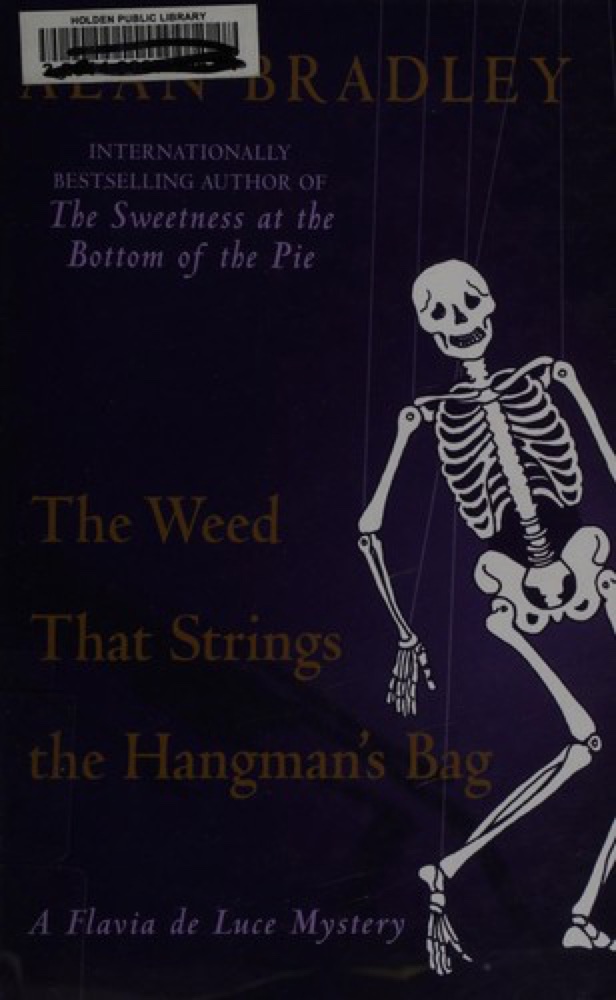 The Weed That Strings the Hangman's Bag
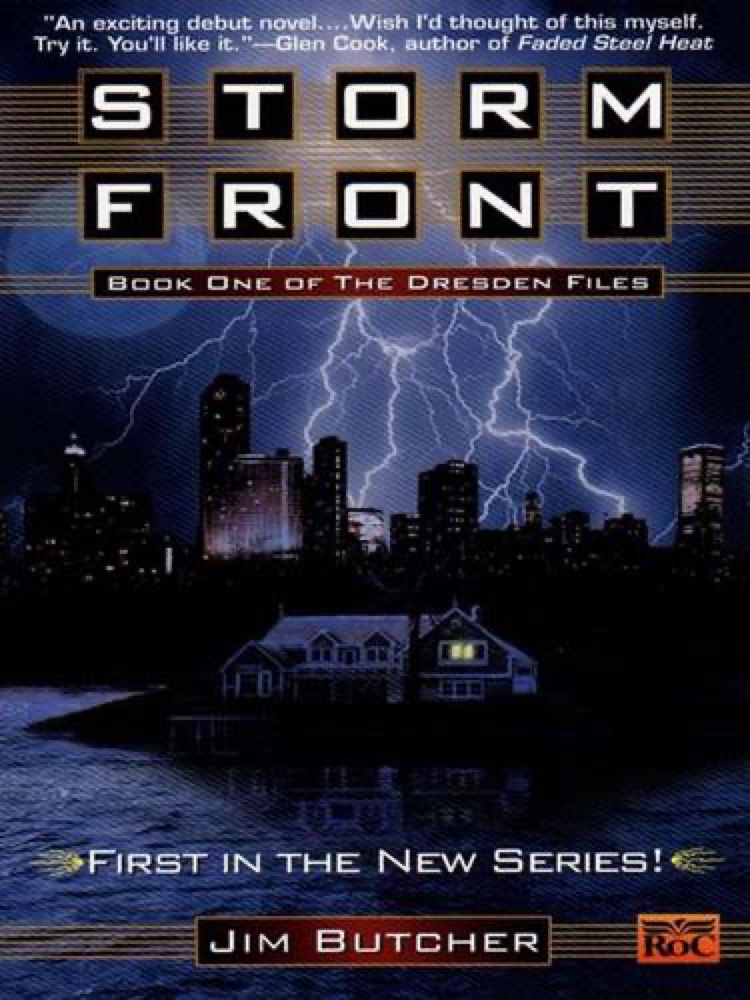 Storm Front
 Jude the Obscure
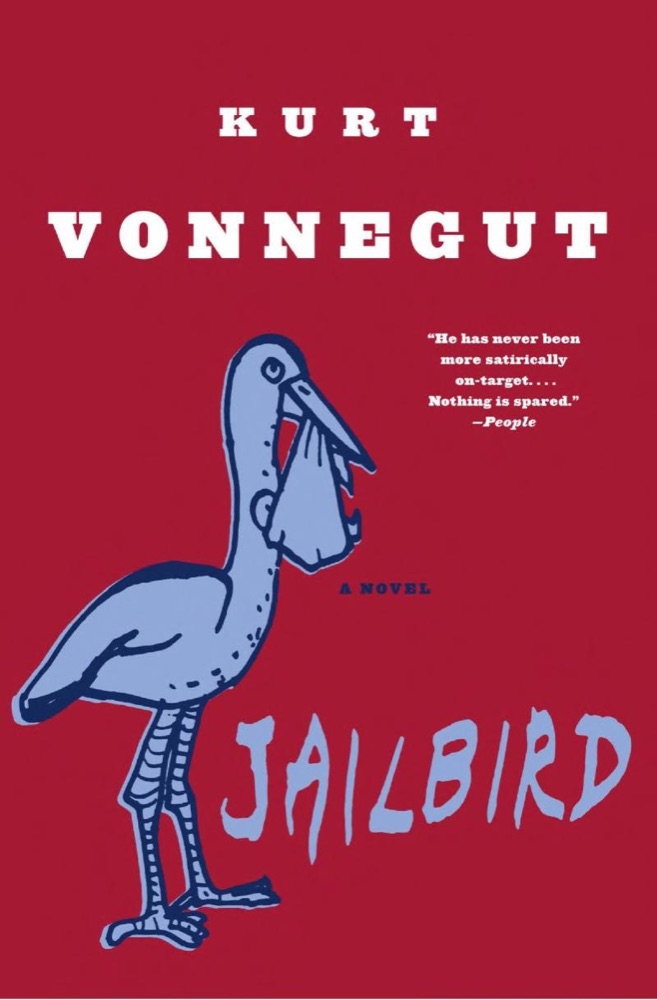 Jailbird
 The Broom of the System
 The Hearing Trumpet
 That Hideous Strength
 Dark Places
 The Woman Who Died a Lot
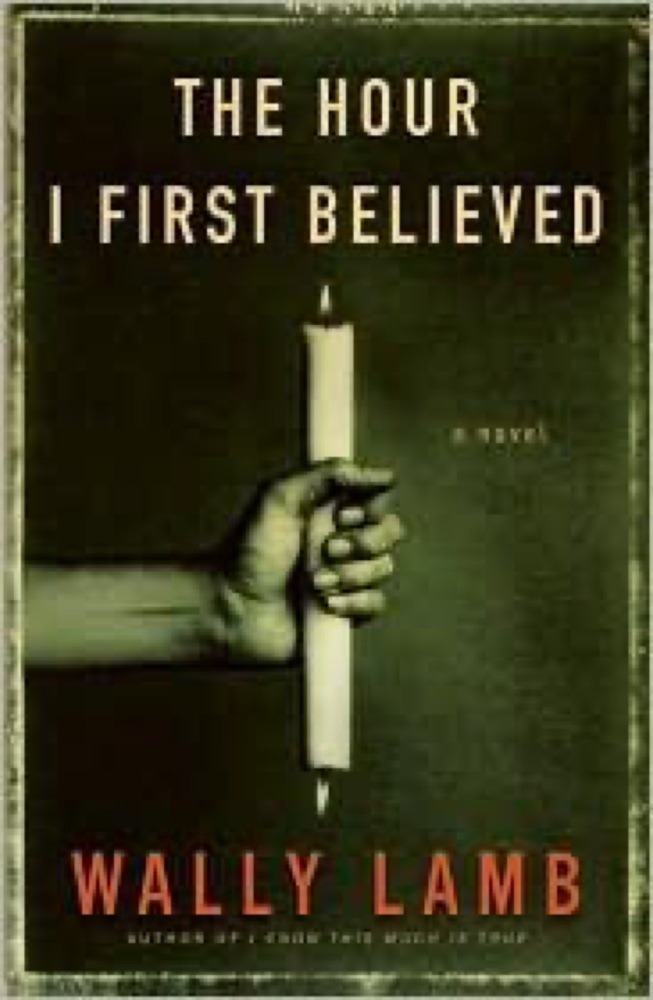 The Hour I First Believed
 American Psycho
 Flight
 Filth
Filth
 The Importance of Being Earnest