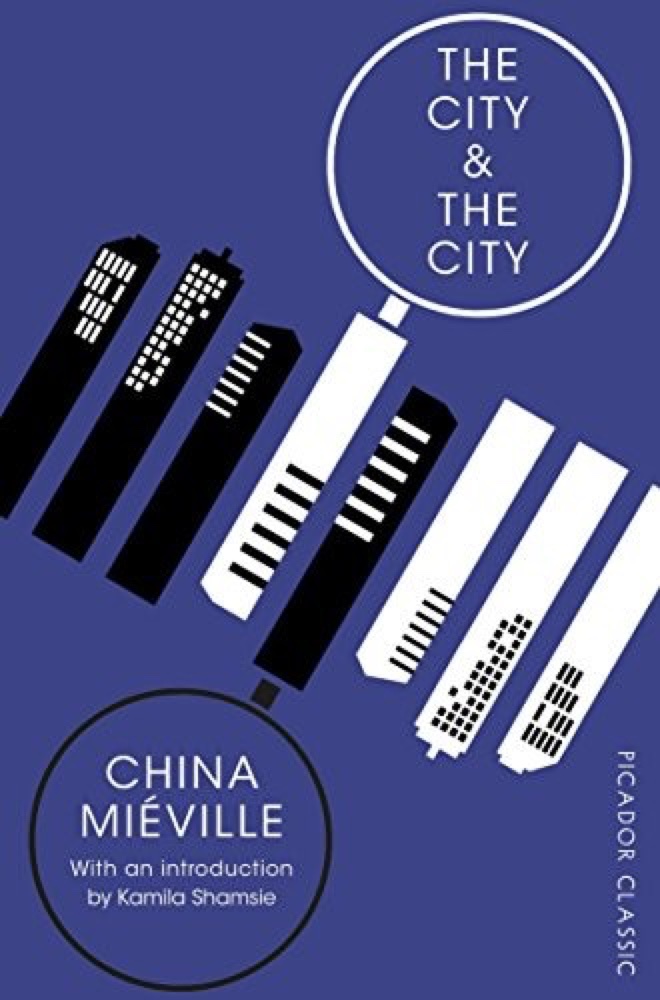

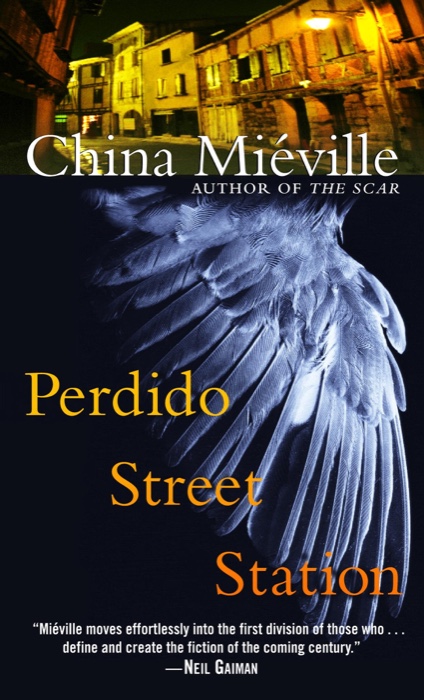
 Perdido Street Station
Quotes from the Book
Books are always obviously having conversations with other books, and some times they're amiable and sometimes not.
Is it more childish and foolish to insist that there is a conspiracy or that there is not?
He walked with equipoise, possibly in either city. Schrödinger’s pedestrian.
We would never call inexplicable little insights 'hunches,' for fear of drawing the universe's attention. But they happened, and you knew you had been in the proximity of one that had come through if you saw a detective kiss his or her fingers and touch his or her chest where a pendant to Warsha, patron saint of inexplicable inspirations, would, theoretically, hang.
From that historically brief quite opaque moment, came the chaos of our material history, an anarchy of chronology, of mismatched remnants that delighted and horrified investigators.
You cannot train yourself to successfully and sustainedly unsee and unhear you do them all the time, but they also fail, repeatedly, and you cheat, repeatedly, in all sorts of small ways. The book mentions that several times. It is absolutely about absolute fidelity to those particular urban protocols, exaggerations or extrapolations of the ones that I think are all around us all the time in the real world; but it's also about cheating them, and failing them, and playing a little fast and loose, which I think is an inextricable part of such norms.
While yes we can both agree the sudden recovery of this footage smells not a little, and that we appear to be bits of tinfoil-on-string to some malevolent government kitten, yes yes yes but, Borlu, however they've come by this evidence, this is the correct decision.
There is no case,” he told her. “There’s a series of random and implausible crises that make no sense other than if you believe the most dramatic possible shit. And there’s a dead girl at the end of it all.
Interstiality is a theme that is simultaneously genuinely interesting and potentially quite useful, and also a terrible cliché, so if you're going to use it, it helps to be at least respectfully skeptical about the wilder claims of its theoretical partisans, I think.
His fidelity to the cliche transcended the necessity to communicate.
Like any dissidents they were neurotic archivists. Agree, disagree, show no interest in or obsess over their narrative of history, you couldn't say their didn't shore it up with footnotes and research.
At the social/political/ juridical, etc., level, the organizing principle was less to do with games and more to do with the nature of taboos—enormously powerful, often enormously arbitrary, and (crucially) regularly quietly broken, without undermining the fact of the taboo itself. That last element, I think, is sometimes underestimated in the discussions of cultural norms, where they are both asserted and breached. Both those elements are foundational. — author interview
…where the two cities are close up they make for interference patterns, harder to read or predict. They are more than a city and a city; that is elementary urban arithmetic.
If the techs are on it we're fine, but Briamiv and his buddy could fuck up a full stop at the end of a sentence.
But here’s the problem you’re not addressing. While yes we can both agree the sudden recovery of this footage smells not a little, and that we appear to be bits of tinfoil-on-string to some malevolent government kitten, yes yes yes but, Borlú, however they’ve come by the evidence, this is the correct decision.
Volunteering’s an early and strong indication that you’re not suited,” he said.
But pass through Copula Hall and she or he might leave Beszel, and at the end of the hall come back to exactly (corporeally) where they had just been, but in another country, a tourist, a marvelling visitor, to a street that shared the latitude-longitude of their own address, a street they had never visited before, whose architecture they had always unseen, to the Ul Qoman house sitting next to and a whole city away from their own building, unvisible there now they had come through, all the way across the Breach, back home.
It's not just us keeping them apart. It's everyone in Beszel and everyone in Ul Qoma. Every minute, every day. We're only the last ditch: it's everyone in the cities who does most of the work. It works because you don't blink. That's why unseeing and unsensing are so vital. No one can admit it doesn't work. So if you don't admit it, it does. But if you breach, even if it's not your fault, for more than the shortest time ... you can't come back from that.
...If she were studying Orciny, and there might be excellent reasons to do so, she'd be doing her doctorate in Folklore or Anthropology or maybe Comp Lit. Granted, the edges of disciplines are getting vague. Also that Mahalia is one of a number of young archaeologists more interested in Foucault and Baudrillard than in Gordon Childe or in trowels.
The early years of a Bes (and presumably an Ul Qoman) child are intense learnings of cues. We pick up styles of clothing, permissible colours, ways of walking and holding oneself, very fast. Before we were eight or so most of us could be trusted not to breach embarrassingly and illegally, though licence of course is granted children every moment they are in the street.
They looked like people-shaped clay in the moments before God breathed out.
«Si riferisce ai loro poteri magici? Vorrei, lo vorrei tanto. Ma anche così questi scavi sono incomparabili. La cultura materiale non ha nessun senso. Non esiste nessun’altra parte al mondo in cui si possa riportare alla luce quelli che sembrano oggetti della tarda antichità con bordi taglienti, reperti in bronzo bellissimi e compositi mischiati con materiale palesemente neolitico. Con questa roba è come se la stratigrafia andasse a farsi benedire. È stata usata come prova contro il matrix di Harris... erroneamente, ma capirà perché. Ecco perché questi scavi sono così popolari fra i giovani archeologi.
Tutte le note erano come a strati, un palinsesto di interpretazione in progresso. Feci archeologia.
And even if you’re right, the CIA paid millions of dollars to men trying to kill goats by staring at them,” I said.
Same weather over here as back home," I said.
How could one not think of the stories we all grew up on, that surely the Ul Qomans grew up on too? Ul Qoman man and Besź maid, meeting in the middle of Copula Hall, returning to their homes to realise that they live, grosstopically, next door to each other, spending their lives faithful and alone, rising at the same time, walking crosshatched streets close like a couple, each in their own city, never breaching, never quite touching, never speaking a word across the border.
Watch on YouTube
About China Miéville
We have collected 192 quotes from 9 books by China Miéville on BookQuoters.
More about the author →More by China Miéville
All books by China Miéville →
Book details
- Author
- China Miéville
- Genre
- Fiction
- Goodreads rating
- 3.90 (81k ratings) →
Keep reading
 Embassytown
 Sixty Stories
 The Peripheral
 Underworld
 The Rise and Fall of D.O.D.O.
 The Gone-Away World
 Authority
 Anathem
 Skinny Legs and All
 Amongst Our Weapons
 Mason & Dixon
 Open City
 V.
V.
 That Hideous Strength
 Quicksilver
 Mostly Harmless
 The Fear Institute
 Foundation and Empire
 Revelation Space
 The Bourne Identity
 The Long Dark Tea-Time of the Soul
 The State of the Art
 Prelude to Foundation
 Babylon's Ashes
 Point Omega
 Flights
 Mao II
 Out of Oz
 The Eyre Affair
 Lies Sleeping
 Flight Behavior
 Red Mars
 One of Our Thursdays Is Missing
 InterWorld
 Pattern Recognition
 The Last Continent
 Zero History
 Dhalgren
 Against the Day
 Unseen Academicals
 The Consuming Fire
 Moving Pictures
 The Truth: Stage Adaptation
 Broken Homes
 CryoBurn
 People of the Book
 Sometimes a Great Notion
 Gnomon
 There but for the
 The Tainted Cup
 A Drop of Corruption
 Table for Two
 Another Roadside Attraction
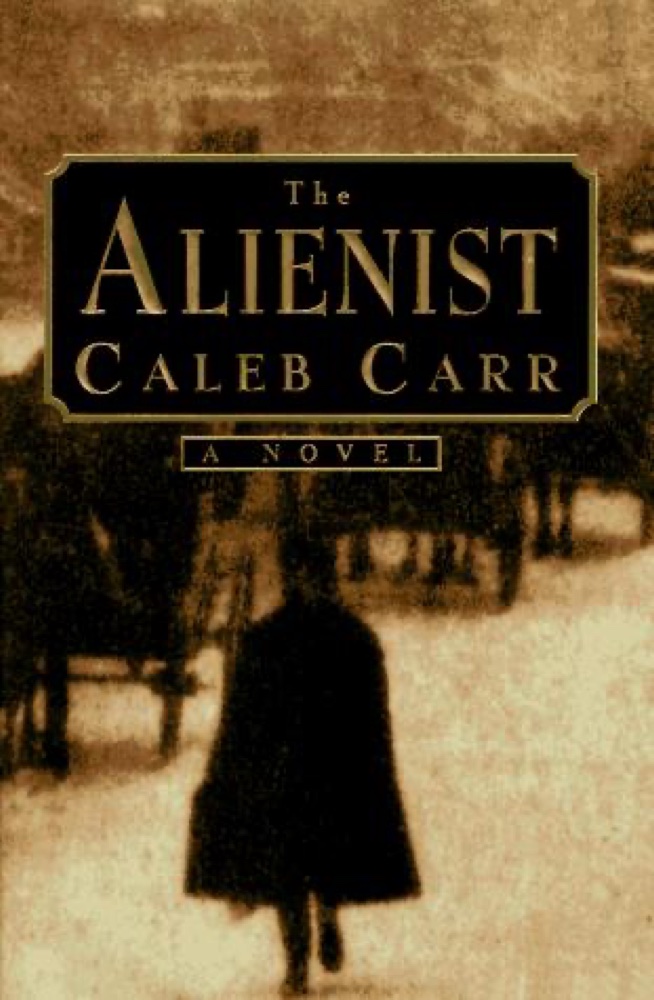 The Alienist
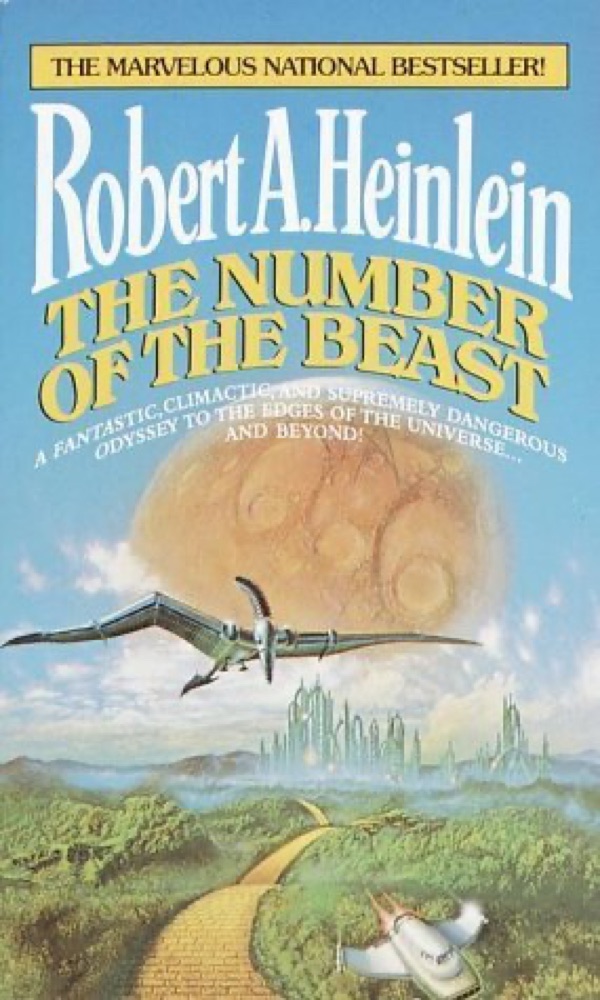 The Number of the Beast
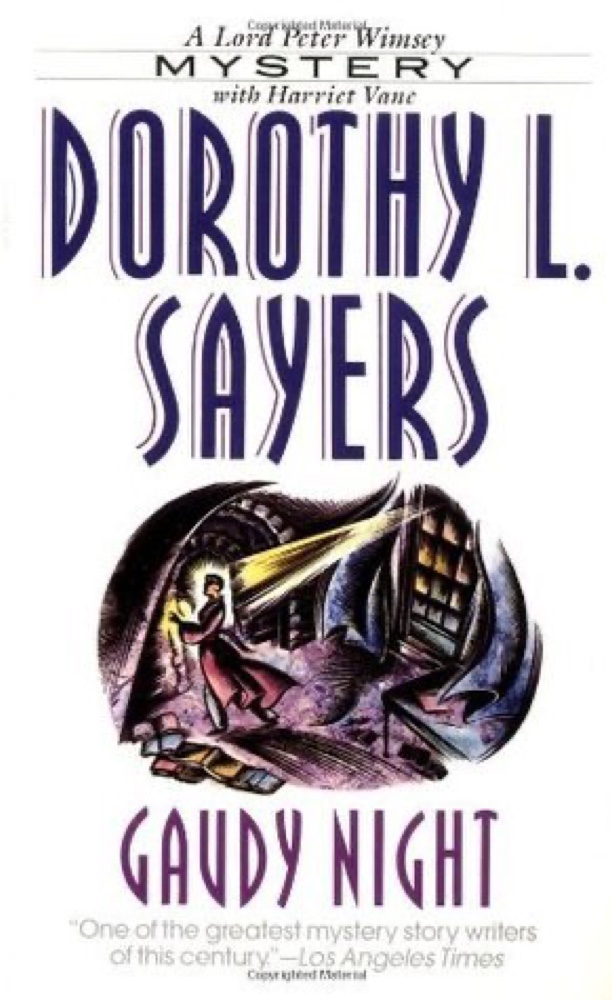 Gaudy Night
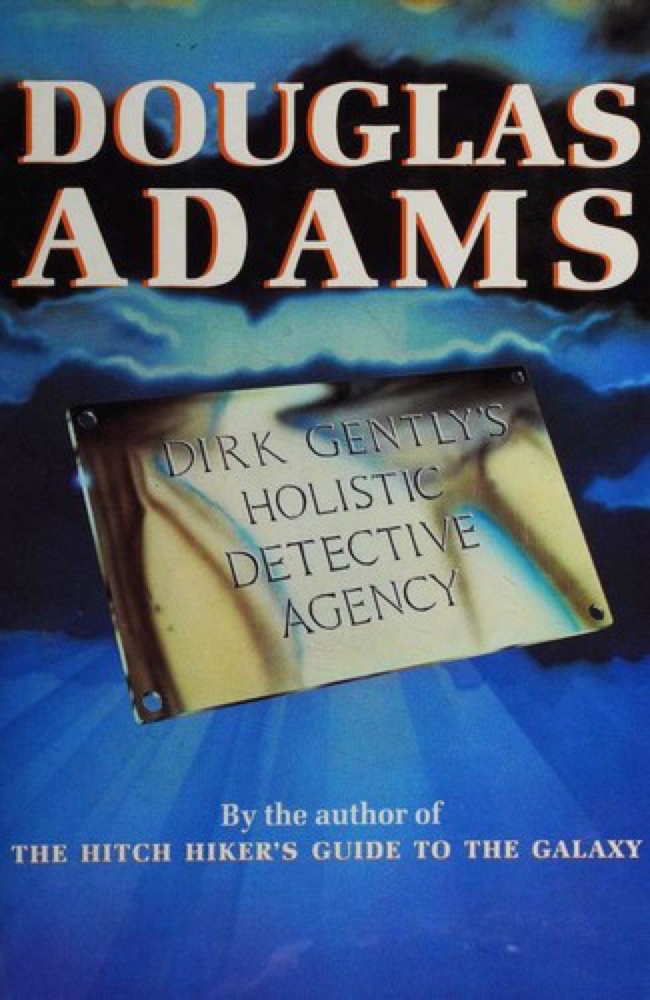 Dirk Gently's Holistic Detective Agency
 The Rebel Angels
 The Ground Beneath Her Feet
 Saturday