
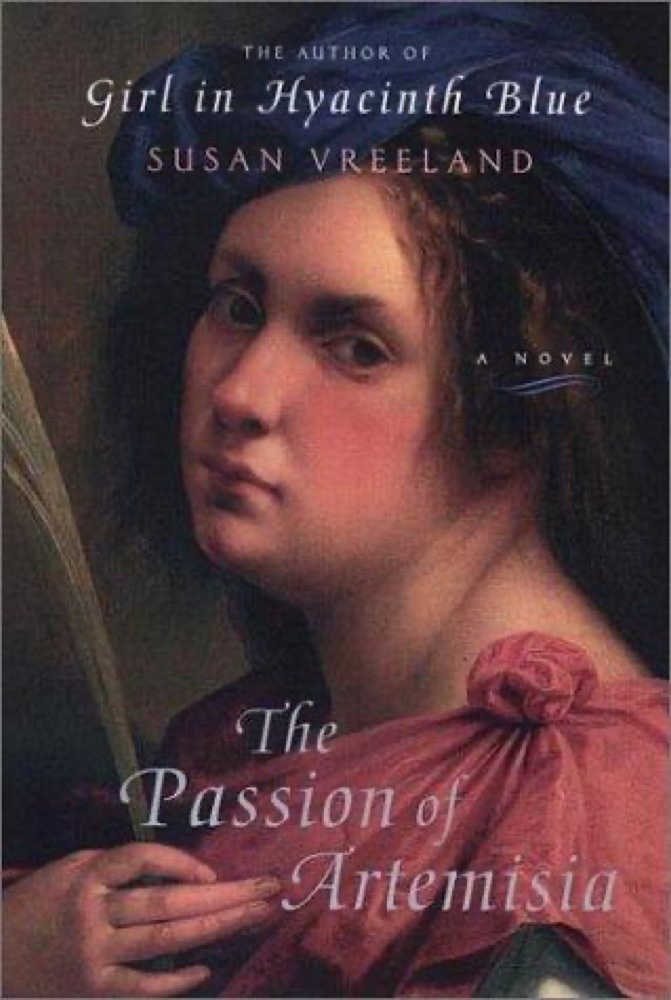
 The Passion of Artemisia
Quotes from the Book
Everybody works . . . . That's what life is. Work and a little play and a lot of prayer.
If two people love the same thing, she reasoned, then they must love each other, at least a little, even if they never say it.
In the end, it's only the moments that we have, the kiss on the palm, the joint wonder at the furrowed texture of a fir trunk or at the infinitude of grains of sand in a dune. Only the moments.
Work is love made plain, whether man’s work or woman’s work.
How love builds itself unconsciously, he thought, out of the momentous ordinary.
In the end, it's only the moments that we have.
People who would be that close to her, she thought, a matter of a few arms' lengths, looking, looking, and they would never know her.
The winsome lilt of Digna humming in the garden. Her knowing, almost teasing look, not quite a smile, when she knew she had the upper hand about something, and his willing acquiescence. Her coaxing in the dark next to him - What was your favorite part of the day? - to which he'd always say, because he always thought it - now, touching you. He'd feel the lump of truth form in his throat, the swell of love in his loins. And afterward, the peace of her rhythmic breathing, steady as a Frisian clock, her simple uncomposed lullaby. Those are things he would, in some final, stretched-out moment, relive. How love builds itself unconsciously, he thought, out of the momentous ordinary.
The painting showed she did not yet know that lives end abruptly, that much of living is repetition and separation, that buttons forever need re-sewing no matter how ferociously one works the thread, that nice things almost happen.
No one but another painter could know the delicacy required to balance the complexities, to keep reality at bay in order to remain in the innermost center of his work.
Now he knew . . . that there was nothing so vital as paying attention, and perfecting the humble offices of love.
She thought of all the people in all the paintings she had seen that day, not just Father's, in all the paintings of the world, in fact. Their eyes, the particular turn of a head, their loneliness or suffering or grief was borrowed by an artist to be seen by other people throughout the years who would never see them face to face. People who would be that close to her, she thought, a matter of a few arms' lengths, looking, looking, and they would never know her.
It was strange: When you reduced even a fledgling love affair to its essentials - I loved her, she maybe loved me, I was foolish, I suffered - it became vacuous and trite, meaningless to anyone else. In the end, it's only the moments that we have, the kiss on the palm, the joint wonder at the furrowed texture of a fir trunk or at the infinitude of grains of sand in a dune. Only the moments.
I came to see that knowing what love isn't might be just as valuable, though infinitely less satisfying, as knowing what it is.
She was a desperate woman with frailties just like her, temptations just like her, a woman who had needs, a woman who loved almost to the point of there being no more her anymore, a woman who probably cried too much, just like her, a woman afraid, wanting to believe rather than believing [...]
The only place Aletta and I could be together unseen was just under the rafters in the church tower, a circumstance that propelled us into an earlier intimacy than what we would have known had we been permitted to walk together Sunday afternoons under the wide sky.
Watch on YouTube
About Susan Vreeland
We have collected 44 quotes from 3 books by Susan Vreeland on BookQuoters.
More about the author →More by Susan Vreeland
The Passion of Artemisia
 Luncheon of the Boating Party
Book details
- Author
- Susan Vreeland
- Genre
- Fiction
- Goodreads rating
- 3.74 (41k ratings) →
Keep reading
 The Memory Keeper's Daughter
 The Wings of the Dove
 Justine
 Love in the Time of Cholera
 In the Shadow of Young Girls in Flower
 Forever in Blue: The Fourth Summer of the Sisterhood
 Simply Magic
 Atonement
 To the Lighthouse
 Frenchman's Creek
 Truly, Madly, Deeply
 The Strange and Beautiful Sorrows of Ava Lavender
 The Story of Beautiful Girl
 Night and Day
 A Reliable Wife
 The Secret Lives of People in Love
 The Girl You Left Behind
 Tender Is the Night
 Little, Big
 Honey, Baby, Sweetheart
 Women in Love
 The Pilot's Wife
 The Song of the Lark
The Passion of Artemisia
The Song of the Lark
The Passion of Artemisia
 The Girl Who Chased the Moon
 Madame Bovary
 Anna Karenina
 On Chesil Beach
 The God of Small Things
 The Brief Wondrous Life of Oscar Wao
 On Mystic Lake
 The House of Mirth
 The Age of Innocence
 Prodigal Summer
 Longbourn
 The Well of Loneliness
 Far from the Madding Crowd
 Teardrop
 An Object of Beauty
 A Widow for One Year
 Like Life: Stories
 The Probable Future
 Lovely War
 The Gravity of Us
 Bel Canto
 On Beauty
 Second Glance
 The Price of Salt
 Desperate Remedies
 The Best of Everything
 The Robber Bride
 The Enchanted April
 The Confessions of Max Tivoli
 A Constellation of Vital Phenomena
 The Shell Seekers
 The Secret Keeper
 The Bridge of San Luis Rey
 Save Me the Waltz
 Silent Melody
 The Nightingale